| Record Information |
|---|
| Version | 5.0 |
|---|
| Status | Detected and Quantified |
|---|
| Creation Date | 2005-11-16 15:48:42 UTC |
|---|
| Update Date | 2023-02-21 17:15:40 UTC |
|---|
| HMDB ID | HMDB0001392 |
|---|
| Secondary Accession Numbers | |
|---|
| Metabolite Identification |
|---|
| Common Name | p-Aminobenzoic acid |
|---|
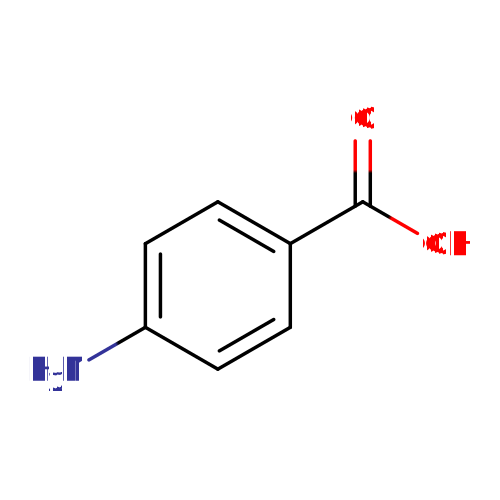
| Description | p-Aminobenzoic acid, also known as 4-aminobenzoic acid or PABA, is an organic compound with molecular formula C7H7NO2. PABA is a white crystalline substance that is only slightly soluble in water. It consists of a benzene ring substituted with an amino group and a carboxylic acid. PABA is an essential nutrient for some bacteria and is sometimes called vitamin Bx. However, PABA is not essential for humans and it varies in its activity from other B vitamins. PABA is sometimes marketed as an essential nutrient under the premise that it can stimulate intestinal bacteria. Certain bacteria in the human intestinal tract such as E. coli generate PABA from chorismate. Humans lack the enzymes to convert PABA into folate, and therefore require folate from dietary sources such as green leafy vegetables. Although some intestinal bacteria can synthesize folate from PABA and some E. coli can synthesize folate this requires six enzymatic activities in folate synthesis which are not all done in the same bacteria. PABA used to be a common sunscreen agent until it was found to also be a sensitizer. The potassium salt of PABA is used therapeutically in fibrotic skin disorders. PABA can also be found in Acetobacter (DOI: 10.3181/00379727-52-14147). |
|---|
| Structure | InChI=1S/C7H7NO2/c8-6-3-1-5(2-4-6)7(9)10/h1-4H,8H2,(H,9,10) |
|---|
| Synonyms | | Value | Source |
|---|
| 1-Amino-4-carboxybenzene | ChEBI | | 4-Amino-benzoic acid | ChEBI | | 4-Aminobenzoesaeure | ChEBI | | 4-Carboxyaniline | ChEBI | | 4-Carboxyphenylamine | ChEBI | | ABEE | ChEBI | | gamma-Aminobenzoic acid | ChEBI | | p-Aminobenzoesaeure | ChEBI | | p-Carboxyaniline | ChEBI | | p-Carboxyphenylamine | ChEBI | | PABA | ChEBI | | Para-aminobenzoic acid | ChEBI | | 4-Aminobenzoic acid | Kegg | | p-Aminobenzoate | Kegg | | RVPaba lipstick | Kegg | | 4-Amino-benzoate | Generator | | g-Aminobenzoate | Generator | | g-Aminobenzoic acid | Generator | | gamma-Aminobenzoate | Generator | | Γ-aminobenzoate | Generator | | Γ-aminobenzoic acid | Generator | | Para-aminobenzoate | Generator | | 4-Aminobenzoate | Generator | | acido P-Aminobenzoico | HMDB | | Acidum paraminobenzoicum | HMDB | | Actipol | HMDB | | Amben | HMDB | | Aminobenzoate | HMDB | | Aminobenzoic acid | HMDB, MeSH | | Aniline-4-carboxylate | HMDB | | Aniline-4-carboxylic acid | HMDB | | Anti-chromotrichia factor | HMDB | | Anticanitic vitamin | HMDB | | Anticantic vitamin | HMDB | | Antichromotrichia factor | HMDB | | Bacterial vitamin H1 | HMDB | | Chromotrichia factor | HMDB | | Hachemina | HMDB, MeSH | | Kyselina P-aminobenzoova | HMDB | | P-amino-Benzoate | HMDB | | P-amino-Benzoic acid | HMDB | | PAB | HMDB | | Pabacyd | HMDB | | Pabafilm | HMDB | | Pabagel | HMDB | | Pabamine | HMDB | | Pabanol | HMDB | | Papacidum | HMDB | | Paraminol | HMDB, MeSH | | Paranate | HMDB | | Potaba | HMDB, MeSH | | Romavit | HMDB | | Rvpaba | HMDB | | Sunbrella | HMDB | | Super shade by coppertone | HMDB | | Trichochromogenic factor | HMDB | | Trochromogenic factor | HMDB | | Vitamin BX | HMDB | | Vitamin h' | HMDB | | 4 Aminobenzoic acid | MeSH, HMDB | | 4 Aminobenzoic acid, potassium salt | MeSH, HMDB | | Epitelplast | MeSH, HMDB | | Jumer brand OF aminobenzoic acid | MeSH, HMDB | | Medea brand OF aminobenzoic acid | MeSH, HMDB | | Paraminan | MeSH, HMDB | | 4-Aminobenzoate, potassium | MeSH, HMDB | | Epit vit | MeSH, HMDB | | Llorens brand OF aminobenzoic acid | MeSH, HMDB | | Pabasan | MeSH, HMDB | | Potassium aminobenzoate | MeSH, HMDB | | 4-Aminobenzoic acid, potassium salt | MeSH, HMDB | | Aminobenzoate, potassium | MeSH, HMDB | | Glenwood brand OF potassium aminobezoate | MeSH, HMDB | | Llorens brand OF aminobenzoic acid sodium salt | MeSH, HMDB | | Magnesium para-aminobenzoate | MeSH, HMDB | | Potassium 4 aminobenzoate | MeSH, HMDB | | Potassium 4-aminobenzoate | MeSH, HMDB | | P Aminobenzoic acid | MeSH, HMDB | | Para aminobenzoic acid | MeSH, HMDB | | Para-aminobenzoate, magnesium | MeSH, HMDB | | p-Aminobenzoic acid | ChEBI |
|
|---|
| Chemical Formula | C7H7NO2 |
|---|
| Average Molecular Weight | 137.136 |
|---|
| Monoisotopic Molecular Weight | 137.047678473 |
|---|
| IUPAC Name | 4-aminobenzoic acid |
|---|
| Traditional Name | sunbrella |
|---|
| CAS Registry Number | 150-13-0 |
|---|
| SMILES | NC1=CC=C(C=C1)C(O)=O |
|---|
| InChI Identifier | InChI=1S/C7H7NO2/c8-6-3-1-5(2-4-6)7(9)10/h1-4H,8H2,(H,9,10) |
|---|
| InChI Key | ALYNCZNDIQEVRV-UHFFFAOYSA-N |
|---|
| Chemical Taxonomy |
|---|
| Description | Belongs to the class of organic compounds known as aminobenzoic acids. These are benzoic acids containing an amine group attached to the benzene moiety. |
|---|
| Kingdom | Organic compounds |
|---|
| Super Class | Benzenoids |
|---|
| Class | Benzene and substituted derivatives |
|---|
| Sub Class | Benzoic acids and derivatives |
|---|
| Direct Parent | Aminobenzoic acids |
|---|
| Alternative Parents | |
|---|
| Substituents | - Aminobenzoic acid
- Benzoic acid
- Benzoyl
- Aniline or substituted anilines
- Amino acid or derivatives
- Amino acid
- Carboxylic acid derivative
- Carboxylic acid
- Monocarboxylic acid or derivatives
- Amine
- Organonitrogen compound
- Organooxygen compound
- Primary amine
- Hydrocarbon derivative
- Organic oxide
- Organopnictogen compound
- Organic oxygen compound
- Organic nitrogen compound
- Aromatic homomonocyclic compound
|
|---|
| Molecular Framework | Aromatic homomonocyclic compounds |
|---|
| External Descriptors | |
|---|
| Ontology |
|---|
| Physiological effect | Not Available |
|---|
| Disposition | |
|---|
| Process | |
|---|
| Role | |
|---|
| Physical Properties |
|---|
| State | Solid |
|---|
| Experimental Molecular Properties | | Property | Value | Reference |
|---|
| Melting Point | 188.5 °C | Not Available | | Boiling Point | 339.00 to 340.00 °C. @ 760.00 mm Hg (est) | The Good Scents Company Information System | | Water Solubility | 6.11 mg/mL | Not Available | | LogP | 0.83 | HANSCH,C ET AL. (1995) |
|
|---|
| Experimental Chromatographic Properties | Experimental Collision Cross Sections |
|---|
| Predicted Molecular Properties | |
|---|
| Predicted Chromatographic Properties | Predicted Collision Cross SectionsPredicted Kovats Retention IndicesUnderivatizedDerivatized| Derivative Name / Structure | SMILES | Kovats RI Value | Column Type | Reference |
|---|
| p-Aminobenzoic acid,1TMS,isomer #1 | C[Si](C)(C)OC(=O)C1=CC=C(N)C=C1 | 1665.0 | Semi standard non polar | 33892256 | | p-Aminobenzoic acid,1TMS,isomer #2 | C[Si](C)(C)NC1=CC=C(C(=O)O)C=C1 | 1814.5 | Semi standard non polar | 33892256 | | p-Aminobenzoic acid,2TMS,isomer #1 | C[Si](C)(C)NC1=CC=C(C(=O)O[Si](C)(C)C)C=C1 | 1818.2 | Semi standard non polar | 33892256 | | p-Aminobenzoic acid,2TMS,isomer #1 | C[Si](C)(C)NC1=CC=C(C(=O)O[Si](C)(C)C)C=C1 | 1834.1 | Standard non polar | 33892256 | | p-Aminobenzoic acid,2TMS,isomer #1 | C[Si](C)(C)NC1=CC=C(C(=O)O[Si](C)(C)C)C=C1 | 1851.5 | Standard polar | 33892256 | | p-Aminobenzoic acid,2TMS,isomer #2 | C[Si](C)(C)N(C1=CC=C(C(=O)O)C=C1)[Si](C)(C)C | 1866.9 | Semi standard non polar | 33892256 | | p-Aminobenzoic acid,2TMS,isomer #2 | C[Si](C)(C)N(C1=CC=C(C(=O)O)C=C1)[Si](C)(C)C | 1927.8 | Standard non polar | 33892256 | | p-Aminobenzoic acid,2TMS,isomer #2 | C[Si](C)(C)N(C1=CC=C(C(=O)O)C=C1)[Si](C)(C)C | 1971.5 | Standard polar | 33892256 | | p-Aminobenzoic acid,3TMS,isomer #1 | C[Si](C)(C)OC(=O)C1=CC=C(N([Si](C)(C)C)[Si](C)(C)C)C=C1 | 1793.0 | Semi standard non polar | 33892256 | | p-Aminobenzoic acid,3TMS,isomer #1 | C[Si](C)(C)OC(=O)C1=CC=C(N([Si](C)(C)C)[Si](C)(C)C)C=C1 | 1891.0 | Standard non polar | 33892256 | | p-Aminobenzoic acid,3TMS,isomer #1 | C[Si](C)(C)OC(=O)C1=CC=C(N([Si](C)(C)C)[Si](C)(C)C)C=C1 | 1768.3 | Standard polar | 33892256 | | p-Aminobenzoic acid,1TBDMS,isomer #1 | CC(C)(C)[Si](C)(C)OC(=O)C1=CC=C(N)C=C1 | 1894.8 | Semi standard non polar | 33892256 | | p-Aminobenzoic acid,1TBDMS,isomer #2 | CC(C)(C)[Si](C)(C)NC1=CC=C(C(=O)O)C=C1 | 2098.7 | Semi standard non polar | 33892256 | | p-Aminobenzoic acid,2TBDMS,isomer #1 | CC(C)(C)[Si](C)(C)NC1=CC=C(C(=O)O[Si](C)(C)C(C)(C)C)C=C1 | 2339.3 | Semi standard non polar | 33892256 | | p-Aminobenzoic acid,2TBDMS,isomer #1 | CC(C)(C)[Si](C)(C)NC1=CC=C(C(=O)O[Si](C)(C)C(C)(C)C)C=C1 | 2264.8 | Standard non polar | 33892256 | | p-Aminobenzoic acid,2TBDMS,isomer #1 | CC(C)(C)[Si](C)(C)NC1=CC=C(C(=O)O[Si](C)(C)C(C)(C)C)C=C1 | 2118.8 | Standard polar | 33892256 | | p-Aminobenzoic acid,2TBDMS,isomer #2 | CC(C)(C)[Si](C)(C)N(C1=CC=C(C(=O)O)C=C1)[Si](C)(C)C(C)(C)C | 2356.9 | Semi standard non polar | 33892256 | | p-Aminobenzoic acid,2TBDMS,isomer #2 | CC(C)(C)[Si](C)(C)N(C1=CC=C(C(=O)O)C=C1)[Si](C)(C)C(C)(C)C | 2317.7 | Standard non polar | 33892256 | | p-Aminobenzoic acid,2TBDMS,isomer #2 | CC(C)(C)[Si](C)(C)N(C1=CC=C(C(=O)O)C=C1)[Si](C)(C)C(C)(C)C | 2122.2 | Standard polar | 33892256 | | p-Aminobenzoic acid,3TBDMS,isomer #1 | CC(C)(C)[Si](C)(C)OC(=O)C1=CC=C(N([Si](C)(C)C(C)(C)C)[Si](C)(C)C(C)(C)C)C=C1 | 2558.9 | Semi standard non polar | 33892256 | | p-Aminobenzoic acid,3TBDMS,isomer #1 | CC(C)(C)[Si](C)(C)OC(=O)C1=CC=C(N([Si](C)(C)C(C)(C)C)[Si](C)(C)C(C)(C)C)C=C1 | 2484.2 | Standard non polar | 33892256 | | p-Aminobenzoic acid,3TBDMS,isomer #1 | CC(C)(C)[Si](C)(C)OC(=O)C1=CC=C(N([Si](C)(C)C(C)(C)C)[Si](C)(C)C(C)(C)C)C=C1 | 2155.6 | Standard polar | 33892256 |
|
|---|
| GC-MS Spectra| Spectrum Type | Description | Splash Key | Deposition Date | Source | View |
|---|
| Experimental GC-MS | GC-MS Spectrum - p-Aminobenzoic acid GC-EI-TOF (Pegasus III TOF-MS system, Leco; GC 6890, Agilent Technologies) (Non-derivatized) | splash10-00yl-1960000000-b22b04854c131470802a | 2014-06-16 | HMDB team, MONA, MassBank | View Spectrum | | Experimental GC-MS | GC-MS Spectrum - p-Aminobenzoic acid GC-MS (1 TMS) | splash10-0fkc-2900000000-dec9b6851633ff2c426c | 2014-06-16 | HMDB team, MONA, MassBank | View Spectrum | | Experimental GC-MS | GC-MS Spectrum - p-Aminobenzoic acid GC-MS (2 TMS) | splash10-00yl-2890000000-b299bfaaed61286c2ff6 | 2014-06-16 | HMDB team, MONA, MassBank | View Spectrum | | Experimental GC-MS | GC-MS Spectrum - p-Aminobenzoic acid EI-B (Non-derivatized) | splash10-0079-9600000000-075c262f1e5d23ef097d | 2017-09-12 | HMDB team, MONA, MassBank | View Spectrum | | Experimental GC-MS | GC-MS Spectrum - p-Aminobenzoic acid GC-EI-TOF (Non-derivatized) | splash10-00yl-1960000000-b22b04854c131470802a | 2017-09-12 | HMDB team, MONA, MassBank | View Spectrum | | Experimental GC-MS | GC-MS Spectrum - p-Aminobenzoic acid GC-MS (Non-derivatized) | splash10-0fkc-2900000000-dec9b6851633ff2c426c | 2017-09-12 | HMDB team, MONA, MassBank | View Spectrum | | Experimental GC-MS | GC-MS Spectrum - p-Aminobenzoic acid GC-MS (Non-derivatized) | splash10-00yl-2890000000-b299bfaaed61286c2ff6 | 2017-09-12 | HMDB team, MONA, MassBank | View Spectrum | | Experimental GC-MS | GC-MS Spectrum - p-Aminobenzoic acid GC-EI-TOF (Non-derivatized) | splash10-00yl-1960000000-4d7d9e3e3a7a741c72ca | 2017-09-12 | HMDB team, MONA, MassBank | View Spectrum | | Predicted GC-MS | Predicted GC-MS Spectrum - p-Aminobenzoic acid GC-MS (Non-derivatized) - 70eV, Positive | splash10-00kr-5900000000-8244277f60fc465369b8 | 2016-09-22 | Wishart Lab | View Spectrum | | Predicted GC-MS | Predicted GC-MS Spectrum - p-Aminobenzoic acid GC-MS (1 TMS) - 70eV, Positive | splash10-006x-4900000000-299c72af4aa4008292bc | 2017-10-06 | Wishart Lab | View Spectrum | | Predicted GC-MS | Predicted GC-MS Spectrum - p-Aminobenzoic acid GC-MS (Non-derivatized) - 70eV, Positive | Not Available | 2021-10-12 | Wishart Lab | View Spectrum | | Predicted GC-MS | Predicted GC-MS Spectrum - p-Aminobenzoic acid GC-MS (Non-derivatized) - 70eV, Positive | Not Available | 2021-10-12 | Wishart Lab | View Spectrum | | MS | Mass Spectrum (Electron Ionization) | splash10-00dr-8900000000-bface88b2e77a7dce6e1 | 2015-03-01 | Not Available | View Spectrum |
MS/MS Spectra| Spectrum Type | Description | Splash Key | Deposition Date | Source | View |
|---|
| Experimental LC-MS/MS | LC-MS/MS Spectrum - p-Aminobenzoic acid Quattro_QQQ 10V, Positive-QTOF (Annotated) | splash10-00ku-4900000000-ab0d2860a4f23e4fcad4 | 2012-07-24 | HMDB team, MONA | View Spectrum | | Experimental LC-MS/MS | LC-MS/MS Spectrum - p-Aminobenzoic acid Quattro_QQQ 25V, Positive-QTOF (Annotated) | splash10-00mo-9100000000-667a53f89529678400c7 | 2012-07-24 | HMDB team, MONA | View Spectrum | | Experimental LC-MS/MS | LC-MS/MS Spectrum - p-Aminobenzoic acid Quattro_QQQ 40V, Positive-QTOF (Annotated) | splash10-014i-9000000000-0bbc34587525655f98ef | 2012-07-24 | HMDB team, MONA | View Spectrum | | Experimental LC-MS/MS | LC-MS/MS Spectrum - p-Aminobenzoic acid LC-ESI-QQ (API3000, Applied Biosystems) 10V, Negative-QTOF | splash10-000i-0900000000-8f6c193895f5adf391be | 2012-08-31 | HMDB team, MONA | View Spectrum | | Experimental LC-MS/MS | LC-MS/MS Spectrum - p-Aminobenzoic acid LC-ESI-QQ (API3000, Applied Biosystems) 20V, Negative-QTOF | splash10-0006-9200000000-78f63538a3011f036551 | 2012-08-31 | HMDB team, MONA | View Spectrum | | Experimental LC-MS/MS | LC-MS/MS Spectrum - p-Aminobenzoic acid LC-ESI-QQ (API3000, Applied Biosystems) 30V, Negative-QTOF | splash10-0006-9000000000-521edb7d484c452d0da3 | 2012-08-31 | HMDB team, MONA | View Spectrum | | Experimental LC-MS/MS | LC-MS/MS Spectrum - p-Aminobenzoic acid LC-ESI-QQ (API3000, Applied Biosystems) 40V, Negative-QTOF | splash10-0006-9000000000-7ae0035594587960bab7 | 2012-08-31 | HMDB team, MONA | View Spectrum | | Experimental LC-MS/MS | LC-MS/MS Spectrum - p-Aminobenzoic acid LC-ESI-QQ (API3000, Applied Biosystems) 50V, Negative-QTOF | splash10-00kf-9000000000-35088605171b150e8b08 | 2012-08-31 | HMDB team, MONA | View Spectrum | | Experimental LC-MS/MS | LC-MS/MS Spectrum - p-Aminobenzoic acid LC-ESI-QQ (API3000, Applied Biosystems) 10V, Positive-QTOF | splash10-00di-3900000000-d67f9d252f758529a83c | 2012-08-31 | HMDB team, MONA | View Spectrum | | Experimental LC-MS/MS | LC-MS/MS Spectrum - p-Aminobenzoic acid LC-ESI-QQ (API3000, Applied Biosystems) 20V, Positive-QTOF | splash10-00di-1900000000-e4d34d9516fe889137f6 | 2012-08-31 | HMDB team, MONA | View Spectrum | | Experimental LC-MS/MS | LC-MS/MS Spectrum - p-Aminobenzoic acid LC-ESI-QQ (API3000, Applied Biosystems) 30V, Positive-QTOF | splash10-00di-6900000000-387d1a3c2d588c6f8552 | 2012-08-31 | HMDB team, MONA | View Spectrum | | Experimental LC-MS/MS | LC-MS/MS Spectrum - p-Aminobenzoic acid LC-ESI-QQ (API3000, Applied Biosystems) 40V, Positive-QTOF | splash10-00r6-9200000000-9ef61d003f891b00406f | 2012-08-31 | HMDB team, MONA | View Spectrum | | Experimental LC-MS/MS | LC-MS/MS Spectrum - p-Aminobenzoic acid LC-ESI-QQ (API3000, Applied Biosystems) 50V, Positive-QTOF | splash10-014i-9000000000-eaf693e5f0cde39a548e | 2012-08-31 | HMDB team, MONA | View Spectrum | | Experimental LC-MS/MS | LC-MS/MS Spectrum - p-Aminobenzoic acid LC-ESI-QTOF (UPLC Q-Tof Premier, Waters) , Positive-QTOF | splash10-000i-7900000000-225973eab49386396fa9 | 2012-08-31 | HMDB team, MONA | View Spectrum | | Experimental LC-MS/MS | LC-MS/MS Spectrum - p-Aminobenzoic acid LC-ESI-QQ , negative-QTOF | splash10-000i-0900000000-8f6c193895f5adf391be | 2017-09-14 | HMDB team, MONA | View Spectrum | | Experimental LC-MS/MS | LC-MS/MS Spectrum - p-Aminobenzoic acid LC-ESI-QQ , negative-QTOF | splash10-0006-9200000000-78f63538a3011f036551 | 2017-09-14 | HMDB team, MONA | View Spectrum | | Experimental LC-MS/MS | LC-MS/MS Spectrum - p-Aminobenzoic acid LC-ESI-QQ , negative-QTOF | splash10-0006-9000000000-521edb7d484c452d0da3 | 2017-09-14 | HMDB team, MONA | View Spectrum | | Experimental LC-MS/MS | LC-MS/MS Spectrum - p-Aminobenzoic acid LC-ESI-QQ , negative-QTOF | splash10-0006-9000000000-7ae0035594587960bab7 | 2017-09-14 | HMDB team, MONA | View Spectrum | | Experimental LC-MS/MS | LC-MS/MS Spectrum - p-Aminobenzoic acid LC-ESI-QQ , negative-QTOF | splash10-00kf-9000000000-35088605171b150e8b08 | 2017-09-14 | HMDB team, MONA | View Spectrum | | Predicted LC-MS/MS | Predicted LC-MS/MS Spectrum - p-Aminobenzoic acid 10V, Positive-QTOF | splash10-0079-0900000000-173f144fba431cca9164 | 2016-09-12 | Wishart Lab | View Spectrum | | Predicted LC-MS/MS | Predicted LC-MS/MS Spectrum - p-Aminobenzoic acid 20V, Positive-QTOF | splash10-00di-1900000000-ab3524c5aadc6fdc28cb | 2016-09-12 | Wishart Lab | View Spectrum | | Predicted LC-MS/MS | Predicted LC-MS/MS Spectrum - p-Aminobenzoic acid 40V, Positive-QTOF | splash10-0006-9200000000-67cea679b40b94c39ac0 | 2016-09-12 | Wishart Lab | View Spectrum | | Predicted LC-MS/MS | Predicted LC-MS/MS Spectrum - p-Aminobenzoic acid 10V, Negative-QTOF | splash10-000i-3900000000-682d5d9d22372ece770b | 2016-09-12 | Wishart Lab | View Spectrum | | Predicted LC-MS/MS | Predicted LC-MS/MS Spectrum - p-Aminobenzoic acid 20V, Negative-QTOF | splash10-000f-9600000000-8d4bba3f647000005bb0 | 2016-09-12 | Wishart Lab | View Spectrum | | Predicted LC-MS/MS | Predicted LC-MS/MS Spectrum - p-Aminobenzoic acid 40V, Negative-QTOF | splash10-0006-9100000000-5d9b80bb0601c2f238c2 | 2016-09-12 | Wishart Lab | View Spectrum |
NMR Spectra| Spectrum Type | Description | Deposition Date | Source | View |
|---|
| Experimental 1D NMR | 1H NMR Spectrum (1D, 600 MHz, H2O, experimental) | 2012-12-04 | Wishart Lab | View Spectrum | | Experimental 2D NMR | [1H, 13C]-HSQC NMR Spectrum (2D, 600 MHz, H2O, experimental) | 2012-12-05 | Wishart Lab | View Spectrum |
IR Spectra| Spectrum Type | Description | Deposition Date | Source | View |
|---|
| Predicted IR Spectrum | IR Ion Spectrum (Predicted IRIS Spectrum, Adduct: [M-H]-) | 2023-02-03 | FELIX lab | View Spectrum | | Predicted IR Spectrum | IR Ion Spectrum (Predicted IRIS Spectrum, Adduct: [M+H]+) | 2023-02-03 | FELIX lab | View Spectrum | | Predicted IR Spectrum | IR Ion Spectrum (Predicted IRIS Spectrum, Adduct: [M+Na]+) | 2023-02-03 | FELIX lab | View Spectrum |
|
|---|
| Disease References | | Colorectal cancer |
|---|
- Goedert JJ, Sampson JN, Moore SC, Xiao Q, Xiong X, Hayes RB, Ahn J, Shi J, Sinha R: Fecal metabolomics: assay performance and association with colorectal cancer. Carcinogenesis. 2014 Sep;35(9):2089-96. doi: 10.1093/carcin/bgu131. Epub 2014 Jul 18. [PubMed:25037050 ]
- Brown DG, Rao S, Weir TL, O'Malia J, Bazan M, Brown RJ, Ryan EP: Metabolomics and metabolic pathway networks from human colorectal cancers, adjacent mucosa, and stool. Cancer Metab. 2016 Jun 6;4:11. doi: 10.1186/s40170-016-0151-y. eCollection 2016. [PubMed:27275383 ]
- Sinha R, Ahn J, Sampson JN, Shi J, Yu G, Xiong X, Hayes RB, Goedert JJ: Fecal Microbiota, Fecal Metabolome, and Colorectal Cancer Interrelations. PLoS One. 2016 Mar 25;11(3):e0152126. doi: 10.1371/journal.pone.0152126. eCollection 2016. [PubMed:27015276 ]
|
|
|---|
| General References | - Derewlany LO, Knie B, Koren G: Arylamine N-acetyltransferase activity of the human placenta. J Pharmacol Exp Ther. 1994 May;269(2):756-60. [PubMed:8182542 ]
- Laufer D, Cleghorn G, Forstner G, Ellis L, Koren G, Durie P: The bentiromide test using plasma p-aminobenzoic acid for diagnosing pancreatic insufficiency in young children. The effect of two different doses and a liquid meal. Gastroenterology. 1991 Jul;101(1):207-13. [PubMed:2044909 ]
- Nathan D, Sakr A, Lichtin JL, Bronaugh RL: In vitro skin absorption and metabolism of benzoic acid, p-aminobenzoic acid, and benzocaine in the hairless guinea pig. Pharm Res. 1990 Nov;7(11):1147-51. [PubMed:2293213 ]
- Lankisch PG, Brauneis J, Otto J, Goke B: Pancreolauryl and NBT-PABA tests. Are serum tests more practicable alternatives to urine tests in the diagnosis of exocrine pancreatic insufficiency? Gastroenterology. 1986 Feb;90(2):350-4. [PubMed:3484456 ]
- Szewczuk A, Wellman-Bednawska M: The use of gamma-glutamyl-p-aminobenzoic acid as the substrate for determination of gamma-glutamyltranspeptidase activity in blood serum. Clin Chim Acta. 1978 Mar 1;84(1-2):19-26. [PubMed:25149 ]
- Kiss Z, Wolfling J, Csati S, Nagy F, Lonovics J, Schneider G: [The ursodeoxycholic acid-p-aminobenzoic acid test in the diagnosis of small bowel bacterial overgrowth syndrome]. Orv Hetil. 1997 May 18;138(20):1255-8. [PubMed:9244859 ]
- Szewczuk A, Wellman-Bednawska M: Acyl derivatives of p-aminobenzoic acid as new substrates for the assay of serum acylase activity. Clin Chim Acta. 1978 Mar 1;84(1-2):27-31. [PubMed:305833 ]
- Derewlany LO, Knie B, Koren G: Human placental transfer and metabolism of p-aminobenzoic acid. J Pharmacol Exp Ther. 1994 May;269(2):761-5. [PubMed:8182543 ]
- Ito S, Maruta K, Imai Y, Kato T, Ito M, Nakajima S, Fujita K, Kurahashi T: Urinary p-aminobenzoic acid determined in the pancreatic function test by liquid chromatography, with electrochemical detection. Clin Chem. 1982 Feb;28(2):323-6. [PubMed:6976857 ]
- Durie PR, Yung-Jato LY, Soldin SJ, Verjee Z, Ellis L: Bentiromide test using liquid-chromatographic measurement of p-aminobenzoic acid and its metabolites for diagnosing pancreatic insufficiency in childhood. J Pediatr. 1992 Sep;121(3):413-6. [PubMed:1517919 ]
|
|---|