| Record Information |
|---|
| Version | 5.0 |
|---|
| Status | Detected and Quantified |
|---|
| Creation Date | 2006-05-22 15:12:02 UTC |
|---|
| Update Date | 2022-03-07 02:49:16 UTC |
|---|
| HMDB ID | HMDB0002670 |
|---|
| Secondary Accession Numbers | |
|---|
| Metabolite Identification |
|---|
| Common Name | Naringenin |
|---|
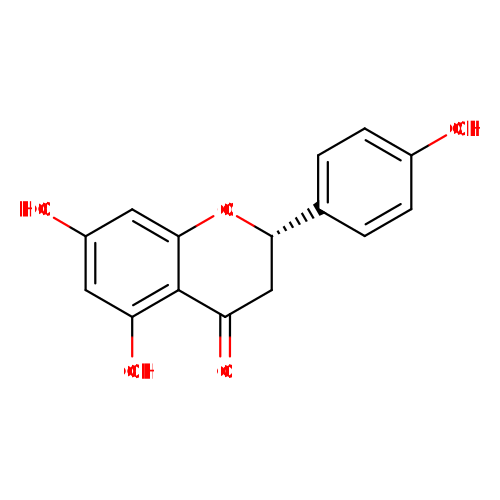
| Description | Naringenin is a flavorless, colorless flavanone, a type of flavonoid. It is the predominant flavanone in grapefruit, and is found in a variety of fruits and herbs. Naringenin has the skeleton structure of a flavanone with three hydroxy groups at the 4', 5, and 7 carbons. It may be found both in the aglycol form, naringenin, or in its glycosidic form, naringin, which has the addition of the disaccharide neohesperidose attached via a glycosidic linkage at carbon 7. Naringenin (not to be confused with naringin) is a flavanone that is considered to have a bioactive effect on human health as antioxidant, free radical scavenger, antiinflammatory, carbohydrate metabolism promoter, immunity system modulater. This substance has also been shown to repair DNA. Scientists exposed cells to 80 micomoles of naringenin per liter, for 24 hours, and found that the amount of hydroxyl damage to the DNA was reduced by 24 percent in that very short period of time. Unfortunately, this bioflavonoid is difficult to absorb on oral ingestion. Only 15% of ingested naringenin will get absorbed, in the human gastrointestinal tract, in the best case scenario. A full glass of orange juice will supply about enough naringenin to achieve a concentration of about 0.5 micromoles per liter. Naringenin is a biomarker for the consumption of citrus fruits. |
|---|
| Structure | OC1=CC=C(C=C1)[C@@H]1CC(=O)C2=C(O)C=C(O)C=C2O1 InChI=1S/C15H12O5/c16-9-3-1-8(2-4-9)13-7-12(19)15-11(18)5-10(17)6-14(15)20-13/h1-6,13,16-18H,7H2/t13-/m0/s1 |
|---|
| Synonyms | | Value | Source |
|---|
| (-)-(2S)-Naringenin | ChEBI | | (2S)-Naringenin | ChEBI | | (S)-2,3-Dihydo-5,7-dihydroxy-2-(4-hydroxyphenyl)-4H-1-benzopyran-4-one | ChEBI | | 4',5,7-Trihydroxyflavanone | ChEBI | | Naringetol | ChEBI | | Pelargidanon | ChEBI | | Salipurpol | ChEBI | | (-)-Naringenin | HMDB | | Asahina | HMDB | | Naringenine | HMDB | | Salipurol | HMDB | | (2S)-2,3-Dihydro-5,7-dihydroxy-2-(4-hydroxyphenyl)-4H-1-benzopyran-4-one | PhytoBank | | (2S)-4',5,7-Trihydroxyflavanone | PhytoBank | | (2S)-4’,5,7-Trihydroxyflavanone | PhytoBank | | (S)-Naringenin | PhytoBank | | S-Dihydrogenistein | PhytoBank | | 5,7,4'-Trihydroxyflavanone | PhytoBank | | 5,7,4’-Trihydroxyflavanone | PhytoBank |
|
|---|
| Chemical Formula | C15H12O5 |
|---|
| Average Molecular Weight | 272.2528 |
|---|
| Monoisotopic Molecular Weight | 272.068473494 |
|---|
| IUPAC Name | (2S)-5,7-dihydroxy-2-(4-hydroxyphenyl)-3,4-dihydro-2H-1-benzopyran-4-one |
|---|
| Traditional Name | naringenin |
|---|
| CAS Registry Number | 480-41-1 |
|---|
| SMILES | OC1=CC=C(C=C1)[C@@H]1CC(=O)C2=C(O1)C=C(O)C=C2O |
|---|
| InChI Identifier | InChI=1S/C15H12O5/c16-9-3-1-8(2-4-9)13-7-12(19)15-11(18)5-10(17)6-14(15)20-13/h1-6,13,16-18H,7H2/t13-/m0/s1 |
|---|
| InChI Key | FTVWIRXFELQLPI-ZDUSSCGKSA-N |
|---|
| Chemical Taxonomy |
|---|
| Description | Belongs to the class of organic compounds known as flavanones. Flavanones are compounds containing a flavan-3-one moiety, with a structure characterized by a 2-phenyl-3,4-dihydro-2H-1-benzopyran bearing a ketone at the carbon C3. |
|---|
| Kingdom | Organic compounds |
|---|
| Super Class | Phenylpropanoids and polyketides |
|---|
| Class | Flavonoids |
|---|
| Sub Class | Flavans |
|---|
| Direct Parent | Flavanones |
|---|
| Alternative Parents | |
|---|
| Substituents | - Flavanone
- Hydroxyflavonoid
- 4'-hydroxyflavonoid
- 5-hydroxyflavonoid
- 7-hydroxyflavonoid
- Chromone
- Benzopyran
- Chromane
- 1-benzopyran
- Aryl alkyl ketone
- Aryl ketone
- 1-hydroxy-4-unsubstituted benzenoid
- Phenol
- Alkyl aryl ether
- 1-hydroxy-2-unsubstituted benzenoid
- Monocyclic benzene moiety
- Benzenoid
- Vinylogous acid
- Ketone
- Organoheterocyclic compound
- Oxacycle
- Ether
- Organooxygen compound
- Organic oxygen compound
- Hydrocarbon derivative
- Organic oxide
- Aromatic heteropolycyclic compound
|
|---|
| Molecular Framework | Aromatic heteropolycyclic compounds |
|---|
| External Descriptors | |
|---|
| Ontology |
|---|
| Physiological effect | |
|---|
| Disposition | |
|---|
| Process | |
|---|
| Role | |
|---|
| Physical Properties |
|---|
| State | Solid |
|---|
| Experimental Molecular Properties | | Property | Value | Reference |
|---|
| Melting Point | 251 °C | Not Available | | Boiling Point | Not Available | Not Available | | Water Solubility | Not Available | Not Available | | LogP | 2.52 | PERRISSOUD,D & TESTA,B (1986) |
|
|---|
| Experimental Chromatographic Properties | Experimental Collision Cross Sections| Adduct Type | Data Source | CCS Value (Å2) | Reference |
|---|
| [M-H]- | Baker | 167.328 | 30932474 | | [M+H]+ | Baker | 167.965 | 30932474 |
|
|---|
| Predicted Molecular Properties | |
|---|
| Predicted Chromatographic Properties | Predicted Collision Cross SectionsPredicted Kovats Retention IndicesUnderivatizedDerivatized| Derivative Name / Structure | SMILES | Kovats RI Value | Column Type | Reference |
|---|
| Naringenin,1TMS,isomer #1 | C[Si](C)(C)OC1=CC=C([C@@H]2CC(=O)C3=C(O)C=C(O)C=C3O2)C=C1 | 2812.2 | Semi standard non polar | 33892256 | | Naringenin,1TMS,isomer #2 | C[Si](C)(C)OC1=CC(O)=C2C(=O)C[C@@H](C3=CC=C(O)C=C3)OC2=C1 | 2777.2 | Semi standard non polar | 33892256 | | Naringenin,1TMS,isomer #3 | C[Si](C)(C)OC1=CC(O)=CC2=C1C(=O)C[C@@H](C1=CC=C(O)C=C1)O2 | 2792.7 | Semi standard non polar | 33892256 | | Naringenin,2TMS,isomer #1 | C[Si](C)(C)OC1=CC=C([C@@H]2CC(=O)C3=C(C=C(O)C=C3O[Si](C)(C)C)O2)C=C1 | 2786.0 | Semi standard non polar | 33892256 | | Naringenin,2TMS,isomer #2 | C[Si](C)(C)OC1=CC=C([C@@H]2CC(=O)C3=C(O)C=C(O[Si](C)(C)C)C=C3O2)C=C1 | 2847.9 | Semi standard non polar | 33892256 | | Naringenin,2TMS,isomer #3 | C[Si](C)(C)OC1=CC2=C(C(=O)C[C@@H](C3=CC=C(O)C=C3)O2)C(O[Si](C)(C)C)=C1 | 2746.9 | Semi standard non polar | 33892256 | | Naringenin,3TMS,isomer #1 | C[Si](C)(C)OC1=CC=C([C@@H]2CC(=O)C3=C(C=C(O[Si](C)(C)C)C=C3O[Si](C)(C)C)O2)C=C1 | 2821.6 | Semi standard non polar | 33892256 | | Naringenin,1TBDMS,isomer #1 | CC(C)(C)[Si](C)(C)OC1=CC=C([C@@H]2CC(=O)C3=C(O)C=C(O)C=C3O2)C=C1 | 3094.8 | Semi standard non polar | 33892256 | | Naringenin,1TBDMS,isomer #2 | CC(C)(C)[Si](C)(C)OC1=CC(O)=C2C(=O)C[C@@H](C3=CC=C(O)C=C3)OC2=C1 | 3057.8 | Semi standard non polar | 33892256 | | Naringenin,1TBDMS,isomer #3 | CC(C)(C)[Si](C)(C)OC1=CC(O)=CC2=C1C(=O)C[C@@H](C1=CC=C(O)C=C1)O2 | 3052.9 | Semi standard non polar | 33892256 | | Naringenin,2TBDMS,isomer #1 | CC(C)(C)[Si](C)(C)OC1=CC=C([C@@H]2CC(=O)C3=C(C=C(O)C=C3O[Si](C)(C)C(C)(C)C)O2)C=C1 | 3298.3 | Semi standard non polar | 33892256 | | Naringenin,2TBDMS,isomer #2 | CC(C)(C)[Si](C)(C)OC1=CC=C([C@@H]2CC(=O)C3=C(O)C=C(O[Si](C)(C)C(C)(C)C)C=C3O2)C=C1 | 3330.6 | Semi standard non polar | 33892256 | | Naringenin,2TBDMS,isomer #3 | CC(C)(C)[Si](C)(C)OC1=CC2=C(C(=O)C[C@@H](C3=CC=C(O)C=C3)O2)C(O[Si](C)(C)C(C)(C)C)=C1 | 3268.5 | Semi standard non polar | 33892256 | | Naringenin,3TBDMS,isomer #1 | CC(C)(C)[Si](C)(C)OC1=CC=C([C@@H]2CC(=O)C3=C(C=C(O[Si](C)(C)C(C)(C)C)C=C3O[Si](C)(C)C(C)(C)C)O2)C=C1 | 3502.9 | Semi standard non polar | 33892256 |
|
|---|
| GC-MS Spectra| Spectrum Type | Description | Splash Key | Deposition Date | Source | View |
|---|
| Experimental GC-MS | GC-MS Spectrum - Naringenin GC-EI-TOF (Pegasus III TOF-MS system, Leco; GC 6890, Agilent Technologies) (Non-derivatized) | splash10-00fs-1951400000-0e93ea96a72cb2a5a868 | 2014-06-16 | HMDB team, MONA, MassBank | View Spectrum | | Experimental GC-MS | GC-MS Spectrum - Naringenin GC-EI-TOF (Pegasus III TOF-MS system, Leco; GC 6890, Agilent Technologies) (Non-derivatized) | splash10-0a4r-2961300000-725a9d843a4286e86b06 | 2014-06-16 | HMDB team, MONA, MassBank | View Spectrum | | Experimental GC-MS | GC-MS Spectrum - Naringenin GC-EI-TOF (Non-derivatized) | splash10-00fs-1951400000-0e93ea96a72cb2a5a868 | 2017-09-12 | HMDB team, MONA, MassBank | View Spectrum | | Experimental GC-MS | GC-MS Spectrum - Naringenin GC-EI-TOF (Non-derivatized) | splash10-0a4r-2961300000-725a9d843a4286e86b06 | 2017-09-12 | HMDB team, MONA, MassBank | View Spectrum | | Experimental GC-MS | GC-MS Spectrum - Naringenin GC-EI-TOF (Non-derivatized) | splash10-00fs-1951400000-44c9c035aeffcacf4e8c | 2017-09-12 | HMDB team, MONA, MassBank | View Spectrum | | Experimental GC-MS | GC-MS Spectrum - Naringenin GC-EI-TOF (Non-derivatized) | splash10-004l-1931100000-ec4d00bbd2895d4d5f9c | 2017-09-12 | HMDB team, MONA, MassBank | View Spectrum | | Experimental GC-MS | GC-MS Spectrum - Naringenin GC-EI-TOF (Non-derivatized) | splash10-0a4r-2961300000-6cd5d798a9dad326f771 | 2017-09-12 | HMDB team, MONA, MassBank | View Spectrum | | Predicted GC-MS | Predicted GC-MS Spectrum - Naringenin GC-MS (Non-derivatized) - 70eV, Positive | splash10-006x-1290000000-3182db290eb43c661919 | 2017-08-28 | Wishart Lab | View Spectrum | | Predicted GC-MS | Predicted GC-MS Spectrum - Naringenin GC-MS (3 TMS) - 70eV, Positive | splash10-01b9-2531900000-0583af94457df8aad759 | 2017-10-06 | Wishart Lab | View Spectrum | | Predicted GC-MS | Predicted GC-MS Spectrum - Naringenin GC-MS (Non-derivatized) - 70eV, Positive | Not Available | 2021-10-12 | Wishart Lab | View Spectrum | | Predicted GC-MS | Predicted GC-MS Spectrum - Naringenin GC-MS (Non-derivatized) - 70eV, Positive | Not Available | 2021-10-12 | Wishart Lab | View Spectrum |
MS/MS Spectra| Spectrum Type | Description | Splash Key | Deposition Date | Source | View |
|---|
| Experimental LC-MS/MS | LC-MS/MS Spectrum - Naringenin Quattro_QQQ 10V, Negative-QTOF (Annotated) | splash10-00di-0190000000-ba73aef4d7cf20a2777d | 2012-07-25 | HMDB team, MONA | View Spectrum | | Experimental LC-MS/MS | LC-MS/MS Spectrum - Naringenin Quattro_QQQ 25V, Negative-QTOF (Annotated) | splash10-066r-3900000000-98ba56d82461a2dc7f6f | 2012-07-25 | HMDB team, MONA | View Spectrum | | Experimental LC-MS/MS | LC-MS/MS Spectrum - Naringenin Quattro_QQQ 40V, Negative-QTOF (Annotated) | splash10-02t9-9600000000-005d5eb55c1f6f3b893d | 2012-07-25 | HMDB team, MONA | View Spectrum | | Experimental LC-MS/MS | LC-MS/MS Spectrum - Naringenin LC-ESI-QTOF (UPLC Q-Tof Premier, Waters) 5V, Positive-QTOF | splash10-00di-0090000000-87dba9fe511299bf27e8 | 2012-08-31 | HMDB team, MONA | View Spectrum | | Experimental LC-MS/MS | LC-MS/MS Spectrum - Naringenin LC-ESI-QTOF (UPLC Q-Tof Premier, Waters) 5V, Positive-QTOF | splash10-00di-0090000000-52282430f89f3cfd51ff | 2012-08-31 | HMDB team, MONA | View Spectrum | | Experimental LC-MS/MS | LC-MS/MS Spectrum - Naringenin LC-ESI-QTOF (UPLC Q-Tof Premier, Waters) , Negative-QTOF | splash10-0g4i-1960000000-74e384d175dd4f05938c | 2012-08-31 | HMDB team, MONA | View Spectrum | | Experimental LC-MS/MS | LC-MS/MS Spectrum - Naringenin LC-ESI-QTOF (UPLC Q-Tof Premier, Waters) , Negative-QTOF | splash10-014i-1900000000-702ce5f0315e56bb08a0 | 2012-08-31 | HMDB team, MONA | View Spectrum | | Experimental LC-MS/MS | LC-MS/MS Spectrum - Naringenin LC-ESI-QTOF (UPLC Q-Tof Premier, Waters) , Positive-QTOF | splash10-0udi-2900000000-aeb81b324d8162537df3 | 2012-08-31 | HMDB team, MONA | View Spectrum | | Experimental LC-MS/MS | LC-MS/MS Spectrum - Naringenin LC-ESI-QTOF (UPLC Q-Tof Premier, Waters) , Positive-QTOF | splash10-0fk9-1960000000-b4a541e5476f88624522 | 2012-08-31 | HMDB team, MONA | View Spectrum | | Experimental LC-MS/MS | LC-MS/MS Spectrum - Naringenin ESI-TOF , Negative-QTOF | splash10-000i-0090000000-cfa015b97699d9b8d3a9 | 2017-08-14 | HMDB team, MONA | View Spectrum | | Experimental LC-MS/MS | LC-MS/MS Spectrum - Naringenin ESI-TOF 25V, Negative-QTOF | splash10-0gb9-0900000000-5295f7ce31d20a80235c | 2017-08-14 | HMDB team, MONA | View Spectrum | | Experimental LC-MS/MS | LC-MS/MS Spectrum - Naringenin ESI-TOF , Negative-QTOF | splash10-0gb9-0900000000-5295f7ce31d20a80235c | 2017-08-14 | HMDB team, MONA | View Spectrum | | Experimental LC-MS/MS | LC-MS/MS Spectrum - Naringenin ESI-TOF 40V, Negative-QTOF | splash10-0gb9-0900000000-5295f7ce31d20a80235c | 2017-08-14 | HMDB team, MONA | View Spectrum | | Experimental LC-MS/MS | LC-MS/MS Spectrum - Naringenin ESI-TOF 10V, Negative-QTOF | splash10-0gb9-0900000000-5295f7ce31d20a80235c | 2017-08-14 | HMDB team, MONA | View Spectrum | | Experimental LC-MS/MS | LC-MS/MS Spectrum - Naringenin ESI-TOF 30V, Negative-QTOF | splash10-0gb9-0900000000-5295f7ce31d20a80235c | 2017-08-14 | HMDB team, MONA | View Spectrum | | Experimental LC-MS/MS | LC-MS/MS Spectrum - Naringenin ESI-TOF 20V, Negative-QTOF | splash10-0gb9-0900000000-5295f7ce31d20a80235c | 2017-08-14 | HMDB team, MONA | View Spectrum | | Experimental LC-MS/MS | LC-MS/MS Spectrum - Naringenin ESI-TOF , Negative-QTOF | splash10-00di-0090000000-dae76236c5699dabc079 | 2017-09-12 | HMDB team, MONA | View Spectrum | | Experimental LC-MS/MS | LC-MS/MS Spectrum - Naringenin ESI-TOF 25V, Negative-QTOF | splash10-0gb9-0900000000-5295f7ce31d20a80235c | 2017-09-12 | HMDB team, MONA | View Spectrum | | Experimental LC-MS/MS | LC-MS/MS Spectrum - Naringenin ESI-TOF , Negative-QTOF | splash10-00di-0090010000-5e9a02398f13b71eccfb | 2017-09-12 | HMDB team, MONA | View Spectrum | | Predicted LC-MS/MS | Predicted LC-MS/MS Spectrum - Naringenin 10V, Positive-QTOF | splash10-00di-0290000000-32844ab19a143b70951b | 2017-07-26 | Wishart Lab | View Spectrum | | Predicted LC-MS/MS | Predicted LC-MS/MS Spectrum - Naringenin 20V, Positive-QTOF | splash10-0fk9-0980000000-93073e4c39e23c3099c5 | 2017-07-26 | Wishart Lab | View Spectrum | | Predicted LC-MS/MS | Predicted LC-MS/MS Spectrum - Naringenin 40V, Positive-QTOF | splash10-0uki-4900000000-8d2daa4eb7a40b866718 | 2017-07-26 | Wishart Lab | View Spectrum | | Predicted LC-MS/MS | Predicted LC-MS/MS Spectrum - Naringenin 10V, Negative-QTOF | splash10-00di-0090000000-b29e35ecf9be0aa440c2 | 2017-07-26 | Wishart Lab | View Spectrum | | Predicted LC-MS/MS | Predicted LC-MS/MS Spectrum - Naringenin 20V, Negative-QTOF | splash10-00di-1390000000-e9112df7c7b29664a011 | 2017-07-26 | Wishart Lab | View Spectrum | | Predicted LC-MS/MS | Predicted LC-MS/MS Spectrum - Naringenin 40V, Negative-QTOF | splash10-014l-6920000000-3b7e4e282dc4008e8c8e | 2017-07-26 | Wishart Lab | View Spectrum |
NMR Spectra| Spectrum Type | Description | Deposition Date | Source | View |
|---|
| Predicted 1D NMR | 13C NMR Spectrum (1D, 100 MHz, H2O, predicted) | 2022-08-20 | Wishart Lab | View Spectrum | | Predicted 1D NMR | 1H NMR Spectrum (1D, 100 MHz, H2O, predicted) | 2022-08-20 | Wishart Lab | View Spectrum | | Predicted 1D NMR | 13C NMR Spectrum (1D, 1000 MHz, H2O, predicted) | 2022-08-20 | Wishart Lab | View Spectrum | | Predicted 1D NMR | 1H NMR Spectrum (1D, 1000 MHz, H2O, predicted) | 2022-08-20 | Wishart Lab | View Spectrum | | Predicted 1D NMR | 13C NMR Spectrum (1D, 200 MHz, H2O, predicted) | 2022-08-20 | Wishart Lab | View Spectrum | | Predicted 1D NMR | 1H NMR Spectrum (1D, 200 MHz, H2O, predicted) | 2022-08-20 | Wishart Lab | View Spectrum | | Predicted 1D NMR | 13C NMR Spectrum (1D, 300 MHz, H2O, predicted) | 2022-08-20 | Wishart Lab | View Spectrum | | Predicted 1D NMR | 1H NMR Spectrum (1D, 300 MHz, H2O, predicted) | 2022-08-20 | Wishart Lab | View Spectrum | | Predicted 1D NMR | 13C NMR Spectrum (1D, 400 MHz, H2O, predicted) | 2022-08-20 | Wishart Lab | View Spectrum | | Predicted 1D NMR | 1H NMR Spectrum (1D, 400 MHz, H2O, predicted) | 2022-08-20 | Wishart Lab | View Spectrum | | Predicted 1D NMR | 13C NMR Spectrum (1D, 500 MHz, H2O, predicted) | 2022-08-20 | Wishart Lab | View Spectrum | | Predicted 1D NMR | 1H NMR Spectrum (1D, 500 MHz, H2O, predicted) | 2022-08-20 | Wishart Lab | View Spectrum | | Predicted 1D NMR | 13C NMR Spectrum (1D, 600 MHz, H2O, predicted) | 2022-08-20 | Wishart Lab | View Spectrum | | Predicted 1D NMR | 1H NMR Spectrum (1D, 600 MHz, H2O, predicted) | 2022-08-20 | Wishart Lab | View Spectrum | | Predicted 1D NMR | 13C NMR Spectrum (1D, 700 MHz, H2O, predicted) | 2022-08-20 | Wishart Lab | View Spectrum | | Predicted 1D NMR | 1H NMR Spectrum (1D, 700 MHz, H2O, predicted) | 2022-08-20 | Wishart Lab | View Spectrum | | Predicted 1D NMR | 13C NMR Spectrum (1D, 800 MHz, H2O, predicted) | 2022-08-20 | Wishart Lab | View Spectrum | | Predicted 1D NMR | 1H NMR Spectrum (1D, 800 MHz, H2O, predicted) | 2022-08-20 | Wishart Lab | View Spectrum | | Predicted 1D NMR | 13C NMR Spectrum (1D, 900 MHz, H2O, predicted) | 2022-08-20 | Wishart Lab | View Spectrum | | Predicted 1D NMR | 1H NMR Spectrum (1D, 900 MHz, H2O, predicted) | 2022-08-20 | Wishart Lab | View Spectrum | | Experimental 2D NMR | [1H, 13C]-HSQC NMR Spectrum (2D, 600 MHz, CD3OD, experimental) | 2012-12-05 | Wishart Lab | View Spectrum |
|
|---|
| General References | - Miniscalco A, Lundahl J, Regardh CG, Edgar B, Eriksson UG: Inhibition of dihydropyridine metabolism in rat and human liver microsomes by flavonoids found in grapefruit juice. J Pharmacol Exp Ther. 1992 Jun;261(3):1195-9. [PubMed:1602384 ]
- Walker D, Flinois JP, Monkman SC, Beloc C, Boddy AV, Cholerton S, Daly AK, Lind MJ, Pearson AD, Beaune PH, et al.: Identification of the major human hepatic cytochrome P450 involved in activation and N-dechloroethylation of ifosfamide. Biochem Pharmacol. 1994 Mar 29;47(7):1157-63. [PubMed:8161344 ]
- Ameer B, Weintraub RA, Johnson JV, Yost RA, Rouseff RL: Flavanone absorption after naringin, hesperidin, and citrus administration. Clin Pharmacol Ther. 1996 Jul;60(1):34-40. [PubMed:8689809 ]
- Kanaze FI, Kokkalou E, Georgarakis M, Niopas I: Validated high-performance liquid chromatographic method utilizing solid-phase extraction for the simultaneous determination of naringenin and hesperetin in human plasma. J Chromatogr B Analyt Technol Biomed Life Sci. 2004 Mar 5;801(2):363-7. [PubMed:14751808 ]
- Guengerich FP, Kim DH: In vitro inhibition of dihydropyridine oxidation and aflatoxin B1 activation in human liver microsomes by naringenin and other flavonoids. Carcinogenesis. 1990 Dec;11(12):2275-9. [PubMed:2265479 ]
- Ishii K, Furuta T, Kasuya Y: Determination of naringin and naringenin in human plasma by high-performance liquid chromatography. J Chromatogr B Biomed Appl. 1996 Aug 30;683(2):225-9. [PubMed:8891919 ]
- Matsuo M, Sasaki N, Saga K, Kaneko T: Cytotoxicity of flavonoids toward cultured normal human cells. Biol Pharm Bull. 2005 Feb;28(2):253-9. [PubMed:15684479 ]
- Franke AA, Cooney RV, Henning SM, Custer LJ: Bioavailability and antioxidant effects of orange juice components in humans. J Agric Food Chem. 2005 Jun 29;53(13):5170-8. [PubMed:15969493 ]
- Fuhr U, Kummert AL: The fate of naringin in humans: a key to grapefruit juice-drug interactions? Clin Pharmacol Ther. 1995 Oct;58(4):365-73. [PubMed:7586927 ]
- Lin YT, Hsiu SL, Hou YC, Chen HY, Chao PD: Degradation of flavonoid aglycones by rabbit, rat and human fecal flora. Biol Pharm Bull. 2003 May;26(5):747-51. [PubMed:12736527 ]
- Malaveille C, Hautefeuille A, Pignatelli B, Talaska G, Vineis P, Bartsch H: Dietary phenolics as anti-mutagens and inhibitors of tobacco-related DNA adduction in the urothelium of smokers. Carcinogenesis. 1996 Oct;17(10):2193-200. [PubMed:8895488 ]
|
|---|