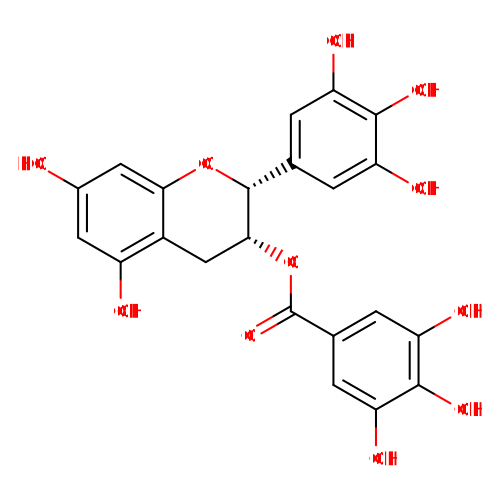
| Derivative Name / Structure | SMILES | Kovats RI Value | Column Type | Reference |
|---|
| Epigallocatechin gallate,1TMS,isomer #1 | C[Si](C)(C)OC1=CC(O)=CC2=C1C[C@@H](OC(=O)C1=CC(O)=C(O)C(O)=C1)[C@@H](C1=CC(O)=C(O)C(O)=C1)O2 | 4546.7 | Semi standard non polar | 33892256 |
| Epigallocatechin gallate,1TMS,isomer #2 | C[Si](C)(C)OC1=CC(O)=C2C[C@@H](OC(=O)C3=CC(O)=C(O)C(O)=C3)[C@@H](C3=CC(O)=C(O)C(O)=C3)OC2=C1 | 4577.8 | Semi standard non polar | 33892256 |
| Epigallocatechin gallate,1TMS,isomer #3 | C[Si](C)(C)OC1=CC([C@H]2OC3=CC(O)=CC(O)=C3C[C@H]2OC(=O)C2=CC(O)=C(O)C(O)=C2)=CC(O)=C1O | 4577.8 | Semi standard non polar | 33892256 |
| Epigallocatechin gallate,1TMS,isomer #4 | C[Si](C)(C)OC1=C(O)C=C([C@H]2OC3=CC(O)=CC(O)=C3C[C@H]2OC(=O)C2=CC(O)=C(O)C(O)=C2)C=C1O | 4565.2 | Semi standard non polar | 33892256 |
| Epigallocatechin gallate,1TMS,isomer #5 | C[Si](C)(C)OC1=CC(C(=O)O[C@@H]2CC3=C(O)C=C(O)C=C3O[C@@H]2C2=CC(O)=C(O)C(O)=C2)=CC(O)=C1O | 4589.0 | Semi standard non polar | 33892256 |
| Epigallocatechin gallate,1TMS,isomer #6 | C[Si](C)(C)OC1=C(O)C=C(C(=O)O[C@@H]2CC3=C(O)C=C(O)C=C3O[C@@H]2C2=CC(O)=C(O)C(O)=C2)C=C1O | 4565.0 | Semi standard non polar | 33892256 |
| Epigallocatechin gallate,2TMS,isomer #1 | C[Si](C)(C)OC1=CC2=C(C[C@@H](OC(=O)C3=CC(O)=C(O)C(O)=C3)[C@@H](C3=CC(O)=C(O)C(O)=C3)O2)C(O[Si](C)(C)C)=C1 | 4370.9 | Semi standard non polar | 33892256 |
| Epigallocatechin gallate,2TMS,isomer #10 | C[Si](C)(C)OC1=CC(C(=O)O[C@@H]2CC3=C(O)C=C(O)C=C3O[C@@H]2C2=CC(O)=C(O)C(O[Si](C)(C)C)=C2)=CC(O)=C1O | 4407.6 | Semi standard non polar | 33892256 |
| Epigallocatechin gallate,2TMS,isomer #11 | C[Si](C)(C)OC1=CC([C@H]2OC3=CC(O)=CC(O)=C3C[C@H]2OC(=O)C2=CC(O)=C(O[Si](C)(C)C)C(O)=C2)=CC(O)=C1O | 4405.5 | Semi standard non polar | 33892256 |
| Epigallocatechin gallate,2TMS,isomer #12 | C[Si](C)(C)OC1=CC([C@H]2OC3=CC(O)=CC(O)=C3C[C@H]2OC(=O)C2=CC(O)=C(O)C(O)=C2)=CC(O[Si](C)(C)C)=C1O | 4448.4 | Semi standard non polar | 33892256 |
| Epigallocatechin gallate,2TMS,isomer #13 | C[Si](C)(C)OC1=CC([C@H]2OC3=CC(O)=CC(O)=C3C[C@H]2OC(=O)C2=CC(O)=C(O)C(O)=C2)=CC(O)=C1O[Si](C)(C)C | 4393.9 | Semi standard non polar | 33892256 |
| Epigallocatechin gallate,2TMS,isomer #14 | C[Si](C)(C)OC1=CC(C(=O)O[C@@H]2CC3=C(O)C=C(O)C=C3O[C@@H]2C2=CC(O)=C(O[Si](C)(C)C)C(O)=C2)=CC(O)=C1O | 4429.2 | Semi standard non polar | 33892256 |
| Epigallocatechin gallate,2TMS,isomer #15 | C[Si](C)(C)OC1=C(O)C=C(C(=O)O[C@@H]2CC3=C(O)C=C(O)C=C3O[C@@H]2C2=CC(O)=C(O[Si](C)(C)C)C(O)=C2)C=C1O | 4423.6 | Semi standard non polar | 33892256 |
| Epigallocatechin gallate,2TMS,isomer #16 | C[Si](C)(C)OC1=CC(C(=O)O[C@@H]2CC3=C(O)C=C(O)C=C3O[C@@H]2C2=CC(O)=C(O)C(O)=C2)=CC(O[Si](C)(C)C)=C1O | 4471.3 | Semi standard non polar | 33892256 |
| Epigallocatechin gallate,2TMS,isomer #17 | C[Si](C)(C)OC1=CC(C(=O)O[C@@H]2CC3=C(O)C=C(O)C=C3O[C@@H]2C2=CC(O)=C(O)C(O)=C2)=CC(O)=C1O[Si](C)(C)C | 4405.8 | Semi standard non polar | 33892256 |
| Epigallocatechin gallate,2TMS,isomer #2 | C[Si](C)(C)OC1=CC(C(=O)O[C@@H]2CC3=C(C=C(O)C=C3O[Si](C)(C)C)O[C@@H]2C2=CC(O)=C(O)C(O)=C2)=CC(O)=C1O | 4402.9 | Semi standard non polar | 33892256 |
| Epigallocatechin gallate,2TMS,isomer #3 | C[Si](C)(C)OC1=CC(O)=CC2=C1C[C@@H](OC(=O)C1=CC(O)=C(O[Si](C)(C)C)C(O)=C1)[C@@H](C1=CC(O)=C(O)C(O)=C1)O2 | 4356.2 | Semi standard non polar | 33892256 |
| Epigallocatechin gallate,2TMS,isomer #4 | C[Si](C)(C)OC1=CC([C@H]2OC3=CC(O)=CC(O[Si](C)(C)C)=C3C[C@H]2OC(=O)C2=CC(O)=C(O)C(O)=C2)=CC(O)=C1O | 4385.7 | Semi standard non polar | 33892256 |
| Epigallocatechin gallate,2TMS,isomer #5 | C[Si](C)(C)OC1=CC(O)=CC2=C1C[C@@H](OC(=O)C1=CC(O)=C(O)C(O)=C1)[C@@H](C1=CC(O)=C(O[Si](C)(C)C)C(O)=C1)O2 | 4347.3 | Semi standard non polar | 33892256 |
| Epigallocatechin gallate,2TMS,isomer #6 | C[Si](C)(C)OC1=CC(O)=C2C[C@@H](OC(=O)C3=CC(O)=C(O)C(O)=C3)[C@@H](C3=CC(O)=C(O)C(O[Si](C)(C)C)=C3)OC2=C1 | 4409.2 | Semi standard non polar | 33892256 |
| Epigallocatechin gallate,2TMS,isomer #7 | C[Si](C)(C)OC1=CC(O)=C2C[C@@H](OC(=O)C3=CC(O)=C(O)C(O)=C3)[C@@H](C3=CC(O)=C(O[Si](C)(C)C)C(O)=C3)OC2=C1 | 4387.0 | Semi standard non polar | 33892256 |
| Epigallocatechin gallate,2TMS,isomer #8 | C[Si](C)(C)OC1=CC(O)=C2C[C@@H](OC(=O)C3=CC(O)=C(O)C(O[Si](C)(C)C)=C3)[C@@H](C3=CC(O)=C(O)C(O)=C3)OC2=C1 | 4428.4 | Semi standard non polar | 33892256 |
| Epigallocatechin gallate,2TMS,isomer #9 | C[Si](C)(C)OC1=CC(O)=C2C[C@@H](OC(=O)C3=CC(O)=C(O[Si](C)(C)C)C(O)=C3)[C@@H](C3=CC(O)=C(O)C(O)=C3)OC2=C1 | 4398.2 | Semi standard non polar | 33892256 |
| Epigallocatechin gallate,3TMS,isomer #1 | C[Si](C)(C)OC1=CC2=C(C[C@@H](OC(=O)C3=CC(O)=C(O)C(O[Si](C)(C)C)=C3)[C@@H](C3=CC(O)=C(O)C(O)=C3)O2)C(O[Si](C)(C)C)=C1 | 4232.9 | Semi standard non polar | 33892256 |
| Epigallocatechin gallate,3TMS,isomer #10 | C[Si](C)(C)OC1=CC(O)=CC2=C1C[C@@H](OC(=O)C1=CC(O)=C(O[Si](C)(C)C)C(O)=C1)[C@@H](C1=CC(O)=C(O[Si](C)(C)C)C(O)=C1)O2 | 4144.9 | Semi standard non polar | 33892256 |
| Epigallocatechin gallate,3TMS,isomer #11 | C[Si](C)(C)OC1=CC([C@H]2OC3=CC(O)=CC(O[Si](C)(C)C)=C3C[C@H]2OC(=O)C2=CC(O)=C(O)C(O)=C2)=CC(O[Si](C)(C)C)=C1O | 4266.9 | Semi standard non polar | 33892256 |
| Epigallocatechin gallate,3TMS,isomer #12 | C[Si](C)(C)OC1=CC(O)=CC2=C1C[C@@H](OC(=O)C1=CC(O)=C(O)C(O)=C1)[C@@H](C1=CC(O)=C(O[Si](C)(C)C)C(O[Si](C)(C)C)=C1)O2 | 4239.5 | Semi standard non polar | 33892256 |
| Epigallocatechin gallate,3TMS,isomer #13 | C[Si](C)(C)OC1=CC(O)=C2C[C@@H](OC(=O)C3=CC(O)=C(O)C(O)=C3)[C@@H](C3=CC(O[Si](C)(C)C)=C(O)C(O[Si](C)(C)C)=C3)OC2=C1 | 4290.3 | Semi standard non polar | 33892256 |
| Epigallocatechin gallate,3TMS,isomer #14 | C[Si](C)(C)OC1=CC(O)=C2C[C@@H](OC(=O)C3=CC(O)=C(O)C(O)=C3)[C@@H](C3=CC(O)=C(O[Si](C)(C)C)C(O[Si](C)(C)C)=C3)OC2=C1 | 4257.4 | Semi standard non polar | 33892256 |
| Epigallocatechin gallate,3TMS,isomer #15 | C[Si](C)(C)OC1=CC(O)=C2C[C@@H](OC(=O)C3=CC(O)=C(O)C(O[Si](C)(C)C)=C3)[C@@H](C3=CC(O)=C(O)C(O[Si](C)(C)C)=C3)OC2=C1 | 4238.8 | Semi standard non polar | 33892256 |
| Epigallocatechin gallate,3TMS,isomer #16 | C[Si](C)(C)OC1=CC(O)=C2C[C@@H](OC(=O)C3=CC(O)=C(O[Si](C)(C)C)C(O)=C3)[C@@H](C3=CC(O)=C(O)C(O[Si](C)(C)C)=C3)OC2=C1 | 4176.2 | Semi standard non polar | 33892256 |
| Epigallocatechin gallate,3TMS,isomer #17 | C[Si](C)(C)OC1=CC(O)=C2C[C@@H](OC(=O)C3=CC(O)=C(O)C(O[Si](C)(C)C)=C3)[C@@H](C3=CC(O)=C(O[Si](C)(C)C)C(O)=C3)OC2=C1 | 4182.0 | Semi standard non polar | 33892256 |
| Epigallocatechin gallate,3TMS,isomer #18 | C[Si](C)(C)OC1=CC(O)=C2C[C@@H](OC(=O)C3=CC(O)=C(O[Si](C)(C)C)C(O)=C3)[C@@H](C3=CC(O)=C(O[Si](C)(C)C)C(O)=C3)OC2=C1 | 4198.9 | Semi standard non polar | 33892256 |
| Epigallocatechin gallate,3TMS,isomer #19 | C[Si](C)(C)OC1=CC(O)=C2C[C@@H](OC(=O)C3=CC(O[Si](C)(C)C)=C(O)C(O[Si](C)(C)C)=C3)[C@@H](C3=CC(O)=C(O)C(O)=C3)OC2=C1 | 4317.1 | Semi standard non polar | 33892256 |
| Epigallocatechin gallate,3TMS,isomer #2 | C[Si](C)(C)OC1=CC2=C(C[C@@H](OC(=O)C3=CC(O)=C(O[Si](C)(C)C)C(O)=C3)[C@@H](C3=CC(O)=C(O)C(O)=C3)O2)C(O[Si](C)(C)C)=C1 | 4181.9 | Semi standard non polar | 33892256 |
| Epigallocatechin gallate,3TMS,isomer #20 | C[Si](C)(C)OC1=CC(O)=C2C[C@@H](OC(=O)C3=CC(O)=C(O[Si](C)(C)C)C(O[Si](C)(C)C)=C3)[C@@H](C3=CC(O)=C(O)C(O)=C3)OC2=C1 | 4266.4 | Semi standard non polar | 33892256 |
| Epigallocatechin gallate,3TMS,isomer #21 | C[Si](C)(C)OC1=CC(C(=O)O[C@@H]2CC3=C(O)C=C(O)C=C3O[C@@H]2C2=CC(O[Si](C)(C)C)=C(O)C(O[Si](C)(C)C)=C2)=CC(O)=C1O | 4295.5 | Semi standard non polar | 33892256 |
| Epigallocatechin gallate,3TMS,isomer #22 | C[Si](C)(C)OC1=CC(C(=O)O[C@@H]2CC3=C(O)C=C(O)C=C3O[C@@H]2C2=CC(O)=C(O[Si](C)(C)C)C(O[Si](C)(C)C)=C2)=CC(O)=C1O | 4264.6 | Semi standard non polar | 33892256 |
| Epigallocatechin gallate,3TMS,isomer #23 | C[Si](C)(C)OC1=CC([C@H]2OC3=CC(O)=CC(O)=C3C[C@H]2OC(=O)C2=CC(O[Si](C)(C)C)=C(O)C(O[Si](C)(C)C)=C2)=CC(O)=C1O | 4298.5 | Semi standard non polar | 33892256 |
| Epigallocatechin gallate,3TMS,isomer #24 | C[Si](C)(C)OC1=CC([C@H]2OC3=CC(O)=CC(O)=C3C[C@H]2OC(=O)C2=CC(O)=C(O[Si](C)(C)C)C(O[Si](C)(C)C)=C2)=CC(O)=C1O | 4252.1 | Semi standard non polar | 33892256 |
| Epigallocatechin gallate,3TMS,isomer #25 | C[Si](C)(C)OC1=CC([C@H]2OC3=CC(O)=CC(O)=C3C[C@H]2OC(=O)C2=CC(O)=C(O[Si](C)(C)C)C(O)=C2)=CC(O[Si](C)(C)C)=C1O | 4248.1 | Semi standard non polar | 33892256 |
| Epigallocatechin gallate,3TMS,isomer #26 | C[Si](C)(C)OC1=CC([C@H]2OC3=CC(O)=CC(O)=C3C[C@H]2OC(=O)C2=CC(O)=C(O[Si](C)(C)C)C(O)=C2)=CC(O)=C1O[Si](C)(C)C | 4228.9 | Semi standard non polar | 33892256 |
| Epigallocatechin gallate,3TMS,isomer #27 | C[Si](C)(C)OC1=CC([C@H]2OC3=CC(O)=CC(O)=C3C[C@H]2OC(=O)C2=CC(O)=C(O)C(O)=C2)=CC(O[Si](C)(C)C)=C1O[Si](C)(C)C | 4291.2 | Semi standard non polar | 33892256 |
| Epigallocatechin gallate,3TMS,isomer #28 | C[Si](C)(C)OC1=CC(C(=O)O[C@@H]2CC3=C(O)C=C(O)C=C3O[C@@H]2C2=CC(O)=C(O[Si](C)(C)C)C(O)=C2)=CC(O[Si](C)(C)C)=C1O | 4272.9 | Semi standard non polar | 33892256 |
| Epigallocatechin gallate,3TMS,isomer #29 | C[Si](C)(C)OC1=CC(C(=O)O[C@@H]2CC3=C(O)C=C(O)C=C3O[C@@H]2C2=CC(O)=C(O[Si](C)(C)C)C(O)=C2)=CC(O)=C1O[Si](C)(C)C | 4234.4 | Semi standard non polar | 33892256 |
| Epigallocatechin gallate,3TMS,isomer #3 | C[Si](C)(C)OC1=CC2=C(C[C@@H](OC(=O)C3=CC(O)=C(O)C(O)=C3)[C@@H](C3=CC(O)=C(O)C(O[Si](C)(C)C)=C3)O2)C(O[Si](C)(C)C)=C1 | 4212.7 | Semi standard non polar | 33892256 |
| Epigallocatechin gallate,3TMS,isomer #30 | C[Si](C)(C)OC1=CC(C(=O)O[C@@H]2CC3=C(O)C=C(O)C=C3O[C@@H]2C2=CC(O)=C(O)C(O)=C2)=CC(O[Si](C)(C)C)=C1O[Si](C)(C)C | 4288.4 | Semi standard non polar | 33892256 |
| Epigallocatechin gallate,3TMS,isomer #4 | C[Si](C)(C)OC1=CC2=C(C[C@@H](OC(=O)C3=CC(O)=C(O)C(O)=C3)[C@@H](C3=CC(O)=C(O[Si](C)(C)C)C(O)=C3)O2)C(O[Si](C)(C)C)=C1 | 4177.0 | Semi standard non polar | 33892256 |
| Epigallocatechin gallate,3TMS,isomer #5 | C[Si](C)(C)OC1=CC(C(=O)O[C@@H]2CC3=C(C=C(O)C=C3O[Si](C)(C)C)O[C@@H]2C2=CC(O)=C(O)C(O[Si](C)(C)C)=C2)=CC(O)=C1O | 4231.4 | Semi standard non polar | 33892256 |
| Epigallocatechin gallate,3TMS,isomer #6 | C[Si](C)(C)OC1=CC(C(=O)O[C@@H]2CC3=C(C=C(O)C=C3O[Si](C)(C)C)O[C@@H]2C2=CC(O)=C(O[Si](C)(C)C)C(O)=C2)=CC(O)=C1O | 4187.6 | Semi standard non polar | 33892256 |
| Epigallocatechin gallate,3TMS,isomer #7 | C[Si](C)(C)OC1=CC(C(=O)O[C@@H]2CC3=C(C=C(O)C=C3O[Si](C)(C)C)O[C@@H]2C2=CC(O)=C(O)C(O)=C2)=CC(O[Si](C)(C)C)=C1O | 4291.3 | Semi standard non polar | 33892256 |
| Epigallocatechin gallate,3TMS,isomer #8 | C[Si](C)(C)OC1=CC(O)=CC2=C1C[C@@H](OC(=O)C1=CC(O)=C(O[Si](C)(C)C)C(O[Si](C)(C)C)=C1)[C@@H](C1=CC(O)=C(O)C(O)=C1)O2 | 4243.4 | Semi standard non polar | 33892256 |
| Epigallocatechin gallate,3TMS,isomer #9 | C[Si](C)(C)OC1=CC([C@H]2OC3=CC(O)=CC(O[Si](C)(C)C)=C3C[C@H]2OC(=O)C2=CC(O)=C(O[Si](C)(C)C)C(O)=C2)=CC(O)=C1O | 4176.8 | Semi standard non polar | 33892256 |
| Epigallocatechin gallate,4TMS,isomer #1 | C[Si](C)(C)OC1=CC2=C(C[C@@H](OC(=O)C3=CC(O[Si](C)(C)C)=C(O)C(O[Si](C)(C)C)=C3)[C@@H](C3=CC(O)=C(O)C(O)=C3)O2)C(O[Si](C)(C)C)=C1 | 4128.7 | Semi standard non polar | 33892256 |
| Epigallocatechin gallate,4TMS,isomer #10 | C[Si](C)(C)OC1=CC(C(=O)O[C@@H]2CC3=C(C=C(O)C=C3O[Si](C)(C)C)O[C@@H]2C2=CC(O)=C(O[Si](C)(C)C)C(O[Si](C)(C)C)=C2)=CC(O)=C1O | 4070.2 | Semi standard non polar | 33892256 |
| Epigallocatechin gallate,4TMS,isomer #11 | C[Si](C)(C)OC1=CC([C@H]2OC3=CC(O)=CC(O[Si](C)(C)C)=C3C[C@H]2OC(=O)C2=CC(O[Si](C)(C)C)=C(O)C(O[Si](C)(C)C)=C2)=CC(O)=C1O | 4086.8 | Semi standard non polar | 33892256 |
| Epigallocatechin gallate,4TMS,isomer #12 | C[Si](C)(C)OC1=CC([C@H]2OC3=CC(O)=CC(O[Si](C)(C)C)=C3C[C@H]2OC(=O)C2=CC(O)=C(O[Si](C)(C)C)C(O[Si](C)(C)C)=C2)=CC(O)=C1O | 4053.3 | Semi standard non polar | 33892256 |
| Epigallocatechin gallate,4TMS,isomer #13 | C[Si](C)(C)OC1=CC(C(=O)O[C@@H]2CC3=C(C=C(O)C=C3O[Si](C)(C)C)O[C@@H]2C2=CC(O)=C(O[Si](C)(C)C)C(O)=C2)=CC(O[Si](C)(C)C)=C1O | 4047.6 | Semi standard non polar | 33892256 |
| Epigallocatechin gallate,4TMS,isomer #14 | C[Si](C)(C)OC1=CC(O)=CC2=C1C[C@@H](OC(=O)C1=CC(O)=C(O[Si](C)(C)C)C(O[Si](C)(C)C)=C1)[C@@H](C1=CC(O)=C(O[Si](C)(C)C)C(O)=C1)O2 | 4021.0 | Semi standard non polar | 33892256 |
| Epigallocatechin gallate,4TMS,isomer #15 | C[Si](C)(C)OC1=CC(O)=CC2=C1C[C@@H](OC(=O)C1=CC(O[Si](C)(C)C)=C(O[Si](C)(C)C)C(O[Si](C)(C)C)=C1)[C@@H](C1=CC(O)=C(O)C(O)=C1)O2 | 4185.3 | Semi standard non polar | 33892256 |
| Epigallocatechin gallate,4TMS,isomer #16 | C[Si](C)(C)OC1=CC([C@H]2OC3=CC(O)=CC(O[Si](C)(C)C)=C3C[C@H]2OC(=O)C2=CC(O)=C(O[Si](C)(C)C)C(O)=C2)=CC(O[Si](C)(C)C)=C1O | 4034.2 | Semi standard non polar | 33892256 |
| Epigallocatechin gallate,4TMS,isomer #17 | C[Si](C)(C)OC1=CC(O)=CC2=C1C[C@@H](OC(=O)C1=CC(O)=C(O[Si](C)(C)C)C(O)=C1)[C@@H](C1=CC(O)=C(O[Si](C)(C)C)C(O[Si](C)(C)C)=C1)O2 | 4019.8 | Semi standard non polar | 33892256 |
| Epigallocatechin gallate,4TMS,isomer #18 | C[Si](C)(C)OC1=CC(O)=CC2=C1C[C@@H](OC(=O)C1=CC(O)=C(O)C(O)=C1)[C@@H](C1=CC(O[Si](C)(C)C)=C(O[Si](C)(C)C)C(O[Si](C)(C)C)=C1)O2 | 4188.8 | Semi standard non polar | 33892256 |
| Epigallocatechin gallate,4TMS,isomer #19 | C[Si](C)(C)OC1=CC(O)=C2C[C@@H](OC(=O)C3=CC(O)=C(O)C(O)=C3)[C@@H](C3=CC(O[Si](C)(C)C)=C(O[Si](C)(C)C)C(O[Si](C)(C)C)=C3)OC2=C1 | 4204.9 | Semi standard non polar | 33892256 |
| Epigallocatechin gallate,4TMS,isomer #2 | C[Si](C)(C)OC1=CC2=C(C[C@@H](OC(=O)C3=CC(O)=C(O[Si](C)(C)C)C(O[Si](C)(C)C)=C3)[C@@H](C3=CC(O)=C(O)C(O)=C3)O2)C(O[Si](C)(C)C)=C1 | 4097.7 | Semi standard non polar | 33892256 |
| Epigallocatechin gallate,4TMS,isomer #20 | C[Si](C)(C)OC1=CC(O)=C2C[C@@H](OC(=O)C3=CC(O)=C(O)C(O[Si](C)(C)C)=C3)[C@@H](C3=CC(O[Si](C)(C)C)=C(O)C(O[Si](C)(C)C)=C3)OC2=C1 | 4072.9 | Semi standard non polar | 33892256 |
| Epigallocatechin gallate,4TMS,isomer #21 | C[Si](C)(C)OC1=CC(O)=C2C[C@@H](OC(=O)C3=CC(O)=C(O[Si](C)(C)C)C(O)=C3)[C@@H](C3=CC(O[Si](C)(C)C)=C(O)C(O[Si](C)(C)C)=C3)OC2=C1 | 4076.5 | Semi standard non polar | 33892256 |
| Epigallocatechin gallate,4TMS,isomer #22 | C[Si](C)(C)OC1=CC(O)=C2C[C@@H](OC(=O)C3=CC(O)=C(O)C(O[Si](C)(C)C)=C3)[C@@H](C3=CC(O)=C(O[Si](C)(C)C)C(O[Si](C)(C)C)=C3)OC2=C1 | 4065.9 | Semi standard non polar | 33892256 |
| Epigallocatechin gallate,4TMS,isomer #23 | C[Si](C)(C)OC1=CC(O)=C2C[C@@H](OC(=O)C3=CC(O)=C(O[Si](C)(C)C)C(O)=C3)[C@@H](C3=CC(O)=C(O[Si](C)(C)C)C(O[Si](C)(C)C)=C3)OC2=C1 | 4071.3 | Semi standard non polar | 33892256 |
| Epigallocatechin gallate,4TMS,isomer #24 | C[Si](C)(C)OC1=CC(O)=C2C[C@@H](OC(=O)C3=CC(O[Si](C)(C)C)=C(O)C(O[Si](C)(C)C)=C3)[C@@H](C3=CC(O)=C(O)C(O[Si](C)(C)C)=C3)OC2=C1 | 4077.3 | Semi standard non polar | 33892256 |
| Epigallocatechin gallate,4TMS,isomer #25 | C[Si](C)(C)OC1=CC(O)=C2C[C@@H](OC(=O)C3=CC(O)=C(O[Si](C)(C)C)C(O[Si](C)(C)C)=C3)[C@@H](C3=CC(O)=C(O)C(O[Si](C)(C)C)=C3)OC2=C1 | 4048.1 | Semi standard non polar | 33892256 |
| Epigallocatechin gallate,4TMS,isomer #26 | C[Si](C)(C)OC1=CC(O)=C2C[C@@H](OC(=O)C3=CC(O[Si](C)(C)C)=C(O)C(O[Si](C)(C)C)=C3)[C@@H](C3=CC(O)=C(O[Si](C)(C)C)C(O)=C3)OC2=C1 | 4090.2 | Semi standard non polar | 33892256 |
| Epigallocatechin gallate,4TMS,isomer #27 | C[Si](C)(C)OC1=CC(O)=C2C[C@@H](OC(=O)C3=CC(O)=C(O[Si](C)(C)C)C(O[Si](C)(C)C)=C3)[C@@H](C3=CC(O)=C(O[Si](C)(C)C)C(O)=C3)OC2=C1 | 4072.7 | Semi standard non polar | 33892256 |
| Epigallocatechin gallate,4TMS,isomer #28 | C[Si](C)(C)OC1=CC(O)=C2C[C@@H](OC(=O)C3=CC(O[Si](C)(C)C)=C(O[Si](C)(C)C)C(O[Si](C)(C)C)=C3)[C@@H](C3=CC(O)=C(O)C(O)=C3)OC2=C1 | 4203.2 | Semi standard non polar | 33892256 |
| Epigallocatechin gallate,4TMS,isomer #29 | C[Si](C)(C)OC1=CC(C(=O)O[C@@H]2CC3=C(O)C=C(O)C=C3O[C@@H]2C2=CC(O[Si](C)(C)C)=C(O[Si](C)(C)C)C(O[Si](C)(C)C)=C2)=CC(O)=C1O | 4188.5 | Semi standard non polar | 33892256 |
| Epigallocatechin gallate,4TMS,isomer #3 | C[Si](C)(C)OC1=CC2=C(C[C@@H](OC(=O)C3=CC(O)=C(O)C(O[Si](C)(C)C)=C3)[C@@H](C3=CC(O)=C(O)C(O[Si](C)(C)C)=C3)O2)C(O[Si](C)(C)C)=C1 | 4037.5 | Semi standard non polar | 33892256 |
| Epigallocatechin gallate,4TMS,isomer #30 | C[Si](C)(C)OC1=CC(C(=O)O[C@@H]2CC3=C(O)C=C(O)C=C3O[C@@H]2C2=CC(O[Si](C)(C)C)=C(O)C(O[Si](C)(C)C)=C2)=CC(O[Si](C)(C)C)=C1O | 4133.2 | Semi standard non polar | 33892256 |
| Epigallocatechin gallate,4TMS,isomer #31 | C[Si](C)(C)OC1=CC([C@H]2OC3=CC(O)=CC(O)=C3C[C@H]2OC(=O)C2=CC(O)=C(O[Si](C)(C)C)C(O[Si](C)(C)C)=C2)=CC(O[Si](C)(C)C)=C1O | 4102.5 | Semi standard non polar | 33892256 |
| Epigallocatechin gallate,4TMS,isomer #32 | C[Si](C)(C)OC1=CC(C(=O)O[C@@H]2CC3=C(O)C=C(O)C=C3O[C@@H]2C2=CC(O)=C(O[Si](C)(C)C)C(O[Si](C)(C)C)=C2)=CC(O[Si](C)(C)C)=C1O | 4125.6 | Semi standard non polar | 33892256 |
| Epigallocatechin gallate,4TMS,isomer #33 | C[Si](C)(C)OC1=CC(C(=O)O[C@@H]2CC3=C(O)C=C(O)C=C3O[C@@H]2C2=CC(O)=C(O[Si](C)(C)C)C(O[Si](C)(C)C)=C2)=CC(O)=C1O[Si](C)(C)C | 4092.7 | Semi standard non polar | 33892256 |
| Epigallocatechin gallate,4TMS,isomer #34 | C[Si](C)(C)OC1=CC([C@H]2OC3=CC(O)=CC(O)=C3C[C@H]2OC(=O)C2=CC(O[Si](C)(C)C)=C(O[Si](C)(C)C)C(O[Si](C)(C)C)=C2)=CC(O)=C1O | 4166.9 | Semi standard non polar | 33892256 |
| Epigallocatechin gallate,4TMS,isomer #35 | C[Si](C)(C)OC1=CC([C@H]2OC3=CC(O)=CC(O)=C3C[C@H]2OC(=O)C2=CC(O)=C(O[Si](C)(C)C)C(O)=C2)=CC(O[Si](C)(C)C)=C1O[Si](C)(C)C | 4113.0 | Semi standard non polar | 33892256 |
| Epigallocatechin gallate,4TMS,isomer #36 | C[Si](C)(C)OC1=CC(C(=O)O[C@@H]2CC3=C(O)C=C(O)C=C3O[C@@H]2C2=CC(O)=C(O[Si](C)(C)C)C(O)=C2)=CC(O[Si](C)(C)C)=C1O[Si](C)(C)C | 4109.4 | Semi standard non polar | 33892256 |
| Epigallocatechin gallate,4TMS,isomer #4 | C[Si](C)(C)OC1=CC2=C(C[C@@H](OC(=O)C3=CC(O)=C(O)C(O[Si](C)(C)C)=C3)[C@@H](C3=CC(O)=C(O[Si](C)(C)C)C(O)=C3)O2)C(O[Si](C)(C)C)=C1 | 4008.8 | Semi standard non polar | 33892256 |
| Epigallocatechin gallate,4TMS,isomer #5 | C[Si](C)(C)OC1=CC2=C(C[C@@H](OC(=O)C3=CC(O)=C(O[Si](C)(C)C)C(O)=C3)[C@@H](C3=CC(O)=C(O)C(O[Si](C)(C)C)=C3)O2)C(O[Si](C)(C)C)=C1 | 3995.2 | Semi standard non polar | 33892256 |
| Epigallocatechin gallate,4TMS,isomer #6 | C[Si](C)(C)OC1=CC2=C(C[C@@H](OC(=O)C3=CC(O)=C(O[Si](C)(C)C)C(O)=C3)[C@@H](C3=CC(O)=C(O[Si](C)(C)C)C(O)=C3)O2)C(O[Si](C)(C)C)=C1 | 4097.6 | Semi standard non polar | 33892256 |
| Epigallocatechin gallate,4TMS,isomer #7 | C[Si](C)(C)OC1=CC2=C(C[C@@H](OC(=O)C3=CC(O)=C(O)C(O)=C3)[C@@H](C3=CC(O[Si](C)(C)C)=C(O)C(O[Si](C)(C)C)=C3)O2)C(O[Si](C)(C)C)=C1 | 4113.1 | Semi standard non polar | 33892256 |
| Epigallocatechin gallate,4TMS,isomer #8 | C[Si](C)(C)OC1=CC2=C(C[C@@H](OC(=O)C3=CC(O)=C(O)C(O)=C3)[C@@H](C3=CC(O)=C(O[Si](C)(C)C)C(O[Si](C)(C)C)=C3)O2)C(O[Si](C)(C)C)=C1 | 4097.5 | Semi standard non polar | 33892256 |
| Epigallocatechin gallate,4TMS,isomer #9 | C[Si](C)(C)OC1=CC(C(=O)O[C@@H]2CC3=C(C=C(O)C=C3O[Si](C)(C)C)O[C@@H]2C2=CC(O[Si](C)(C)C)=C(O)C(O[Si](C)(C)C)=C2)=CC(O)=C1O | 4073.9 | Semi standard non polar | 33892256 |
| Epigallocatechin gallate,5TMS,isomer #1 | C[Si](C)(C)OC1=CC2=C(C[C@@H](OC(=O)C3=CC(O[Si](C)(C)C)=C(O[Si](C)(C)C)C(O[Si](C)(C)C)=C3)[C@@H](C3=CC(O)=C(O)C(O)=C3)O2)C(O[Si](C)(C)C)=C1 | 4070.1 | Semi standard non polar | 33892256 |
| Epigallocatechin gallate,5TMS,isomer #10 | C[Si](C)(C)OC1=CC2=C(C[C@@H](OC(=O)C3=CC(O)=C(O)C(O)=C3)[C@@H](C3=CC(O[Si](C)(C)C)=C(O[Si](C)(C)C)C(O[Si](C)(C)C)=C3)O2)C(O[Si](C)(C)C)=C1 | 4076.7 | Semi standard non polar | 33892256 |
| Epigallocatechin gallate,5TMS,isomer #11 | C[Si](C)(C)OC1=CC(C(=O)O[C@@H]2CC3=C(C=C(O)C=C3O[Si](C)(C)C)O[C@@H]2C2=CC(O[Si](C)(C)C)=C(O[Si](C)(C)C)C(O[Si](C)(C)C)=C2)=CC(O)=C1O | 4029.2 | Semi standard non polar | 33892256 |
| Epigallocatechin gallate,5TMS,isomer #12 | C[Si](C)(C)OC1=CC(C(=O)O[C@@H]2CC3=C(C=C(O)C=C3O[Si](C)(C)C)O[C@@H]2C2=CC(O[Si](C)(C)C)=C(O)C(O[Si](C)(C)C)=C2)=CC(O[Si](C)(C)C)=C1O | 4001.1 | Semi standard non polar | 33892256 |
| Epigallocatechin gallate,5TMS,isomer #13 | C[Si](C)(C)OC1=CC([C@H]2OC3=CC(O)=CC(O[Si](C)(C)C)=C3C[C@H]2OC(=O)C2=CC(O)=C(O[Si](C)(C)C)C(O[Si](C)(C)C)=C2)=CC(O[Si](C)(C)C)=C1O | 3997.8 | Semi standard non polar | 33892256 |
| Epigallocatechin gallate,5TMS,isomer #14 | C[Si](C)(C)OC1=CC(C(=O)O[C@@H]2CC3=C(C=C(O)C=C3O[Si](C)(C)C)O[C@@H]2C2=CC(O)=C(O[Si](C)(C)C)C(O[Si](C)(C)C)=C2)=CC(O[Si](C)(C)C)=C1O | 4002.4 | Semi standard non polar | 33892256 |
| Epigallocatechin gallate,5TMS,isomer #15 | C[Si](C)(C)OC1=CC(O)=CC2=C1C[C@@H](OC(=O)C1=CC(O)=C(O[Si](C)(C)C)C(O[Si](C)(C)C)=C1)[C@@H](C1=CC(O)=C(O[Si](C)(C)C)C(O[Si](C)(C)C)=C1)O2 | 3989.6 | Semi standard non polar | 33892256 |
| Epigallocatechin gallate,5TMS,isomer #16 | C[Si](C)(C)OC1=CC([C@H]2OC3=CC(O)=CC(O[Si](C)(C)C)=C3C[C@H]2OC(=O)C2=CC(O[Si](C)(C)C)=C(O[Si](C)(C)C)C(O[Si](C)(C)C)=C2)=CC(O)=C1O | 4013.2 | Semi standard non polar | 33892256 |
| Epigallocatechin gallate,5TMS,isomer #17 | C[Si](C)(C)OC1=CC(O)=CC2=C1C[C@@H](OC(=O)C1=CC(O[Si](C)(C)C)=C(O[Si](C)(C)C)C(O[Si](C)(C)C)=C1)[C@@H](C1=CC(O)=C(O[Si](C)(C)C)C(O)=C1)O2 | 4008.9 | Semi standard non polar | 33892256 |
| Epigallocatechin gallate,5TMS,isomer #18 | C[Si](C)(C)OC1=CC(O)=CC2=C1C[C@@H](OC(=O)C1=CC(O)=C(O[Si](C)(C)C)C(O)=C1)[C@@H](C1=CC(O[Si](C)(C)C)=C(O[Si](C)(C)C)C(O[Si](C)(C)C)=C1)O2 | 4015.2 | Semi standard non polar | 33892256 |
| Epigallocatechin gallate,5TMS,isomer #19 | C[Si](C)(C)OC1=CC(O)=C2C[C@@H](OC(=O)C3=CC(O)=C(O)C(O[Si](C)(C)C)=C3)[C@@H](C3=CC(O[Si](C)(C)C)=C(O[Si](C)(C)C)C(O[Si](C)(C)C)=C3)OC2=C1 | 4044.2 | Semi standard non polar | 33892256 |
| Epigallocatechin gallate,5TMS,isomer #2 | C[Si](C)(C)OC1=CC2=C(C[C@@H](OC(=O)C3=CC(O[Si](C)(C)C)=C(O)C(O[Si](C)(C)C)=C3)[C@@H](C3=CC(O)=C(O)C(O[Si](C)(C)C)=C3)O2)C(O[Si](C)(C)C)=C1 | 3980.9 | Semi standard non polar | 33892256 |
| Epigallocatechin gallate,5TMS,isomer #20 | C[Si](C)(C)OC1=CC(O)=C2C[C@@H](OC(=O)C3=CC(O)=C(O[Si](C)(C)C)C(O)=C3)[C@@H](C3=CC(O[Si](C)(C)C)=C(O[Si](C)(C)C)C(O[Si](C)(C)C)=C3)OC2=C1 | 4051.1 | Semi standard non polar | 33892256 |
| Epigallocatechin gallate,5TMS,isomer #21 | C[Si](C)(C)OC1=CC(O)=C2C[C@@H](OC(=O)C3=CC(O[Si](C)(C)C)=C(O)C(O[Si](C)(C)C)=C3)[C@@H](C3=CC(O[Si](C)(C)C)=C(O)C(O[Si](C)(C)C)=C3)OC2=C1 | 4030.0 | Semi standard non polar | 33892256 |
| Epigallocatechin gallate,5TMS,isomer #22 | C[Si](C)(C)OC1=CC(O)=C2C[C@@H](OC(=O)C3=CC(O)=C(O[Si](C)(C)C)C(O[Si](C)(C)C)=C3)[C@@H](C3=CC(O[Si](C)(C)C)=C(O)C(O[Si](C)(C)C)=C3)OC2=C1 | 4029.5 | Semi standard non polar | 33892256 |
| Epigallocatechin gallate,5TMS,isomer #23 | C[Si](C)(C)OC1=CC(O)=C2C[C@@H](OC(=O)C3=CC(O[Si](C)(C)C)=C(O)C(O[Si](C)(C)C)=C3)[C@@H](C3=CC(O)=C(O[Si](C)(C)C)C(O[Si](C)(C)C)=C3)OC2=C1 | 4032.1 | Semi standard non polar | 33892256 |
| Epigallocatechin gallate,5TMS,isomer #24 | C[Si](C)(C)OC1=CC(O)=C2C[C@@H](OC(=O)C3=CC(O)=C(O[Si](C)(C)C)C(O[Si](C)(C)C)=C3)[C@@H](C3=CC(O)=C(O[Si](C)(C)C)C(O[Si](C)(C)C)=C3)OC2=C1 | 4025.3 | Semi standard non polar | 33892256 |
| Epigallocatechin gallate,5TMS,isomer #25 | C[Si](C)(C)OC1=CC(O)=C2C[C@@H](OC(=O)C3=CC(O[Si](C)(C)C)=C(O[Si](C)(C)C)C(O[Si](C)(C)C)=C3)[C@@H](C3=CC(O)=C(O)C(O[Si](C)(C)C)=C3)OC2=C1 | 4024.0 | Semi standard non polar | 33892256 |
| Epigallocatechin gallate,5TMS,isomer #26 | C[Si](C)(C)OC1=CC(O)=C2C[C@@H](OC(=O)C3=CC(O[Si](C)(C)C)=C(O[Si](C)(C)C)C(O[Si](C)(C)C)=C3)[C@@H](C3=CC(O)=C(O[Si](C)(C)C)C(O)=C3)OC2=C1 | 4042.6 | Semi standard non polar | 33892256 |
| Epigallocatechin gallate,5TMS,isomer #27 | C[Si](C)(C)OC1=CC(C(=O)O[C@@H]2CC3=C(O)C=C(O)C=C3O[C@@H]2C2=CC(O[Si](C)(C)C)=C(O[Si](C)(C)C)C(O[Si](C)(C)C)=C2)=CC(O[Si](C)(C)C)=C1O | 4068.6 | Semi standard non polar | 33892256 |
| Epigallocatechin gallate,5TMS,isomer #28 | C[Si](C)(C)OC1=CC(C(=O)O[C@@H]2CC3=C(O)C=C(O)C=C3O[C@@H]2C2=CC(O[Si](C)(C)C)=C(O[Si](C)(C)C)C(O[Si](C)(C)C)=C2)=CC(O)=C1O[Si](C)(C)C | 4049.4 | Semi standard non polar | 33892256 |
| Epigallocatechin gallate,5TMS,isomer #29 | C[Si](C)(C)OC1=CC([C@H]2OC3=CC(O)=CC(O)=C3C[C@H]2OC(=O)C2=CC(O[Si](C)(C)C)=C(O[Si](C)(C)C)C(O[Si](C)(C)C)=C2)=CC(O[Si](C)(C)C)=C1O | 4046.3 | Semi standard non polar | 33892256 |
| Epigallocatechin gallate,5TMS,isomer #3 | C[Si](C)(C)OC1=CC2=C(C[C@@H](OC(=O)C3=CC(O[Si](C)(C)C)=C(O)C(O[Si](C)(C)C)=C3)[C@@H](C3=CC(O)=C(O[Si](C)(C)C)C(O)=C3)O2)C(O[Si](C)(C)C)=C1 | 4052.5 | Semi standard non polar | 33892256 |
| Epigallocatechin gallate,5TMS,isomer #30 | C[Si](C)(C)OC1=CC([C@H]2OC3=CC(O)=CC(O)=C3C[C@H]2OC(=O)C2=CC(O[Si](C)(C)C)=C(O[Si](C)(C)C)C(O[Si](C)(C)C)=C2)=CC(O)=C1O[Si](C)(C)C | 4039.1 | Semi standard non polar | 33892256 |
| Epigallocatechin gallate,5TMS,isomer #4 | C[Si](C)(C)OC1=CC2=C(C[C@@H](OC(=O)C3=CC(O)=C(O[Si](C)(C)C)C(O[Si](C)(C)C)=C3)[C@@H](C3=CC(O)=C(O)C(O[Si](C)(C)C)=C3)O2)C(O[Si](C)(C)C)=C1 | 3980.6 | Semi standard non polar | 33892256 |
| Epigallocatechin gallate,5TMS,isomer #5 | C[Si](C)(C)OC1=CC2=C(C[C@@H](OC(=O)C3=CC(O)=C(O[Si](C)(C)C)C(O[Si](C)(C)C)=C3)[C@@H](C3=CC(O)=C(O[Si](C)(C)C)C(O)=C3)O2)C(O[Si](C)(C)C)=C1 | 4040.9 | Semi standard non polar | 33892256 |
| Epigallocatechin gallate,5TMS,isomer #6 | C[Si](C)(C)OC1=CC2=C(C[C@@H](OC(=O)C3=CC(O)=C(O)C(O[Si](C)(C)C)=C3)[C@@H](C3=CC(O[Si](C)(C)C)=C(O)C(O[Si](C)(C)C)=C3)O2)C(O[Si](C)(C)C)=C1 | 3985.6 | Semi standard non polar | 33892256 |
| Epigallocatechin gallate,5TMS,isomer #7 | C[Si](C)(C)OC1=CC2=C(C[C@@H](OC(=O)C3=CC(O)=C(O)C(O[Si](C)(C)C)=C3)[C@@H](C3=CC(O)=C(O[Si](C)(C)C)C(O[Si](C)(C)C)=C3)O2)C(O[Si](C)(C)C)=C1 | 3988.6 | Semi standard non polar | 33892256 |
| Epigallocatechin gallate,5TMS,isomer #8 | C[Si](C)(C)OC1=CC2=C(C[C@@H](OC(=O)C3=CC(O)=C(O[Si](C)(C)C)C(O)=C3)[C@@H](C3=CC(O[Si](C)(C)C)=C(O)C(O[Si](C)(C)C)=C3)O2)C(O[Si](C)(C)C)=C1 | 4047.0 | Semi standard non polar | 33892256 |
| Epigallocatechin gallate,5TMS,isomer #9 | C[Si](C)(C)OC1=CC2=C(C[C@@H](OC(=O)C3=CC(O)=C(O[Si](C)(C)C)C(O)=C3)[C@@H](C3=CC(O)=C(O[Si](C)(C)C)C(O[Si](C)(C)C)=C3)O2)C(O[Si](C)(C)C)=C1 | 4041.6 | Semi standard non polar | 33892256 |
| Epigallocatechin gallate,6TMS,isomer #1 | C[Si](C)(C)OC1=CC2=C(C[C@@H](OC(=O)C3=CC(O[Si](C)(C)C)=C(O[Si](C)(C)C)C(O[Si](C)(C)C)=C3)[C@@H](C3=CC(O)=C(O)C(O[Si](C)(C)C)=C3)O2)C(O[Si](C)(C)C)=C1 | 4008.2 | Semi standard non polar | 33892256 |
| Epigallocatechin gallate,6TMS,isomer #10 | C[Si](C)(C)OC1=CC(O)=CC2=C1C[C@@H](OC(=O)C1=CC(O)=C(O[Si](C)(C)C)C(O[Si](C)(C)C)=C1)[C@@H](C1=CC(O[Si](C)(C)C)=C(O[Si](C)(C)C)C(O[Si](C)(C)C)=C1)O2 | 4025.2 | Semi standard non polar | 33892256 |
| Epigallocatechin gallate,6TMS,isomer #11 | C[Si](C)(C)OC1=CC([C@H]2OC3=CC(O)=CC(O[Si](C)(C)C)=C3C[C@H]2OC(=O)C2=CC(O[Si](C)(C)C)=C(O[Si](C)(C)C)C(O[Si](C)(C)C)=C2)=CC(O[Si](C)(C)C)=C1O | 4025.7 | Semi standard non polar | 33892256 |
| Epigallocatechin gallate,6TMS,isomer #12 | C[Si](C)(C)OC1=CC(O)=CC2=C1C[C@@H](OC(=O)C1=CC(O[Si](C)(C)C)=C(O[Si](C)(C)C)C(O[Si](C)(C)C)=C1)[C@@H](C1=CC(O)=C(O[Si](C)(C)C)C(O[Si](C)(C)C)=C1)O2 | 4020.9 | Semi standard non polar | 33892256 |
| Epigallocatechin gallate,6TMS,isomer #13 | C[Si](C)(C)OC1=CC(O)=C2C[C@@H](OC(=O)C3=CC(O[Si](C)(C)C)=C(O)C(O[Si](C)(C)C)=C3)[C@@H](C3=CC(O[Si](C)(C)C)=C(O[Si](C)(C)C)C(O[Si](C)(C)C)=C3)OC2=C1 | 4057.2 | Semi standard non polar | 33892256 |
| Epigallocatechin gallate,6TMS,isomer #14 | C[Si](C)(C)OC1=CC(O)=C2C[C@@H](OC(=O)C3=CC(O)=C(O[Si](C)(C)C)C(O[Si](C)(C)C)=C3)[C@@H](C3=CC(O[Si](C)(C)C)=C(O[Si](C)(C)C)C(O[Si](C)(C)C)=C3)OC2=C1 | 4045.7 | Semi standard non polar | 33892256 |
| Epigallocatechin gallate,6TMS,isomer #15 | C[Si](C)(C)OC1=CC(O)=C2C[C@@H](OC(=O)C3=CC(O[Si](C)(C)C)=C(O[Si](C)(C)C)C(O[Si](C)(C)C)=C3)[C@@H](C3=CC(O[Si](C)(C)C)=C(O)C(O[Si](C)(C)C)=C3)OC2=C1 | 4041.3 | Semi standard non polar | 33892256 |
| Epigallocatechin gallate,6TMS,isomer #16 | C[Si](C)(C)OC1=CC(O)=C2C[C@@H](OC(=O)C3=CC(O[Si](C)(C)C)=C(O[Si](C)(C)C)C(O[Si](C)(C)C)=C3)[C@@H](C3=CC(O)=C(O[Si](C)(C)C)C(O[Si](C)(C)C)=C3)OC2=C1 | 4037.3 | Semi standard non polar | 33892256 |
| Epigallocatechin gallate,6TMS,isomer #17 | C[Si](C)(C)OC1=CC(C(=O)O[C@@H]2CC3=C(O)C=C(O)C=C3O[C@@H]2C2=CC(O[Si](C)(C)C)=C(O[Si](C)(C)C)C(O[Si](C)(C)C)=C2)=CC(O[Si](C)(C)C)=C1O[Si](C)(C)C | 4051.5 | Semi standard non polar | 33892256 |
| Epigallocatechin gallate,6TMS,isomer #2 | C[Si](C)(C)OC1=CC2=C(C[C@@H](OC(=O)C3=CC(O[Si](C)(C)C)=C(O[Si](C)(C)C)C(O[Si](C)(C)C)=C3)[C@@H](C3=CC(O)=C(O[Si](C)(C)C)C(O)=C3)O2)C(O[Si](C)(C)C)=C1 | 4030.1 | Semi standard non polar | 33892256 |
| Epigallocatechin gallate,6TMS,isomer #3 | C[Si](C)(C)OC1=CC2=C(C[C@@H](OC(=O)C3=CC(O[Si](C)(C)C)=C(O)C(O[Si](C)(C)C)=C3)[C@@H](C3=CC(O[Si](C)(C)C)=C(O)C(O[Si](C)(C)C)=C3)O2)C(O[Si](C)(C)C)=C1 | 4018.4 | Semi standard non polar | 33892256 |
| Epigallocatechin gallate,6TMS,isomer #4 | C[Si](C)(C)OC1=CC2=C(C[C@@H](OC(=O)C3=CC(O[Si](C)(C)C)=C(O)C(O[Si](C)(C)C)=C3)[C@@H](C3=CC(O)=C(O[Si](C)(C)C)C(O[Si](C)(C)C)=C3)O2)C(O[Si](C)(C)C)=C1 | 4022.0 | Semi standard non polar | 33892256 |
| Epigallocatechin gallate,6TMS,isomer #5 | C[Si](C)(C)OC1=CC2=C(C[C@@H](OC(=O)C3=CC(O)=C(O[Si](C)(C)C)C(O[Si](C)(C)C)=C3)[C@@H](C3=CC(O[Si](C)(C)C)=C(O)C(O[Si](C)(C)C)=C3)O2)C(O[Si](C)(C)C)=C1 | 4012.1 | Semi standard non polar | 33892256 |
| Epigallocatechin gallate,6TMS,isomer #6 | C[Si](C)(C)OC1=CC2=C(C[C@@H](OC(=O)C3=CC(O)=C(O[Si](C)(C)C)C(O[Si](C)(C)C)=C3)[C@@H](C3=CC(O)=C(O[Si](C)(C)C)C(O[Si](C)(C)C)=C3)O2)C(O[Si](C)(C)C)=C1 | 4010.3 | Semi standard non polar | 33892256 |
| Epigallocatechin gallate,6TMS,isomer #7 | C[Si](C)(C)OC1=CC2=C(C[C@@H](OC(=O)C3=CC(O)=C(O)C(O[Si](C)(C)C)=C3)[C@@H](C3=CC(O[Si](C)(C)C)=C(O[Si](C)(C)C)C(O[Si](C)(C)C)=C3)O2)C(O[Si](C)(C)C)=C1 | 4025.6 | Semi standard non polar | 33892256 |
| Epigallocatechin gallate,6TMS,isomer #8 | C[Si](C)(C)OC1=CC2=C(C[C@@H](OC(=O)C3=CC(O)=C(O[Si](C)(C)C)C(O)=C3)[C@@H](C3=CC(O[Si](C)(C)C)=C(O[Si](C)(C)C)C(O[Si](C)(C)C)=C3)O2)C(O[Si](C)(C)C)=C1 | 4039.8 | Semi standard non polar | 33892256 |
| Epigallocatechin gallate,6TMS,isomer #9 | C[Si](C)(C)OC1=CC(C(=O)O[C@@H]2CC3=C(C=C(O)C=C3O[Si](C)(C)C)O[C@@H]2C2=CC(O[Si](C)(C)C)=C(O[Si](C)(C)C)C(O[Si](C)(C)C)=C2)=CC(O[Si](C)(C)C)=C1O | 4040.9 | Semi standard non polar | 33892256 |
| Epigallocatechin gallate,1TBDMS,isomer #1 | CC(C)(C)[Si](C)(C)OC1=CC(O)=CC2=C1C[C@@H](OC(=O)C1=CC(O)=C(O)C(O)=C1)[C@@H](C1=CC(O)=C(O)C(O)=C1)O2 | 4832.0 | Semi standard non polar | 33892256 |
| Epigallocatechin gallate,1TBDMS,isomer #2 | CC(C)(C)[Si](C)(C)OC1=CC(O)=C2C[C@@H](OC(=O)C3=CC(O)=C(O)C(O)=C3)[C@@H](C3=CC(O)=C(O)C(O)=C3)OC2=C1 | 4863.5 | Semi standard non polar | 33892256 |
| Epigallocatechin gallate,1TBDMS,isomer #3 | CC(C)(C)[Si](C)(C)OC1=CC([C@H]2OC3=CC(O)=CC(O)=C3C[C@H]2OC(=O)C2=CC(O)=C(O)C(O)=C2)=CC(O)=C1O | 4888.0 | Semi standard non polar | 33892256 |
| Epigallocatechin gallate,1TBDMS,isomer #4 | CC(C)(C)[Si](C)(C)OC1=C(O)C=C([C@H]2OC3=CC(O)=CC(O)=C3C[C@H]2OC(=O)C2=CC(O)=C(O)C(O)=C2)C=C1O | 4899.9 | Semi standard non polar | 33892256 |
| Epigallocatechin gallate,1TBDMS,isomer #5 | CC(C)(C)[Si](C)(C)OC1=CC(C(=O)O[C@@H]2CC3=C(O)C=C(O)C=C3O[C@@H]2C2=CC(O)=C(O)C(O)=C2)=CC(O)=C1O | 4887.8 | Semi standard non polar | 33892256 |
| Epigallocatechin gallate,1TBDMS,isomer #6 | CC(C)(C)[Si](C)(C)OC1=C(O)C=C(C(=O)O[C@@H]2CC3=C(O)C=C(O)C=C3O[C@@H]2C2=CC(O)=C(O)C(O)=C2)C=C1O | 4903.4 | Semi standard non polar | 33892256 |
| Epigallocatechin gallate,2TBDMS,isomer #1 | CC(C)(C)[Si](C)(C)OC1=CC2=C(C[C@@H](OC(=O)C3=CC(O)=C(O)C(O)=C3)[C@@H](C3=CC(O)=C(O)C(O)=C3)O2)C(O[Si](C)(C)C(C)(C)C)=C1 | 4923.2 | Semi standard non polar | 33892256 |
| Epigallocatechin gallate,2TBDMS,isomer #10 | CC(C)(C)[Si](C)(C)OC1=CC(C(=O)O[C@@H]2CC3=C(O)C=C(O)C=C3O[C@@H]2C2=CC(O)=C(O)C(O[Si](C)(C)C(C)(C)C)=C2)=CC(O)=C1O | 5051.8 | Semi standard non polar | 33892256 |
| Epigallocatechin gallate,2TBDMS,isomer #11 | CC(C)(C)[Si](C)(C)OC1=CC([C@H]2OC3=CC(O)=CC(O)=C3C[C@H]2OC(=O)C2=CC(O)=C(O[Si](C)(C)C(C)(C)C)C(O)=C2)=CC(O)=C1O | 5053.5 | Semi standard non polar | 33892256 |
| Epigallocatechin gallate,2TBDMS,isomer #12 | CC(C)(C)[Si](C)(C)OC1=CC([C@H]2OC3=CC(O)=CC(O)=C3C[C@H]2OC(=O)C2=CC(O)=C(O)C(O)=C2)=CC(O[Si](C)(C)C(C)(C)C)=C1O | 5054.0 | Semi standard non polar | 33892256 |
| Epigallocatechin gallate,2TBDMS,isomer #13 | CC(C)(C)[Si](C)(C)OC1=CC([C@H]2OC3=CC(O)=CC(O)=C3C[C@H]2OC(=O)C2=CC(O)=C(O)C(O)=C2)=CC(O)=C1O[Si](C)(C)C(C)(C)C | 4996.1 | Semi standard non polar | 33892256 |
| Epigallocatechin gallate,2TBDMS,isomer #14 | CC(C)(C)[Si](C)(C)OC1=CC(C(=O)O[C@@H]2CC3=C(O)C=C(O)C=C3O[C@@H]2C2=CC(O)=C(O[Si](C)(C)C(C)(C)C)C(O)=C2)=CC(O)=C1O | 5055.3 | Semi standard non polar | 33892256 |
| Epigallocatechin gallate,2TBDMS,isomer #15 | CC(C)(C)[Si](C)(C)OC1=C(O)C=C(C(=O)O[C@@H]2CC3=C(O)C=C(O)C=C3O[C@@H]2C2=CC(O)=C(O[Si](C)(C)C(C)(C)C)C(O)=C2)C=C1O | 5054.6 | Semi standard non polar | 33892256 |
| Epigallocatechin gallate,2TBDMS,isomer #16 | CC(C)(C)[Si](C)(C)OC1=CC(C(=O)O[C@@H]2CC3=C(O)C=C(O)C=C3O[C@@H]2C2=CC(O)=C(O)C(O)=C2)=CC(O[Si](C)(C)C(C)(C)C)=C1O | 5070.2 | Semi standard non polar | 33892256 |
| Epigallocatechin gallate,2TBDMS,isomer #17 | CC(C)(C)[Si](C)(C)OC1=CC(C(=O)O[C@@H]2CC3=C(O)C=C(O)C=C3O[C@@H]2C2=CC(O)=C(O)C(O)=C2)=CC(O)=C1O[Si](C)(C)C(C)(C)C | 5010.4 | Semi standard non polar | 33892256 |
| Epigallocatechin gallate,2TBDMS,isomer #2 | CC(C)(C)[Si](C)(C)OC1=CC(C(=O)O[C@@H]2CC3=C(C=C(O)C=C3O[Si](C)(C)C(C)(C)C)O[C@@H]2C2=CC(O)=C(O)C(O)=C2)=CC(O)=C1O | 4974.6 | Semi standard non polar | 33892256 |
| Epigallocatechin gallate,2TBDMS,isomer #3 | CC(C)(C)[Si](C)(C)OC1=CC(O)=CC2=C1C[C@@H](OC(=O)C1=CC(O)=C(O[Si](C)(C)C(C)(C)C)C(O)=C1)[C@@H](C1=CC(O)=C(O)C(O)=C1)O2 | 4963.6 | Semi standard non polar | 33892256 |
| Epigallocatechin gallate,2TBDMS,isomer #4 | CC(C)(C)[Si](C)(C)OC1=CC([C@H]2OC3=CC(O)=CC(O[Si](C)(C)C(C)(C)C)=C3C[C@H]2OC(=O)C2=CC(O)=C(O)C(O)=C2)=CC(O)=C1O | 4965.7 | Semi standard non polar | 33892256 |
| Epigallocatechin gallate,2TBDMS,isomer #5 | CC(C)(C)[Si](C)(C)OC1=CC(O)=CC2=C1C[C@@H](OC(=O)C1=CC(O)=C(O)C(O)=C1)[C@@H](C1=CC(O)=C(O[Si](C)(C)C(C)(C)C)C(O)=C1)O2 | 4952.8 | Semi standard non polar | 33892256 |
| Epigallocatechin gallate,2TBDMS,isomer #6 | CC(C)(C)[Si](C)(C)OC1=CC(O)=C2C[C@@H](OC(=O)C3=CC(O)=C(O)C(O)=C3)[C@@H](C3=CC(O)=C(O)C(O[Si](C)(C)C(C)(C)C)=C3)OC2=C1 | 5002.3 | Semi standard non polar | 33892256 |
| Epigallocatechin gallate,2TBDMS,isomer #7 | CC(C)(C)[Si](C)(C)OC1=CC(O)=C2C[C@@H](OC(=O)C3=CC(O)=C(O)C(O)=C3)[C@@H](C3=CC(O)=C(O[Si](C)(C)C(C)(C)C)C(O)=C3)OC2=C1 | 4988.8 | Semi standard non polar | 33892256 |
| Epigallocatechin gallate,2TBDMS,isomer #8 | CC(C)(C)[Si](C)(C)OC1=CC(O)=C2C[C@@H](OC(=O)C3=CC(O)=C(O)C(O[Si](C)(C)C(C)(C)C)=C3)[C@@H](C3=CC(O)=C(O)C(O)=C3)OC2=C1 | 5014.5 | Semi standard non polar | 33892256 |
| Epigallocatechin gallate,2TBDMS,isomer #9 | CC(C)(C)[Si](C)(C)OC1=CC(O)=C2C[C@@H](OC(=O)C3=CC(O)=C(O[Si](C)(C)C(C)(C)C)C(O)=C3)[C@@H](C3=CC(O)=C(O)C(O)=C3)OC2=C1 | 4996.2 | Semi standard non polar | 33892256 |
| Epigallocatechin gallate,3TBDMS,isomer #1 | CC(C)(C)[Si](C)(C)OC1=CC2=C(C[C@@H](OC(=O)C3=CC(O)=C(O)C(O[Si](C)(C)C(C)(C)C)=C3)[C@@H](C3=CC(O)=C(O)C(O)=C3)O2)C(O[Si](C)(C)C(C)(C)C)=C1 | 4979.8 | Semi standard non polar | 33892256 |
| Epigallocatechin gallate,3TBDMS,isomer #10 | CC(C)(C)[Si](C)(C)OC1=CC(O)=CC2=C1C[C@@H](OC(=O)C1=CC(O)=C(O[Si](C)(C)C(C)(C)C)C(O)=C1)[C@@H](C1=CC(O)=C(O[Si](C)(C)C(C)(C)C)C(O)=C1)O2 | 5001.0 | Semi standard non polar | 33892256 |
| Epigallocatechin gallate,3TBDMS,isomer #11 | CC(C)(C)[Si](C)(C)OC1=CC([C@H]2OC3=CC(O)=CC(O[Si](C)(C)C(C)(C)C)=C3C[C@H]2OC(=O)C2=CC(O)=C(O)C(O)=C2)=CC(O[Si](C)(C)C(C)(C)C)=C1O | 5038.4 | Semi standard non polar | 33892256 |
| Epigallocatechin gallate,3TBDMS,isomer #12 | CC(C)(C)[Si](C)(C)OC1=CC(O)=CC2=C1C[C@@H](OC(=O)C1=CC(O)=C(O)C(O)=C1)[C@@H](C1=CC(O)=C(O[Si](C)(C)C(C)(C)C)C(O[Si](C)(C)C(C)(C)C)=C1)O2 | 4990.7 | Semi standard non polar | 33892256 |
| Epigallocatechin gallate,3TBDMS,isomer #13 | CC(C)(C)[Si](C)(C)OC1=CC(O)=C2C[C@@H](OC(=O)C3=CC(O)=C(O)C(O)=C3)[C@@H](C3=CC(O[Si](C)(C)C(C)(C)C)=C(O)C(O[Si](C)(C)C(C)(C)C)=C3)OC2=C1 | 5052.2 | Semi standard non polar | 33892256 |
| Epigallocatechin gallate,3TBDMS,isomer #14 | CC(C)(C)[Si](C)(C)OC1=CC(O)=C2C[C@@H](OC(=O)C3=CC(O)=C(O)C(O)=C3)[C@@H](C3=CC(O)=C(O[Si](C)(C)C(C)(C)C)C(O[Si](C)(C)C(C)(C)C)=C3)OC2=C1 | 5008.2 | Semi standard non polar | 33892256 |
| Epigallocatechin gallate,3TBDMS,isomer #15 | CC(C)(C)[Si](C)(C)OC1=CC(O)=C2C[C@@H](OC(=O)C3=CC(O)=C(O)C(O[Si](C)(C)C(C)(C)C)=C3)[C@@H](C3=CC(O)=C(O)C(O[Si](C)(C)C(C)(C)C)=C3)OC2=C1 | 5014.7 | Semi standard non polar | 33892256 |
| Epigallocatechin gallate,3TBDMS,isomer #16 | CC(C)(C)[Si](C)(C)OC1=CC(O)=C2C[C@@H](OC(=O)C3=CC(O)=C(O[Si](C)(C)C(C)(C)C)C(O)=C3)[C@@H](C3=CC(O)=C(O)C(O[Si](C)(C)C(C)(C)C)=C3)OC2=C1 | 4992.2 | Semi standard non polar | 33892256 |
| Epigallocatechin gallate,3TBDMS,isomer #17 | CC(C)(C)[Si](C)(C)OC1=CC(O)=C2C[C@@H](OC(=O)C3=CC(O)=C(O)C(O[Si](C)(C)C(C)(C)C)=C3)[C@@H](C3=CC(O)=C(O[Si](C)(C)C(C)(C)C)C(O)=C3)OC2=C1 | 4996.9 | Semi standard non polar | 33892256 |
| Epigallocatechin gallate,3TBDMS,isomer #18 | CC(C)(C)[Si](C)(C)OC1=CC(O)=C2C[C@@H](OC(=O)C3=CC(O)=C(O[Si](C)(C)C(C)(C)C)C(O)=C3)[C@@H](C3=CC(O)=C(O[Si](C)(C)C(C)(C)C)C(O)=C3)OC2=C1 | 5057.3 | Semi standard non polar | 33892256 |
| Epigallocatechin gallate,3TBDMS,isomer #19 | CC(C)(C)[Si](C)(C)OC1=CC(O)=C2C[C@@H](OC(=O)C3=CC(O[Si](C)(C)C(C)(C)C)=C(O)C(O[Si](C)(C)C(C)(C)C)=C3)[C@@H](C3=CC(O)=C(O)C(O)=C3)OC2=C1 | 5073.2 | Semi standard non polar | 33892256 |
| Epigallocatechin gallate,3TBDMS,isomer #2 | CC(C)(C)[Si](C)(C)OC1=CC2=C(C[C@@H](OC(=O)C3=CC(O)=C(O[Si](C)(C)C(C)(C)C)C(O)=C3)[C@@H](C3=CC(O)=C(O)C(O)=C3)O2)C(O[Si](C)(C)C(C)(C)C)=C1 | 4959.7 | Semi standard non polar | 33892256 |
| Epigallocatechin gallate,3TBDMS,isomer #20 | CC(C)(C)[Si](C)(C)OC1=CC(O)=C2C[C@@H](OC(=O)C3=CC(O)=C(O[Si](C)(C)C(C)(C)C)C(O[Si](C)(C)C(C)(C)C)=C3)[C@@H](C3=CC(O)=C(O)C(O)=C3)OC2=C1 | 5012.5 | Semi standard non polar | 33892256 |
| Epigallocatechin gallate,3TBDMS,isomer #21 | CC(C)(C)[Si](C)(C)OC1=CC(C(=O)O[C@@H]2CC3=C(O)C=C(O)C=C3O[C@@H]2C2=CC(O[Si](C)(C)C(C)(C)C)=C(O)C(O[Si](C)(C)C(C)(C)C)=C2)=CC(O)=C1O | 5080.7 | Semi standard non polar | 33892256 |
| Epigallocatechin gallate,3TBDMS,isomer #22 | CC(C)(C)[Si](C)(C)OC1=CC(C(=O)O[C@@H]2CC3=C(O)C=C(O)C=C3O[C@@H]2C2=CC(O)=C(O[Si](C)(C)C(C)(C)C)C(O[Si](C)(C)C(C)(C)C)=C2)=CC(O)=C1O | 5038.8 | Semi standard non polar | 33892256 |
| Epigallocatechin gallate,3TBDMS,isomer #23 | CC(C)(C)[Si](C)(C)OC1=CC([C@H]2OC3=CC(O)=CC(O)=C3C[C@H]2OC(=O)C2=CC(O[Si](C)(C)C(C)(C)C)=C(O)C(O[Si](C)(C)C(C)(C)C)=C2)=CC(O)=C1O | 5095.1 | Semi standard non polar | 33892256 |
| Epigallocatechin gallate,3TBDMS,isomer #24 | CC(C)(C)[Si](C)(C)OC1=CC([C@H]2OC3=CC(O)=CC(O)=C3C[C@H]2OC(=O)C2=CC(O)=C(O[Si](C)(C)C(C)(C)C)C(O[Si](C)(C)C(C)(C)C)=C2)=CC(O)=C1O | 5038.0 | Semi standard non polar | 33892256 |
| Epigallocatechin gallate,3TBDMS,isomer #25 | CC(C)(C)[Si](C)(C)OC1=CC([C@H]2OC3=CC(O)=CC(O)=C3C[C@H]2OC(=O)C2=CC(O)=C(O[Si](C)(C)C(C)(C)C)C(O)=C2)=CC(O[Si](C)(C)C(C)(C)C)=C1O | 5066.5 | Semi standard non polar | 33892256 |
| Epigallocatechin gallate,3TBDMS,isomer #26 | CC(C)(C)[Si](C)(C)OC1=CC([C@H]2OC3=CC(O)=CC(O)=C3C[C@H]2OC(=O)C2=CC(O)=C(O[Si](C)(C)C(C)(C)C)C(O)=C2)=CC(O)=C1O[Si](C)(C)C(C)(C)C | 5024.9 | Semi standard non polar | 33892256 |
| Epigallocatechin gallate,3TBDMS,isomer #27 | CC(C)(C)[Si](C)(C)OC1=CC([C@H]2OC3=CC(O)=CC(O)=C3C[C@H]2OC(=O)C2=CC(O)=C(O)C(O)=C2)=CC(O[Si](C)(C)C(C)(C)C)=C1O[Si](C)(C)C(C)(C)C | 5043.2 | Semi standard non polar | 33892256 |
| Epigallocatechin gallate,3TBDMS,isomer #28 | CC(C)(C)[Si](C)(C)OC1=CC(C(=O)O[C@@H]2CC3=C(O)C=C(O)C=C3O[C@@H]2C2=CC(O)=C(O[Si](C)(C)C(C)(C)C)C(O)=C2)=CC(O[Si](C)(C)C(C)(C)C)=C1O | 5083.9 | Semi standard non polar | 33892256 |
| Epigallocatechin gallate,3TBDMS,isomer #29 | CC(C)(C)[Si](C)(C)OC1=CC(C(=O)O[C@@H]2CC3=C(O)C=C(O)C=C3O[C@@H]2C2=CC(O)=C(O[Si](C)(C)C(C)(C)C)C(O)=C2)=CC(O)=C1O[Si](C)(C)C(C)(C)C | 5026.8 | Semi standard non polar | 33892256 |
| Epigallocatechin gallate,3TBDMS,isomer #3 | CC(C)(C)[Si](C)(C)OC1=CC2=C(C[C@@H](OC(=O)C3=CC(O)=C(O)C(O)=C3)[C@@H](C3=CC(O)=C(O)C(O[Si](C)(C)C(C)(C)C)=C3)O2)C(O[Si](C)(C)C(C)(C)C)=C1 | 4967.8 | Semi standard non polar | 33892256 |
| Epigallocatechin gallate,3TBDMS,isomer #30 | CC(C)(C)[Si](C)(C)OC1=CC(C(=O)O[C@@H]2CC3=C(O)C=C(O)C=C3O[C@@H]2C2=CC(O)=C(O)C(O)=C2)=CC(O[Si](C)(C)C(C)(C)C)=C1O[Si](C)(C)C(C)(C)C | 5050.1 | Semi standard non polar | 33892256 |
| Epigallocatechin gallate,3TBDMS,isomer #4 | CC(C)(C)[Si](C)(C)OC1=CC2=C(C[C@@H](OC(=O)C3=CC(O)=C(O)C(O)=C3)[C@@H](C3=CC(O)=C(O[Si](C)(C)C(C)(C)C)C(O)=C3)O2)C(O[Si](C)(C)C(C)(C)C)=C1 | 4960.2 | Semi standard non polar | 33892256 |
| Epigallocatechin gallate,3TBDMS,isomer #5 | CC(C)(C)[Si](C)(C)OC1=CC(C(=O)O[C@@H]2CC3=C(C=C(O)C=C3O[Si](C)(C)C(C)(C)C)O[C@@H]2C2=CC(O)=C(O)C(O[Si](C)(C)C(C)(C)C)=C2)=CC(O)=C1O | 5004.1 | Semi standard non polar | 33892256 |
| Epigallocatechin gallate,3TBDMS,isomer #6 | CC(C)(C)[Si](C)(C)OC1=CC(C(=O)O[C@@H]2CC3=C(C=C(O)C=C3O[Si](C)(C)C(C)(C)C)O[C@@H]2C2=CC(O)=C(O[Si](C)(C)C(C)(C)C)C(O)=C2)=CC(O)=C1O | 4972.6 | Semi standard non polar | 33892256 |
| Epigallocatechin gallate,3TBDMS,isomer #7 | CC(C)(C)[Si](C)(C)OC1=CC(C(=O)O[C@@H]2CC3=C(C=C(O)C=C3O[Si](C)(C)C(C)(C)C)O[C@@H]2C2=CC(O)=C(O)C(O)=C2)=CC(O[Si](C)(C)C(C)(C)C)=C1O | 5059.5 | Semi standard non polar | 33892256 |
| Epigallocatechin gallate,3TBDMS,isomer #8 | CC(C)(C)[Si](C)(C)OC1=CC(O)=CC2=C1C[C@@H](OC(=O)C1=CC(O)=C(O[Si](C)(C)C(C)(C)C)C(O[Si](C)(C)C(C)(C)C)=C1)[C@@H](C1=CC(O)=C(O)C(O)=C1)O2 | 4998.7 | Semi standard non polar | 33892256 |
| Epigallocatechin gallate,3TBDMS,isomer #9 | CC(C)(C)[Si](C)(C)OC1=CC([C@H]2OC3=CC(O)=CC(O[Si](C)(C)C(C)(C)C)=C3C[C@H]2OC(=O)C2=CC(O)=C(O[Si](C)(C)C(C)(C)C)C(O)=C2)=CC(O)=C1O | 4968.2 | Semi standard non polar | 33892256 |