| Record Information |
|---|
| Version | 5.0 |
|---|
| Status | Detected and Quantified |
|---|
| Creation Date | 2006-08-13 15:01:23 UTC |
|---|
| Update Date | 2022-03-07 02:49:20 UTC |
|---|
| HMDB ID | HMDB0004240 |
|---|
| Secondary Accession Numbers | |
|---|
| Metabolite Identification |
|---|
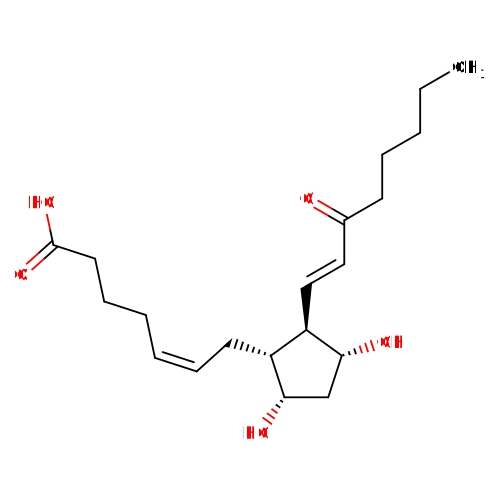
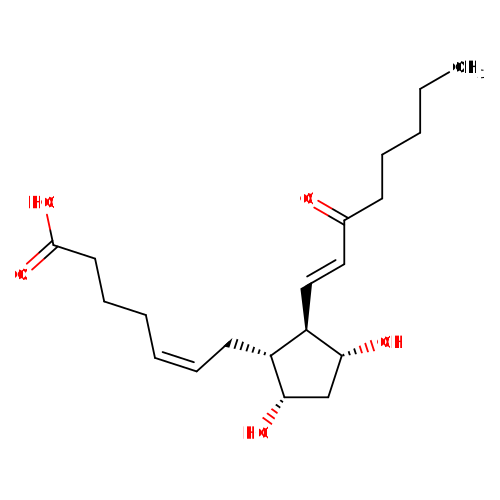
| Common Name | 15-Keto-prostaglandin F2a |
|---|
| Description | 15-Keto-prostaglandin F2a is the oxidized product of prostaglandin F2a by 15-hydroxyprostaglandin dehydrogenase, which is present in lung, kidney, placenta and other tissues and catalyzes the NAD- or NADP-dependent dehydrogenation of 15-dydroxyl group. 15-Keto-prostaglandin F2a is further metabolized by its delta13-reduction, beta-oxidation and omega oxidation. The ultimate metabolite is 5a,7a-dihydroxy-11-keto-tetranorprosta-1,16-dioic acid, and excreted in urine. Prostaglandin F2a (PGF2) is one of the earliest discovered and most common prostaglandins is actively biosynthesized in various organs of mammals and exhibits a variety of biological activities, including contraction of pulmonary arteries. PGF2 is mainly synthesized directly from PGH2 by PGH2 9,11-endoperoxide reductase. A small amount of PGF2 is also produced from PGE2 by PGE2 9-ketoreductase. A PGF2 epimer has been reported to exhibit various biological activities, and its levels are increased in bronchoalveolar lavage fluid, plasma, and urine in patients with mastocytosis and bronchial asthma. PGF2 is synthesized from PGD2 by PGD2 11-ketoreductase. (PMID: 16475787 , 184496 , 5951401 , 12432938 )Prostaglandins are eicosanoids. The eicosanoids consist of the prostaglandins (PGs), thromboxanes (TXs), leukotrienes (LTs), and lipoxins (LXs). The PGs and TXs are collectively identified as prostanoids. Prostaglandins were originally shown to be synthesized in the prostate gland, thromboxanes from platelets (thrombocytes), and leukotrienes from leukocytes, hence the derivation of their names. All mammalian cells except erythrocytes synthesize eicosanoids. These molecules are extremely potent, able to cause profound physiological effects at very dilute concentrations. All eicosanoids function locally at the site of synthesis, through receptor-mediated G-protein linked signalling pathways. |
|---|
| Structure | CCCCCC(=O)\C=C\[C@H]1[C@H](O)C[C@H](O)[C@@H]1C\C=C/CCCC(O)=O InChI=1S/C20H32O5/c1-2-3-6-9-15(21)12-13-17-16(18(22)14-19(17)23)10-7-4-5-8-11-20(24)25/h4,7,12-13,16-19,22-23H,2-3,5-6,8-11,14H2,1H3,(H,24,25)/b7-4-,13-12+/t16-,17-,18+,19-/m1/s1 |
|---|
| Synonyms | | Value | Source |
|---|
| 15-Keto-PGF2a | ChEBI | | 15-Keto-PGF2alpha | ChEBI | | 15-Keto-prostaglandin F2alpha | ChEBI | | 15-Ketoprostaglandin F2alpha | ChEBI | | 15-Keto-PGF2α | Generator | | 15-Keto-prostaglandin F2α | Generator | | 15-Ketoprostaglandin F2a | Generator | | 15-Ketoprostaglandin F2α | Generator | | 15-Keto-prostaglandin F2 alpha | HMDB | | 15-oxo PGF-2alpha | HMDB | | 15-oxo-Prostaglandin F2alpha | HMDB | | 9S,11R-Dihydroxy-15-oxo-5Z,13E-prostadienoate | HMDB | | 9S,11R-Dihydroxy-15-oxo-5Z,13E-prostadienoic acid | HMDB | | 15-Oxoprostaglandin F2a | HMDB | | 15-Oxoprostaglandin F2α | HMDB | | 15-Keto-prostaglandin F2a | ChEBI |
|
|---|
| Chemical Formula | C20H32O5 |
|---|
| Average Molecular Weight | 352.4651 |
|---|
| Monoisotopic Molecular Weight | 352.224974134 |
|---|
| IUPAC Name | (5Z)-7-[(1R,2R,3R,5S)-3,5-dihydroxy-2-[(1E)-3-oxooct-1-en-1-yl]cyclopentyl]hept-5-enoic acid |
|---|
| Traditional Name | 15-keto-prostaglandin F2 α |
|---|
| CAS Registry Number | 35850-13-6 |
|---|
| SMILES | CCCCCC(=O)\C=C\[C@H]1[C@H](O)C[C@H](O)[C@@H]1C\C=C/CCCC(O)=O |
|---|
| InChI Identifier | InChI=1S/C20H32O5/c1-2-3-6-9-15(21)12-13-17-16(18(22)14-19(17)23)10-7-4-5-8-11-20(24)25/h4,7,12-13,16-19,22-23H,2-3,5-6,8-11,14H2,1H3,(H,24,25)/b7-4-,13-12+/t16-,17-,18+,19-/m1/s1 |
|---|
| InChI Key | LOLJEILMPWPILA-AMFHKTBMSA-N |
|---|
| Chemical Taxonomy |
|---|
| Description | Belongs to the class of organic compounds known as prostaglandins and related compounds. These are unsaturated carboxylic acids consisting of a 20 carbon skeleton that also contains a five member ring, and are based upon the fatty acid arachidonic acid. |
|---|
| Kingdom | Organic compounds |
|---|
| Super Class | Lipids and lipid-like molecules |
|---|
| Class | Fatty Acyls |
|---|
| Sub Class | Eicosanoids |
|---|
| Direct Parent | Prostaglandins and related compounds |
|---|
| Alternative Parents | |
|---|
| Substituents | - Prostaglandin skeleton
- Long-chain fatty acid
- Hydroxy fatty acid
- Cyclopentanol
- Unsaturated fatty acid
- Fatty acid
- Enone
- Acryloyl-group
- Cyclic alcohol
- Alpha,beta-unsaturated ketone
- Secondary alcohol
- Ketone
- Monocarboxylic acid or derivatives
- Carboxylic acid
- Carboxylic acid derivative
- Hydrocarbon derivative
- Organooxygen compound
- Organic oxide
- Organic oxygen compound
- Carbonyl group
- Alcohol
- Aliphatic homomonocyclic compound
|
|---|
| Molecular Framework | Aliphatic homomonocyclic compounds |
|---|
| External Descriptors | |
|---|
| Ontology |
|---|
| Physiological effect | Not Available |
|---|
| Disposition | |
|---|
| Process | Not Available |
|---|
| Role | Not Available |
|---|
| Physical Properties |
|---|
| State | Solid |
|---|
| Experimental Molecular Properties | | Property | Value | Reference |
|---|
| Melting Point | Not Available | Not Available | | Boiling Point | Not Available | Not Available | | Water Solubility | Not Available | Not Available | | LogP | Not Available | Not Available |
|
|---|
| Experimental Chromatographic Properties | Not Available |
|---|
| Predicted Molecular Properties | |
|---|
| Predicted Chromatographic Properties | Predicted Collision Cross SectionsPredicted Kovats Retention IndicesUnderivatizedDerivatized| Derivative Name / Structure | SMILES | Kovats RI Value | Column Type | Reference |
|---|
| 15-Keto-prostaglandin F2a,1TMS,isomer #1 | CCCCCC(=O)/C=C/[C@H]1[C@H](O[Si](C)(C)C)C[C@H](O)[C@@H]1C/C=C\CCCC(=O)O | 2758.3 | Semi standard non polar | 33892256 | | 15-Keto-prostaglandin F2a,1TMS,isomer #2 | CCCCCC(=O)/C=C/[C@H]1[C@H](O)C[C@H](O[Si](C)(C)C)[C@@H]1C/C=C\CCCC(=O)O | 2753.6 | Semi standard non polar | 33892256 | | 15-Keto-prostaglandin F2a,1TMS,isomer #3 | CCCCCC(=O)/C=C/[C@H]1[C@H](O)C[C@H](O)[C@@H]1C/C=C\CCCC(=O)O[Si](C)(C)C | 2839.3 | Semi standard non polar | 33892256 | | 15-Keto-prostaglandin F2a,1TMS,isomer #4 | CCCCC=C(/C=C/[C@H]1[C@H](O)C[C@H](O)[C@@H]1C/C=C\CCCC(=O)O)O[Si](C)(C)C | 3159.9 | Semi standard non polar | 33892256 | | 15-Keto-prostaglandin F2a,2TMS,isomer #1 | CCCCCC(=O)/C=C/[C@H]1[C@H](O[Si](C)(C)C)C[C@H](O[Si](C)(C)C)[C@@H]1C/C=C\CCCC(=O)O | 2700.5 | Semi standard non polar | 33892256 | | 15-Keto-prostaglandin F2a,2TMS,isomer #2 | CCCCCC(=O)/C=C/[C@H]1[C@H](O[Si](C)(C)C)C[C@H](O)[C@@H]1C/C=C\CCCC(=O)O[Si](C)(C)C | 2724.7 | Semi standard non polar | 33892256 | | 15-Keto-prostaglandin F2a,2TMS,isomer #3 | CCCCC=C(/C=C/[C@H]1[C@H](O[Si](C)(C)C)C[C@H](O)[C@@H]1C/C=C\CCCC(=O)O)O[Si](C)(C)C | 3046.3 | Semi standard non polar | 33892256 | | 15-Keto-prostaglandin F2a,2TMS,isomer #4 | CCCCCC(=O)/C=C/[C@H]1[C@H](O)C[C@H](O[Si](C)(C)C)[C@@H]1C/C=C\CCCC(=O)O[Si](C)(C)C | 2726.2 | Semi standard non polar | 33892256 | | 15-Keto-prostaglandin F2a,2TMS,isomer #5 | CCCCC=C(/C=C/[C@H]1[C@H](O)C[C@H](O[Si](C)(C)C)[C@@H]1C/C=C\CCCC(=O)O)O[Si](C)(C)C | 3034.3 | Semi standard non polar | 33892256 | | 15-Keto-prostaglandin F2a,2TMS,isomer #6 | CCCCC=C(/C=C/[C@H]1[C@H](O)C[C@H](O)[C@@H]1C/C=C\CCCC(=O)O[Si](C)(C)C)O[Si](C)(C)C | 3078.6 | Semi standard non polar | 33892256 | | 15-Keto-prostaglandin F2a,3TMS,isomer #1 | CCCCCC(=O)/C=C/[C@H]1[C@H](O[Si](C)(C)C)C[C@H](O[Si](C)(C)C)[C@@H]1C/C=C\CCCC(=O)O[Si](C)(C)C | 2696.6 | Semi standard non polar | 33892256 | | 15-Keto-prostaglandin F2a,3TMS,isomer #2 | CCCCC=C(/C=C/[C@H]1[C@H](O[Si](C)(C)C)C[C@H](O[Si](C)(C)C)[C@@H]1C/C=C\CCCC(=O)O)O[Si](C)(C)C | 3006.4 | Semi standard non polar | 33892256 | | 15-Keto-prostaglandin F2a,3TMS,isomer #3 | CCCCC=C(/C=C/[C@H]1[C@H](O[Si](C)(C)C)C[C@H](O)[C@@H]1C/C=C\CCCC(=O)O[Si](C)(C)C)O[Si](C)(C)C | 2998.7 | Semi standard non polar | 33892256 | | 15-Keto-prostaglandin F2a,3TMS,isomer #4 | CCCCC=C(/C=C/[C@H]1[C@H](O)C[C@H](O[Si](C)(C)C)[C@@H]1C/C=C\CCCC(=O)O[Si](C)(C)C)O[Si](C)(C)C | 2984.9 | Semi standard non polar | 33892256 | | 15-Keto-prostaglandin F2a,4TMS,isomer #1 | CCCCC=C(/C=C/[C@H]1[C@H](O[Si](C)(C)C)C[C@H](O[Si](C)(C)C)[C@@H]1C/C=C\CCCC(=O)O[Si](C)(C)C)O[Si](C)(C)C | 2964.5 | Semi standard non polar | 33892256 | | 15-Keto-prostaglandin F2a,4TMS,isomer #1 | CCCCC=C(/C=C/[C@H]1[C@H](O[Si](C)(C)C)C[C@H](O[Si](C)(C)C)[C@@H]1C/C=C\CCCC(=O)O[Si](C)(C)C)O[Si](C)(C)C | 2751.3 | Standard non polar | 33892256 | | 15-Keto-prostaglandin F2a,4TMS,isomer #1 | CCCCC=C(/C=C/[C@H]1[C@H](O[Si](C)(C)C)C[C@H](O[Si](C)(C)C)[C@@H]1C/C=C\CCCC(=O)O[Si](C)(C)C)O[Si](C)(C)C | 2956.4 | Standard polar | 33892256 | | 15-Keto-prostaglandin F2a,1TBDMS,isomer #1 | CCCCCC(=O)/C=C/[C@H]1[C@H](O[Si](C)(C)C(C)(C)C)C[C@H](O)[C@@H]1C/C=C\CCCC(=O)O | 2984.7 | Semi standard non polar | 33892256 | | 15-Keto-prostaglandin F2a,1TBDMS,isomer #2 | CCCCCC(=O)/C=C/[C@H]1[C@H](O)C[C@H](O[Si](C)(C)C(C)(C)C)[C@@H]1C/C=C\CCCC(=O)O | 2985.2 | Semi standard non polar | 33892256 | | 15-Keto-prostaglandin F2a,1TBDMS,isomer #3 | CCCCCC(=O)/C=C/[C@H]1[C@H](O)C[C@H](O)[C@@H]1C/C=C\CCCC(=O)O[Si](C)(C)C(C)(C)C | 3113.6 | Semi standard non polar | 33892256 | | 15-Keto-prostaglandin F2a,1TBDMS,isomer #4 | CCCCC=C(/C=C/[C@H]1[C@H](O)C[C@H](O)[C@@H]1C/C=C\CCCC(=O)O)O[Si](C)(C)C(C)(C)C | 3400.4 | Semi standard non polar | 33892256 | | 15-Keto-prostaglandin F2a,2TBDMS,isomer #1 | CCCCCC(=O)/C=C/[C@H]1[C@H](O[Si](C)(C)C(C)(C)C)C[C@H](O[Si](C)(C)C(C)(C)C)[C@@H]1C/C=C\CCCC(=O)O | 3185.1 | Semi standard non polar | 33892256 | | 15-Keto-prostaglandin F2a,2TBDMS,isomer #2 | CCCCCC(=O)/C=C/[C@H]1[C@H](O[Si](C)(C)C(C)(C)C)C[C@H](O)[C@@H]1C/C=C\CCCC(=O)O[Si](C)(C)C(C)(C)C | 3225.6 | Semi standard non polar | 33892256 | | 15-Keto-prostaglandin F2a,2TBDMS,isomer #3 | CCCCC=C(/C=C/[C@H]1[C@H](O[Si](C)(C)C(C)(C)C)C[C@H](O)[C@@H]1C/C=C\CCCC(=O)O)O[Si](C)(C)C(C)(C)C | 3480.8 | Semi standard non polar | 33892256 | | 15-Keto-prostaglandin F2a,2TBDMS,isomer #4 | CCCCCC(=O)/C=C/[C@H]1[C@H](O)C[C@H](O[Si](C)(C)C(C)(C)C)[C@@H]1C/C=C\CCCC(=O)O[Si](C)(C)C(C)(C)C | 3225.2 | Semi standard non polar | 33892256 | | 15-Keto-prostaglandin F2a,2TBDMS,isomer #5 | CCCCC=C(/C=C/[C@H]1[C@H](O)C[C@H](O[Si](C)(C)C(C)(C)C)[C@@H]1C/C=C\CCCC(=O)O)O[Si](C)(C)C(C)(C)C | 3478.3 | Semi standard non polar | 33892256 | | 15-Keto-prostaglandin F2a,2TBDMS,isomer #6 | CCCCC=C(/C=C/[C@H]1[C@H](O)C[C@H](O)[C@@H]1C/C=C\CCCC(=O)O[Si](C)(C)C(C)(C)C)O[Si](C)(C)C(C)(C)C | 3568.2 | Semi standard non polar | 33892256 | | 15-Keto-prostaglandin F2a,3TBDMS,isomer #1 | CCCCCC(=O)/C=C/[C@H]1[C@H](O[Si](C)(C)C(C)(C)C)C[C@H](O[Si](C)(C)C(C)(C)C)[C@@H]1C/C=C\CCCC(=O)O[Si](C)(C)C(C)(C)C | 3401.9 | Semi standard non polar | 33892256 | | 15-Keto-prostaglandin F2a,3TBDMS,isomer #2 | CCCCC=C(/C=C/[C@H]1[C@H](O[Si](C)(C)C(C)(C)C)C[C@H](O[Si](C)(C)C(C)(C)C)[C@@H]1C/C=C\CCCC(=O)O)O[Si](C)(C)C(C)(C)C | 3647.7 | Semi standard non polar | 33892256 | | 15-Keto-prostaglandin F2a,3TBDMS,isomer #3 | CCCCC=C(/C=C/[C@H]1[C@H](O[Si](C)(C)C(C)(C)C)C[C@H](O)[C@@H]1C/C=C\CCCC(=O)O[Si](C)(C)C(C)(C)C)O[Si](C)(C)C(C)(C)C | 3701.3 | Semi standard non polar | 33892256 | | 15-Keto-prostaglandin F2a,3TBDMS,isomer #4 | CCCCC=C(/C=C/[C@H]1[C@H](O)C[C@H](O[Si](C)(C)C(C)(C)C)[C@@H]1C/C=C\CCCC(=O)O[Si](C)(C)C(C)(C)C)O[Si](C)(C)C(C)(C)C | 3690.8 | Semi standard non polar | 33892256 | | 15-Keto-prostaglandin F2a,4TBDMS,isomer #1 | CCCCC=C(/C=C/[C@H]1[C@H](O[Si](C)(C)C(C)(C)C)C[C@H](O[Si](C)(C)C(C)(C)C)[C@@H]1C/C=C\CCCC(=O)O[Si](C)(C)C(C)(C)C)O[Si](C)(C)C(C)(C)C | 3844.9 | Semi standard non polar | 33892256 | | 15-Keto-prostaglandin F2a,4TBDMS,isomer #1 | CCCCC=C(/C=C/[C@H]1[C@H](O[Si](C)(C)C(C)(C)C)C[C@H](O[Si](C)(C)C(C)(C)C)[C@@H]1C/C=C\CCCC(=O)O[Si](C)(C)C(C)(C)C)O[Si](C)(C)C(C)(C)C | 3447.5 | Standard non polar | 33892256 | | 15-Keto-prostaglandin F2a,4TBDMS,isomer #1 | CCCCC=C(/C=C/[C@H]1[C@H](O[Si](C)(C)C(C)(C)C)C[C@H](O[Si](C)(C)C(C)(C)C)[C@@H]1C/C=C\CCCC(=O)O[Si](C)(C)C(C)(C)C)O[Si](C)(C)C(C)(C)C | 3218.3 | Standard polar | 33892256 |
|
|---|
| GC-MS Spectra| Spectrum Type | Description | Splash Key | Deposition Date | Source | View |
|---|
| Experimental GC-MS | GC-MS Spectrum - 15-Keto-prostaglandin F2a GC-EI-TOF (Non-derivatized) | splash10-001r-2920000000-a626ce383bf6aa5f2615 | 2017-09-12 | HMDB team, MONA, MassBank | View Spectrum | | Experimental GC-MS | GC-MS Spectrum - 15-Keto-prostaglandin F2a GC-EI-TOF (Non-derivatized) | splash10-001r-2920000000-a626ce383bf6aa5f2615 | 2018-05-18 | HMDB team, MONA, MassBank | View Spectrum | | Predicted GC-MS | Predicted GC-MS Spectrum - 15-Keto-prostaglandin F2a GC-MS (Non-derivatized) - 70eV, Positive | splash10-0570-4498000000-cc0a6152c4c014df4b6f | 2017-09-01 | Wishart Lab | View Spectrum | | Predicted GC-MS | Predicted GC-MS Spectrum - 15-Keto-prostaglandin F2a GC-MS (3 TMS) - 70eV, Positive | splash10-0udi-6300890000-f0f8f41dcfc9d8dec0cd | 2017-10-06 | Wishart Lab | View Spectrum | | Predicted GC-MS | Predicted GC-MS Spectrum - 15-Keto-prostaglandin F2a GC-MS (Non-derivatized) - 70eV, Positive | Not Available | 2021-10-12 | Wishart Lab | View Spectrum |
MS/MS Spectra| Spectrum Type | Description | Splash Key | Deposition Date | Source | View |
|---|
| Predicted LC-MS/MS | Predicted LC-MS/MS Spectrum - 15-Keto-prostaglandin F2a 10V, Positive-QTOF | splash10-00kr-0019000000-910369cab5e253b484e6 | 2017-09-01 | Wishart Lab | View Spectrum | | Predicted LC-MS/MS | Predicted LC-MS/MS Spectrum - 15-Keto-prostaglandin F2a 20V, Positive-QTOF | splash10-00kr-2295000000-e2c04166a9405e56f2fc | 2017-09-01 | Wishart Lab | View Spectrum | | Predicted LC-MS/MS | Predicted LC-MS/MS Spectrum - 15-Keto-prostaglandin F2a 40V, Positive-QTOF | splash10-00dr-9160000000-23fb78d0cc03202e3212 | 2017-09-01 | Wishart Lab | View Spectrum | | Predicted LC-MS/MS | Predicted LC-MS/MS Spectrum - 15-Keto-prostaglandin F2a 10V, Negative-QTOF | splash10-0ue9-0009000000-e05daa9da0040142e39c | 2017-09-01 | Wishart Lab | View Spectrum | | Predicted LC-MS/MS | Predicted LC-MS/MS Spectrum - 15-Keto-prostaglandin F2a 20V, Negative-QTOF | splash10-0f8i-2069000000-8c098522c3791b504d19 | 2017-09-01 | Wishart Lab | View Spectrum | | Predicted LC-MS/MS | Predicted LC-MS/MS Spectrum - 15-Keto-prostaglandin F2a 40V, Negative-QTOF | splash10-0a4i-9441000000-d1759dfb65fcc9f9b470 | 2017-09-01 | Wishart Lab | View Spectrum | | Predicted LC-MS/MS | Predicted LC-MS/MS Spectrum - 15-Keto-prostaglandin F2a 10V, Negative-QTOF | splash10-0udi-0039000000-db45ea43b0b32962d543 | 2021-09-23 | Wishart Lab | View Spectrum | | Predicted LC-MS/MS | Predicted LC-MS/MS Spectrum - 15-Keto-prostaglandin F2a 20V, Negative-QTOF | splash10-0fri-0094000000-e560b2602cb2e45b3c66 | 2021-09-23 | Wishart Lab | View Spectrum | | Predicted LC-MS/MS | Predicted LC-MS/MS Spectrum - 15-Keto-prostaglandin F2a 40V, Negative-QTOF | splash10-052p-9151000000-c46a461dbc0a557352d5 | 2021-09-23 | Wishart Lab | View Spectrum | | Predicted LC-MS/MS | Predicted LC-MS/MS Spectrum - 15-Keto-prostaglandin F2a 10V, Positive-QTOF | splash10-014r-0019000000-e81e2e2f5abdc4bb9c39 | 2021-09-24 | Wishart Lab | View Spectrum | | Predicted LC-MS/MS | Predicted LC-MS/MS Spectrum - 15-Keto-prostaglandin F2a 20V, Positive-QTOF | splash10-014r-9356000000-a519ec47287e412b92ed | 2021-09-24 | Wishart Lab | View Spectrum | | Predicted LC-MS/MS | Predicted LC-MS/MS Spectrum - 15-Keto-prostaglandin F2a 40V, Positive-QTOF | splash10-00kf-9100000000-fb5ea9c2e3392b9c6014 | 2021-09-24 | Wishart Lab | View Spectrum |
|
|---|
| General References | - Cornette JC, Kirton KT, Schneider WP, Sun FF, Johnson RA, Nidy EG: Preparation and quantitation of urinary metabolites of prostaglandin F2alpha by radioimmunoassay. Prostaglandins. 1975 Feb;9(2):323-38. [PubMed:1135444 ]
- Satoh K, Yasumizu T, Fukuoka H, Kinoshita K, Kaneko Y, Tsuchiya M, Sakamoto S: Prostaglandin F2 alpha metabolite levels in plasma, amniotic fluid, and urine during pregnancy and labor. Am J Obstet Gynecol. 1979 Apr 15;133(8):886-90. [PubMed:434032 ]
- Komoto J, Yamada T, Watanabe K, Woodward DF, Takusagawa F: Prostaglandin F2alpha formation from prostaglandin H2 by prostaglandin F synthase (PGFS): crystal structure of PGFS containing bimatoprost. Biochemistry. 2006 Feb 21;45(7):1987-96. [PubMed:16475787 ]
- Tai HH, Ensor CM, Tong M, Zhou H, Yan F: Prostaglandin catabolizing enzymes. Prostaglandins Other Lipid Mediat. 2002 Aug;68-69:483-93. [PubMed:12432938 ]
- Hansen HS: 15-hydroxyprostaglandin dehydrogenase. A review. Prostaglandins. 1976 Oct;12(4):647-79. [PubMed:184496 ]
- Anggard E: The biological activities of three metabolites of prostaglandin E 1. Acta Physiol Scand. 1966 Apr;66(4):509-10. [PubMed:5951401 ]
|
|---|