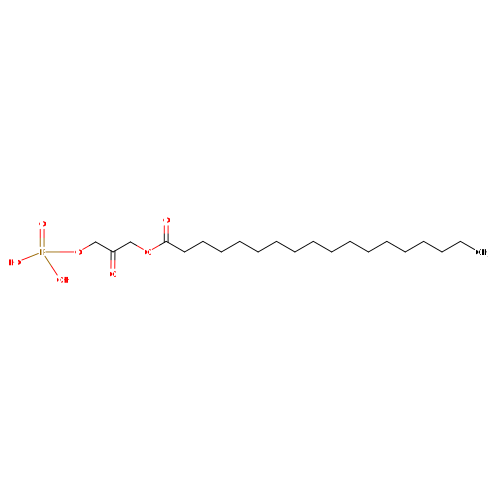
| Record Information |
|---|
| Version | 5.0 |
|---|
| Status | Expected but not Quantified |
|---|
| Creation Date | 2008-10-29 12:24:48 UTC |
|---|
| Update Date | 2022-03-07 02:51:03 UTC |
|---|
| HMDB ID | HMDB0011133 |
|---|
| Secondary Accession Numbers | |
|---|
| Metabolite Identification |
|---|
| Common Name | DHAP(18:0) |
|---|
| Description | DHAP(18:0) is the octadecanoyl derivative of dihydroxyacetone phosphate. It is also known as an alkyl-DHAP. This compound is formed by octadecanoic acid reacting with DHAP. Alkyl-DHAPs are intermediates in the synthesis of ether phospholipids. The initial steps of ether phospholipid biosynthesis take place in peroxisomes. Alkyl-dihydroxyacetonephosphate synthase is the peroxisomal enzyme that actually introduces the ether linkage. Levels of Alkyl-DHAP have been found to be strongly reduced in human fibroblasts derived from Zellweger syndrome and rhizomelic chondrodysplasia punctata patients. Four other enzymes are known to be involved in the metabolism of acyl-DHAP and alkyl-DHAP. These include: acyl-DHAP/alkyl-DHAP oxidoreductase, DHAP acyltransferase, alkyl-DHAP phosphohydrolase, and a dinitrofluorobenzene-insensitive acyl-DHAP acylhydrolase. Dihydroxyacetone phosphate (DHAP) is a biochemical compound primarily involved in the glycolysis metabolic pathway. DHAP is also the product of the dehydrogenation of L-glycerol-3-phosphate which is part of the entry of glycerol (sourced from triglycerides) into the glycolytic pathway. Conversely, reduction of glycolysis-derived DHAP to L-glycerol-3-phosphate provides adipose cells with the activated glycerol backbone they require to synthesize new triglycerides. Both reactions are catalyzed by the enzyme glycerol 3-phosphate dehydrogenase with NAD+/NADH as cofactor. DHAP may be referred to as glycerone phosphate in older texts. 1-Octadecyl-glycerone-3-phosphate is an intermediate in Ether lipid metabolism. DHAP(18:0) or 1-Octadecanoyl-glycerone-3-phosphate is the precursor to 1-Octadecyl-glycerone-3-phosphate DHAP(18:0e) which is generated via alkylglycerone phosphate synthase (EC: 2.5.1.26). Ether lipids are lipids in which one or more of the carbon atoms on glycerol is bonded to an alkyl chain via an ether linkage, as opposed to the usual ester linkage. Ether lipids are called plasmalogens (1-O-1'-alkenyl-2-acylglycerophospholipids) if these are glycerol-containing phospholipids with an unsaturated O-(1-alkenyl) (vinyl ether) group at the first position on the glycerol chain. Plasmalogens as well as some 1-O-alkyl lipids are ubiquitous and sometimes major parts of the cell membranes in mammals and anaerobic bacteria. In archaea, ether lipids are the major polar lipids in the cell envelope and their abundance is one of the major characteristics that separate this group of prokaryotes from the bacteria. In these cells, diphytanylglycerolipids or bipolar macrocyclic tetraethers can form covalently linked 'bilayers'. (Wikipedia) |
|---|
| Structure | CCCCCCCCCCCCCCCCCC(=O)OCC(=O)COP(O)(O)=O InChI=1S/C21H41O7P/c1-2-3-4-5-6-7-8-9-10-11-12-13-14-15-16-17-21(23)27-18-20(22)19-28-29(24,25)26/h2-19H2,1H3,(H2,24,25,26) |
|---|
| Synonyms | | Value | Source |
|---|
| 1-Octadecanoyl dhap | HMDB | | 1-Octadecanoyl dihydroxyacetone phosphate | HMDB | | 1-Octadecanoyl-glycerone-3-phosphate | HMDB | | 1-Stearoylglycerone 3-phosphate | HMDB | | Stearoylglycerone phosphate | ChEBI | | Stearoylglycerone phosphoric acid | Generator |
|
|---|
| Chemical Formula | C21H41O7P |
|---|
| Average Molecular Weight | 436.5198 |
|---|
| Monoisotopic Molecular Weight | 436.258990178 |
|---|
| IUPAC Name | [3-(octadecanoyloxy)-2-oxopropoxy]phosphonic acid |
|---|
| Traditional Name | stearoylglycerone phosphate |
|---|
| CAS Registry Number | Not Available |
|---|
| SMILES | CCCCCCCCCCCCCCCCCC(=O)OCC(=O)COP(O)(O)=O |
|---|
| InChI Identifier | InChI=1S/C21H41O7P/c1-2-3-4-5-6-7-8-9-10-11-12-13-14-15-16-17-21(23)27-18-20(22)19-28-29(24,25)26/h2-19H2,1H3,(H2,24,25,26) |
|---|
| InChI Key | GTPATKZCXDKGQS-UHFFFAOYSA-N |
|---|
| Chemical Taxonomy |
|---|
| Description | Belongs to the class of organic compounds known as o-acylglycerone-phosphates. These are glycerone-3-phosphates carrying an acyl substituent at the 1-position. |
|---|
| Kingdom | Organic compounds |
|---|
| Super Class | Organic oxygen compounds |
|---|
| Class | Organooxygen compounds |
|---|
| Sub Class | Carbonyl compounds |
|---|
| Direct Parent | O-acylglycerone-phosphates |
|---|
| Alternative Parents | |
|---|
| Substituents | - O-acylglycerone-phosphate
- Monosaccharide phosphate
- Fatty acid ester
- Alpha-acyloxy ketone
- Monoalkyl phosphate
- Monosaccharide
- Organic phosphoric acid derivative
- Phosphoric acid ester
- Fatty acyl
- Alkyl phosphate
- Carboxylic acid ester
- Carboxylic acid derivative
- Monocarboxylic acid or derivatives
- Hydrocarbon derivative
- Organic oxide
- Aliphatic acyclic compound
|
|---|
| Molecular Framework | Aliphatic acyclic compounds |
|---|
| External Descriptors | Not Available |
|---|
| Ontology |
|---|
| Physiological effect | |
|---|
| Disposition | |
|---|
| Process | |
|---|
| Role | |
|---|
| Physical Properties |
|---|
| State | Solid |
|---|
| Experimental Molecular Properties | | Property | Value | Reference |
|---|
| Melting Point | Not Available | Not Available | | Boiling Point | Not Available | Not Available | | Water Solubility | Not Available | Not Available | | LogP | Not Available | Not Available |
|
|---|
| Experimental Chromatographic Properties | Not Available |
|---|
| Predicted Molecular Properties | |
|---|
| Predicted Chromatographic Properties | Predicted Collision Cross SectionsPredicted Kovats Retention IndicesUnderivatizedDerivatized| Derivative Name / Structure | SMILES | Kovats RI Value | Column Type | Reference |
|---|
| DHAP(18:0),1TMS,isomer #1 | CCCCCCCCCCCCCCCCCC(=O)OCC(=O)COP(=O)(O)O[Si](C)(C)C | 3212.0 | Semi standard non polar | 33892256 | | DHAP(18:0),1TMS,isomer #1 | CCCCCCCCCCCCCCCCCC(=O)OCC(=O)COP(=O)(O)O[Si](C)(C)C | 3044.0 | Standard non polar | 33892256 | | DHAP(18:0),1TMS,isomer #1 | CCCCCCCCCCCCCCCCCC(=O)OCC(=O)COP(=O)(O)O[Si](C)(C)C | 4138.1 | Standard polar | 33892256 | | DHAP(18:0),1TMS,isomer #2 | CCCCCCCCCCCCCCCCCC(=O)OCC(=COP(=O)(O)O)O[Si](C)(C)C | 3233.1 | Semi standard non polar | 33892256 | | DHAP(18:0),1TMS,isomer #2 | CCCCCCCCCCCCCCCCCC(=O)OCC(=COP(=O)(O)O)O[Si](C)(C)C | 3019.6 | Standard non polar | 33892256 | | DHAP(18:0),1TMS,isomer #2 | CCCCCCCCCCCCCCCCCC(=O)OCC(=COP(=O)(O)O)O[Si](C)(C)C | 4562.0 | Standard polar | 33892256 | | DHAP(18:0),1TMS,isomer #3 | CCCCCCCCCCCCCCCCCC(=O)OC=C(COP(=O)(O)O)O[Si](C)(C)C | 3303.6 | Semi standard non polar | 33892256 | | DHAP(18:0),1TMS,isomer #3 | CCCCCCCCCCCCCCCCCC(=O)OC=C(COP(=O)(O)O)O[Si](C)(C)C | 3023.7 | Standard non polar | 33892256 | | DHAP(18:0),1TMS,isomer #3 | CCCCCCCCCCCCCCCCCC(=O)OC=C(COP(=O)(O)O)O[Si](C)(C)C | 4716.9 | Standard polar | 33892256 | | DHAP(18:0),2TMS,isomer #1 | CCCCCCCCCCCCCCCCCC(=O)OCC(=O)COP(=O)(O[Si](C)(C)C)O[Si](C)(C)C | 3218.6 | Semi standard non polar | 33892256 | | DHAP(18:0),2TMS,isomer #1 | CCCCCCCCCCCCCCCCCC(=O)OCC(=O)COP(=O)(O[Si](C)(C)C)O[Si](C)(C)C | 3095.2 | Standard non polar | 33892256 | | DHAP(18:0),2TMS,isomer #1 | CCCCCCCCCCCCCCCCCC(=O)OCC(=O)COP(=O)(O[Si](C)(C)C)O[Si](C)(C)C | 3573.1 | Standard polar | 33892256 | | DHAP(18:0),2TMS,isomer #2 | CCCCCCCCCCCCCCCCCC(=O)OCC(=COP(=O)(O)O[Si](C)(C)C)O[Si](C)(C)C | 3309.5 | Semi standard non polar | 33892256 | | DHAP(18:0),2TMS,isomer #2 | CCCCCCCCCCCCCCCCCC(=O)OCC(=COP(=O)(O)O[Si](C)(C)C)O[Si](C)(C)C | 3040.0 | Standard non polar | 33892256 | | DHAP(18:0),2TMS,isomer #2 | CCCCCCCCCCCCCCCCCC(=O)OCC(=COP(=O)(O)O[Si](C)(C)C)O[Si](C)(C)C | 3912.9 | Standard polar | 33892256 | | DHAP(18:0),2TMS,isomer #3 | CCCCCCCCCCCCCCCCCC(=O)OC=C(COP(=O)(O)O[Si](C)(C)C)O[Si](C)(C)C | 3314.5 | Semi standard non polar | 33892256 | | DHAP(18:0),2TMS,isomer #3 | CCCCCCCCCCCCCCCCCC(=O)OC=C(COP(=O)(O)O[Si](C)(C)C)O[Si](C)(C)C | 3057.9 | Standard non polar | 33892256 | | DHAP(18:0),2TMS,isomer #3 | CCCCCCCCCCCCCCCCCC(=O)OC=C(COP(=O)(O)O[Si](C)(C)C)O[Si](C)(C)C | 3966.7 | Standard polar | 33892256 | | DHAP(18:0),3TMS,isomer #1 | CCCCCCCCCCCCCCCCCC(=O)OCC(=COP(=O)(O[Si](C)(C)C)O[Si](C)(C)C)O[Si](C)(C)C | 3323.6 | Semi standard non polar | 33892256 | | DHAP(18:0),3TMS,isomer #1 | CCCCCCCCCCCCCCCCCC(=O)OCC(=COP(=O)(O[Si](C)(C)C)O[Si](C)(C)C)O[Si](C)(C)C | 3042.5 | Standard non polar | 33892256 | | DHAP(18:0),3TMS,isomer #1 | CCCCCCCCCCCCCCCCCC(=O)OCC(=COP(=O)(O[Si](C)(C)C)O[Si](C)(C)C)O[Si](C)(C)C | 3401.7 | Standard polar | 33892256 | | DHAP(18:0),3TMS,isomer #2 | CCCCCCCCCCCCCCCCCC(=O)OC=C(COP(=O)(O[Si](C)(C)C)O[Si](C)(C)C)O[Si](C)(C)C | 3337.4 | Semi standard non polar | 33892256 | | DHAP(18:0),3TMS,isomer #2 | CCCCCCCCCCCCCCCCCC(=O)OC=C(COP(=O)(O[Si](C)(C)C)O[Si](C)(C)C)O[Si](C)(C)C | 3067.6 | Standard non polar | 33892256 | | DHAP(18:0),3TMS,isomer #2 | CCCCCCCCCCCCCCCCCC(=O)OC=C(COP(=O)(O[Si](C)(C)C)O[Si](C)(C)C)O[Si](C)(C)C | 3451.9 | Standard polar | 33892256 | | DHAP(18:0),1TBDMS,isomer #1 | CCCCCCCCCCCCCCCCCC(=O)OCC(=O)COP(=O)(O)O[Si](C)(C)C(C)(C)C | 3477.3 | Semi standard non polar | 33892256 | | DHAP(18:0),1TBDMS,isomer #1 | CCCCCCCCCCCCCCCCCC(=O)OCC(=O)COP(=O)(O)O[Si](C)(C)C(C)(C)C | 3213.6 | Standard non polar | 33892256 | | DHAP(18:0),1TBDMS,isomer #1 | CCCCCCCCCCCCCCCCCC(=O)OCC(=O)COP(=O)(O)O[Si](C)(C)C(C)(C)C | 4197.5 | Standard polar | 33892256 | | DHAP(18:0),1TBDMS,isomer #2 | CCCCCCCCCCCCCCCCCC(=O)OCC(=COP(=O)(O)O)O[Si](C)(C)C(C)(C)C | 3509.2 | Semi standard non polar | 33892256 | | DHAP(18:0),1TBDMS,isomer #2 | CCCCCCCCCCCCCCCCCC(=O)OCC(=COP(=O)(O)O)O[Si](C)(C)C(C)(C)C | 3148.5 | Standard non polar | 33892256 | | DHAP(18:0),1TBDMS,isomer #2 | CCCCCCCCCCCCCCCCCC(=O)OCC(=COP(=O)(O)O)O[Si](C)(C)C(C)(C)C | 4525.9 | Standard polar | 33892256 | | DHAP(18:0),1TBDMS,isomer #3 | CCCCCCCCCCCCCCCCCC(=O)OC=C(COP(=O)(O)O)O[Si](C)(C)C(C)(C)C | 3556.0 | Semi standard non polar | 33892256 | | DHAP(18:0),1TBDMS,isomer #3 | CCCCCCCCCCCCCCCCCC(=O)OC=C(COP(=O)(O)O)O[Si](C)(C)C(C)(C)C | 3154.7 | Standard non polar | 33892256 | | DHAP(18:0),1TBDMS,isomer #3 | CCCCCCCCCCCCCCCCCC(=O)OC=C(COP(=O)(O)O)O[Si](C)(C)C(C)(C)C | 4655.4 | Standard polar | 33892256 | | DHAP(18:0),2TBDMS,isomer #1 | CCCCCCCCCCCCCCCCCC(=O)OCC(=O)COP(=O)(O[Si](C)(C)C(C)(C)C)O[Si](C)(C)C(C)(C)C | 3759.1 | Semi standard non polar | 33892256 | | DHAP(18:0),2TBDMS,isomer #1 | CCCCCCCCCCCCCCCCCC(=O)OCC(=O)COP(=O)(O[Si](C)(C)C(C)(C)C)O[Si](C)(C)C(C)(C)C | 3355.1 | Standard non polar | 33892256 | | DHAP(18:0),2TBDMS,isomer #1 | CCCCCCCCCCCCCCCCCC(=O)OCC(=O)COP(=O)(O[Si](C)(C)C(C)(C)C)O[Si](C)(C)C(C)(C)C | 3706.9 | Standard polar | 33892256 | | DHAP(18:0),2TBDMS,isomer #2 | CCCCCCCCCCCCCCCCCC(=O)OCC(=COP(=O)(O)O[Si](C)(C)C(C)(C)C)O[Si](C)(C)C(C)(C)C | 3768.1 | Semi standard non polar | 33892256 | | DHAP(18:0),2TBDMS,isomer #2 | CCCCCCCCCCCCCCCCCC(=O)OCC(=COP(=O)(O)O[Si](C)(C)C(C)(C)C)O[Si](C)(C)C(C)(C)C | 3290.2 | Standard non polar | 33892256 | | DHAP(18:0),2TBDMS,isomer #2 | CCCCCCCCCCCCCCCCCC(=O)OCC(=COP(=O)(O)O[Si](C)(C)C(C)(C)C)O[Si](C)(C)C(C)(C)C | 3992.8 | Standard polar | 33892256 | | DHAP(18:0),2TBDMS,isomer #3 | CCCCCCCCCCCCCCCCCC(=O)OC=C(COP(=O)(O)O[Si](C)(C)C(C)(C)C)O[Si](C)(C)C(C)(C)C | 3798.1 | Semi standard non polar | 33892256 | | DHAP(18:0),2TBDMS,isomer #3 | CCCCCCCCCCCCCCCCCC(=O)OC=C(COP(=O)(O)O[Si](C)(C)C(C)(C)C)O[Si](C)(C)C(C)(C)C | 3318.5 | Standard non polar | 33892256 | | DHAP(18:0),2TBDMS,isomer #3 | CCCCCCCCCCCCCCCCCC(=O)OC=C(COP(=O)(O)O[Si](C)(C)C(C)(C)C)O[Si](C)(C)C(C)(C)C | 4006.3 | Standard polar | 33892256 | | DHAP(18:0),3TBDMS,isomer #1 | CCCCCCCCCCCCCCCCCC(=O)OCC(=COP(=O)(O[Si](C)(C)C(C)(C)C)O[Si](C)(C)C(C)(C)C)O[Si](C)(C)C(C)(C)C | 3972.6 | Semi standard non polar | 33892256 | | DHAP(18:0),3TBDMS,isomer #1 | CCCCCCCCCCCCCCCCCC(=O)OCC(=COP(=O)(O[Si](C)(C)C(C)(C)C)O[Si](C)(C)C(C)(C)C)O[Si](C)(C)C(C)(C)C | 3398.4 | Standard non polar | 33892256 | | DHAP(18:0),3TBDMS,isomer #1 | CCCCCCCCCCCCCCCCCC(=O)OCC(=COP(=O)(O[Si](C)(C)C(C)(C)C)O[Si](C)(C)C(C)(C)C)O[Si](C)(C)C(C)(C)C | 3617.6 | Standard polar | 33892256 | | DHAP(18:0),3TBDMS,isomer #2 | CCCCCCCCCCCCCCCCCC(=O)OC=C(COP(=O)(O[Si](C)(C)C(C)(C)C)O[Si](C)(C)C(C)(C)C)O[Si](C)(C)C(C)(C)C | 4021.1 | Semi standard non polar | 33892256 | | DHAP(18:0),3TBDMS,isomer #2 | CCCCCCCCCCCCCCCCCC(=O)OC=C(COP(=O)(O[Si](C)(C)C(C)(C)C)O[Si](C)(C)C(C)(C)C)O[Si](C)(C)C(C)(C)C | 3428.9 | Standard non polar | 33892256 | | DHAP(18:0),3TBDMS,isomer #2 | CCCCCCCCCCCCCCCCCC(=O)OC=C(COP(=O)(O[Si](C)(C)C(C)(C)C)O[Si](C)(C)C(C)(C)C)O[Si](C)(C)C(C)(C)C | 3636.2 | Standard polar | 33892256 |
|
|---|
| GC-MS Spectra| Spectrum Type | Description | Splash Key | Deposition Date | Source | View |
|---|
| Predicted GC-MS | Predicted GC-MS Spectrum - DHAP(18:0) GC-MS (Non-derivatized) - 70eV, Positive | splash10-000i-4940000000-80a1bdc493c6960db777 | 2017-09-01 | Wishart Lab | View Spectrum | | Predicted GC-MS | Predicted GC-MS Spectrum - DHAP(18:0) GC-MS (Non-derivatized) - 70eV, Positive | Not Available | 2021-10-12 | Wishart Lab | View Spectrum | | Predicted GC-MS | Predicted GC-MS Spectrum - DHAP(18:0) GC-MS (Non-derivatized) - 70eV, Positive | Not Available | 2021-10-12 | Wishart Lab | View Spectrum |
MS/MS Spectra| Spectrum Type | Description | Splash Key | Deposition Date | Source | View |
|---|
| Predicted LC-MS/MS | Predicted LC-MS/MS Spectrum - DHAP(18:0) 10V, Positive-QTOF | splash10-00ks-7675900000-676315db38479a1f63ed | 2017-09-01 | Wishart Lab | View Spectrum | | Predicted LC-MS/MS | Predicted LC-MS/MS Spectrum - DHAP(18:0) 20V, Positive-QTOF | splash10-0gc9-3962200000-9883bfcb711115c19963 | 2017-09-01 | Wishart Lab | View Spectrum | | Predicted LC-MS/MS | Predicted LC-MS/MS Spectrum - DHAP(18:0) 40V, Positive-QTOF | splash10-05tb-9361000000-986bb0d9b34e80238360 | 2017-09-01 | Wishart Lab | View Spectrum | | Predicted LC-MS/MS | Predicted LC-MS/MS Spectrum - DHAP(18:0) 10V, Negative-QTOF | splash10-00nr-4190400000-3a38a8b555ccf3f080be | 2017-09-01 | Wishart Lab | View Spectrum | | Predicted LC-MS/MS | Predicted LC-MS/MS Spectrum - DHAP(18:0) 20V, Negative-QTOF | splash10-004i-9050000000-f0b48935f26d1c1c1c22 | 2017-09-01 | Wishart Lab | View Spectrum | | Predicted LC-MS/MS | Predicted LC-MS/MS Spectrum - DHAP(18:0) 40V, Negative-QTOF | splash10-004i-9000000000-6c9559d558f5504fffa3 | 2017-09-01 | Wishart Lab | View Spectrum | | Predicted LC-MS/MS | Predicted LC-MS/MS Spectrum - DHAP(18:0) 10V, Negative-QTOF | splash10-000i-1000900000-07d76159781dbd3ab519 | 2021-09-24 | Wishart Lab | View Spectrum | | Predicted LC-MS/MS | Predicted LC-MS/MS Spectrum - DHAP(18:0) 20V, Negative-QTOF | splash10-003r-6190000000-ea20c91d06ab5293e53b | 2021-09-24 | Wishart Lab | View Spectrum | | Predicted LC-MS/MS | Predicted LC-MS/MS Spectrum - DHAP(18:0) 40V, Negative-QTOF | splash10-00si-7490000000-02f0b228c932f2c02dae | 2021-09-24 | Wishart Lab | View Spectrum | | Predicted LC-MS/MS | Predicted LC-MS/MS Spectrum - DHAP(18:0) 10V, Positive-QTOF | splash10-00kr-0015900000-5fb40fae3c12e8ece799 | 2021-09-24 | Wishart Lab | View Spectrum | | Predicted LC-MS/MS | Predicted LC-MS/MS Spectrum - DHAP(18:0) 20V, Positive-QTOF | splash10-014r-0295000000-59cfdee546b25ce5989f | 2021-09-24 | Wishart Lab | View Spectrum | | Predicted LC-MS/MS | Predicted LC-MS/MS Spectrum - DHAP(18:0) 40V, Positive-QTOF | splash10-052e-9100000000-3f375f3a3380138127d9 | 2021-09-24 | Wishart Lab | View Spectrum |
|
|---|