| Record Information |
|---|
| Version | 5.0 |
|---|
| Status | Expected but not Quantified |
|---|
| Creation Date | 2012-09-11 17:52:43 UTC |
|---|
| Update Date | 2023-02-21 17:22:48 UTC |
|---|
| HMDB ID | HMDB0032930 |
|---|
| Secondary Accession Numbers | |
|---|
| Metabolite Identification |
|---|
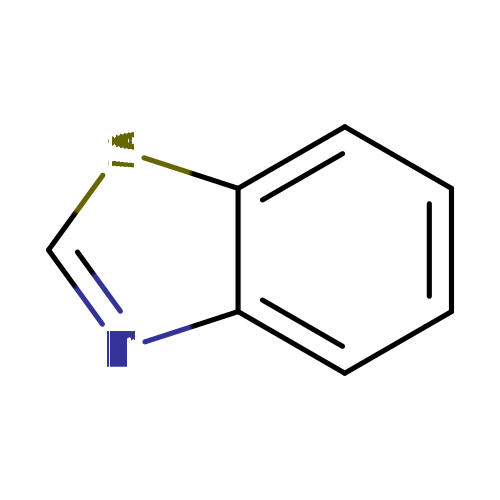
| Common Name | Benzothiazole |
|---|
| Description | Benzothiazole, also known as BT or benzosulfonazole, belongs to the class of organic compounds known as benzothiazoles. These are organic compounds containing a benzene fused to a thiazole ring (a five-membered ring with four carbon atoms, one nitrogen atom and one sulfur atom). This ring is a potential component in nonlinear optics (NLO). The nine atoms of the bicycle and the attached substituents are coplanar. Although the parent compound, benzothiazole is not widely used, many of its derivatives are found in commercial products or in nature. Benzothiazole is a coffee, cooked, and gasoline tasting compound. benzothiazole is found, on average, in the highest concentration in safflowers. benzothiazole has also been detected, but not quantified, in several different foods, such as common persimmons, fruits, guava, potato, and tea. This could make benzothiazole a potential biomarker for the consumption of these foods. Firefly luciferin can be considered a derivative of benzothiazole. The compound is used also used as an insecticide and food flavoring agent. Some drugs contain this group, examples being riluzole and pramipexole. It is colorless, slightly viscous liquid. It is a thermally stable electron-withdrawing moiety with numerous applications in dyes such as thioflavin. Benzothiazole is an aromatic heterocyclic compound with the chemical formula C7H5NS. |
|---|
| Structure | InChI=1S/C7H5NS/c1-2-4-7-6(3-1)8-5-9-7/h1-5H |
|---|
| Synonyms | | Value | Source |
|---|
| 1-Thia-3-azaindene | ChEBI | | Benzosulfonazole | ChEBI | | Benzothiazol | ChEBI | | BT | ChEBI | | Benzosulphonazole | Generator | | 1,3-Benzothiazole | HMDB | | BOT | HMDB | | Vangard BT | HMDB |
|
|---|
| Chemical Formula | C7H5NS |
|---|
| Average Molecular Weight | 135.186 |
|---|
| Monoisotopic Molecular Weight | 135.014269855 |
|---|
| IUPAC Name | 1,3-benzothiazole |
|---|
| Traditional Name | benzothiazole |
|---|
| CAS Registry Number | 95-16-9 |
|---|
| SMILES | S1C=NC2=CC=CC=C12 |
|---|
| InChI Identifier | InChI=1S/C7H5NS/c1-2-4-7-6(3-1)8-5-9-7/h1-5H |
|---|
| InChI Key | IOJUPLGTWVMSFF-UHFFFAOYSA-N |
|---|
| Chemical Taxonomy |
|---|
| Description | Belongs to the class of organic compounds known as benzothiazoles. These are organic compounds containing a benzene fused to a thiazole ring (a five-membered ring with four carbon atoms, one nitrogen atom and one sulfur atom). |
|---|
| Kingdom | Organic compounds |
|---|
| Super Class | Organoheterocyclic compounds |
|---|
| Class | Benzothiazoles |
|---|
| Sub Class | Not Available |
|---|
| Direct Parent | Benzothiazoles |
|---|
| Alternative Parents | |
|---|
| Substituents | - 1,3-benzothiazole
- Benzenoid
- Heteroaromatic compound
- Thiazole
- Azole
- Azacycle
- Organic nitrogen compound
- Organopnictogen compound
- Hydrocarbon derivative
- Organonitrogen compound
- Aromatic heteropolycyclic compound
|
|---|
| Molecular Framework | Aromatic heteropolycyclic compounds |
|---|
| External Descriptors | |
|---|
| Ontology |
|---|
| Physiological effect | |
|---|
| Disposition | |
|---|
| Process | Not Available |
|---|
| Role | |
|---|
| Physical Properties |
|---|
| State | Liquid |
|---|
| Experimental Molecular Properties | | Property | Value | Reference |
|---|
| Melting Point | 2 °C | Not Available | | Boiling Point | 231.00 to 233.00 °C. @ 760.00 mm Hg | The Good Scents Company Information System | | Water Solubility | 4.3 mg/mL at 25 °C | Not Available | | LogP | 2.01 | Not Available |
|
|---|
| Experimental Chromatographic Properties | Not Available |
|---|
| Predicted Molecular Properties | |
|---|
| Predicted Chromatographic Properties | Predicted Collision Cross SectionsPredicted Kovats Retention IndicesUnderivatized |
|---|
| GC-MS Spectra| Spectrum Type | Description | Splash Key | Deposition Date | Source | View |
|---|
| Experimental GC-MS | GC-MS Spectrum - Benzothiazole EI-B (Non-derivatized) | splash10-000i-6900000000-101b2ad37661f6438179 | 2017-09-12 | HMDB team, MONA, MassBank | View Spectrum | | Experimental GC-MS | GC-MS Spectrum - Benzothiazole EI-B (Non-derivatized) | splash10-000i-2900000000-ac6acb266d8c21f1c542 | 2017-09-12 | HMDB team, MONA, MassBank | View Spectrum | | Experimental GC-MS | GC-MS Spectrum - Benzothiazole EI-B (Non-derivatized) | splash10-000i-2900000000-295f818bb85918e8d003 | 2017-09-12 | HMDB team, MONA, MassBank | View Spectrum | | Experimental GC-MS | GC-MS Spectrum - Benzothiazole EI-B (Non-derivatized) | splash10-000i-6900000000-101b2ad37661f6438179 | 2018-05-18 | HMDB team, MONA, MassBank | View Spectrum | | Experimental GC-MS | GC-MS Spectrum - Benzothiazole EI-B (Non-derivatized) | splash10-000i-2900000000-ac6acb266d8c21f1c542 | 2018-05-18 | HMDB team, MONA, MassBank | View Spectrum | | Experimental GC-MS | GC-MS Spectrum - Benzothiazole EI-B (Non-derivatized) | splash10-000i-2900000000-295f818bb85918e8d003 | 2018-05-18 | HMDB team, MONA, MassBank | View Spectrum | | Predicted GC-MS | Predicted GC-MS Spectrum - Benzothiazole GC-MS (Non-derivatized) - 70eV, Positive | splash10-000i-1900000000-a8bc1b842f666f6a9ede | 2016-09-22 | Wishart Lab | View Spectrum | | Predicted GC-MS | Predicted GC-MS Spectrum - Benzothiazole GC-MS (Non-derivatized) - 70eV, Positive | Not Available | 2021-10-12 | Wishart Lab | View Spectrum | | MS | Mass Spectrum (Electron Ionization) | splash10-000i-7900000000-b40f6615eb822769c665 | 2015-03-01 | Not Available | View Spectrum |
MS/MS Spectra| Spectrum Type | Description | Splash Key | Deposition Date | Source | View |
|---|
| Experimental LC-MS/MS | LC-MS/MS Spectrum - Benzothiazole LC-ESI-QTOF , positive-QTOF | splash10-000i-0900000000-2d90876b51324689d2a1 | 2017-09-14 | HMDB team, MONA | View Spectrum | | Experimental LC-MS/MS | LC-MS/MS Spectrum - Benzothiazole LC-ESI-ITFT , positive-QTOF | splash10-000i-0900000000-23187027d5c1a229f442 | 2017-09-14 | HMDB team, MONA | View Spectrum | | Experimental LC-MS/MS | LC-MS/MS Spectrum - Benzothiazole LC-ESI-ITFT , positive-QTOF | splash10-000i-0900000000-cdfc15b55d3e2a90e644 | 2017-09-14 | HMDB team, MONA | View Spectrum | | Experimental LC-MS/MS | LC-MS/MS Spectrum - Benzothiazole LC-ESI-ITFT , positive-QTOF | splash10-000i-0900000000-cdfc15b55d3e2a90e644 | 2017-09-14 | HMDB team, MONA | View Spectrum | | Experimental LC-MS/MS | LC-MS/MS Spectrum - Benzothiazole LC-ESI-ITFT , positive-QTOF | splash10-000i-0900000000-23e0e49d7d7a2ac95443 | 2017-09-14 | HMDB team, MONA | View Spectrum | | Experimental LC-MS/MS | LC-MS/MS Spectrum - Benzothiazole LC-ESI-ITFT , positive-QTOF | splash10-000i-0900000000-e6818e8bda3c62c04253 | 2017-09-14 | HMDB team, MONA | View Spectrum | | Experimental LC-MS/MS | LC-MS/MS Spectrum - Benzothiazole LC-ESI-ITFT , positive-QTOF | splash10-000i-0900000000-df0660c0ba3ed7847630 | 2017-09-14 | HMDB team, MONA | View Spectrum | | Experimental LC-MS/MS | LC-MS/MS Spectrum - Benzothiazole LC-ESI-ITFT , positive-QTOF | splash10-000i-0900000000-23187027d5c1a229f442 | 2017-09-14 | HMDB team, MONA | View Spectrum | | Experimental LC-MS/MS | LC-MS/MS Spectrum - Benzothiazole LC-ESI-ITFT , positive-QTOF | splash10-000i-0900000000-cdfc15b55d3e2a90e644 | 2017-09-14 | HMDB team, MONA | View Spectrum | | Experimental LC-MS/MS | LC-MS/MS Spectrum - Benzothiazole LC-ESI-ITFT , positive-QTOF | splash10-000i-0900000000-cdfc15b55d3e2a90e644 | 2017-09-14 | HMDB team, MONA | View Spectrum | | Experimental LC-MS/MS | LC-MS/MS Spectrum - Benzothiazole LC-ESI-ITFT , positive-QTOF | splash10-000i-0900000000-4b35b950d90ba8676be9 | 2017-09-14 | HMDB team, MONA | View Spectrum | | Experimental LC-MS/MS | LC-MS/MS Spectrum - Benzothiazole LC-ESI-ITFT , positive-QTOF | splash10-000i-0900000000-f93a8a628d80521ad5b8 | 2017-09-14 | HMDB team, MONA | View Spectrum | | Experimental LC-MS/MS | LC-MS/MS Spectrum - Benzothiazole LC-ESI-ITFT , positive-QTOF | splash10-000i-0900000000-f971eedbdb355ab4b11c | 2017-09-14 | HMDB team, MONA | View Spectrum | | Experimental LC-MS/MS | LC-MS/MS Spectrum - Benzothiazole LC-ESI-ITFT , positive-QTOF | splash10-000i-0900000000-ce77248d1c86827d67a3 | 2017-09-14 | HMDB team, MONA | View Spectrum | | Experimental LC-MS/MS | LC-MS/MS Spectrum - Benzothiazole LC-ESI-ITFT , positive-QTOF | splash10-000i-0900000000-eb6332ab9322a7dd166d | 2017-09-14 | HMDB team, MONA | View Spectrum | | Experimental LC-MS/MS | LC-MS/MS Spectrum - Benzothiazole LC-ESI-ITFT , positive-QTOF | splash10-000i-0900000000-76a6050548e54cc4c4b6 | 2017-09-14 | HMDB team, MONA | View Spectrum | | Experimental LC-MS/MS | LC-MS/MS Spectrum - Benzothiazole LC-ESI-QFT , positive-QTOF | splash10-000i-0900000000-69af903dce2e39b4ebfd | 2017-09-14 | HMDB team, MONA | View Spectrum | | Experimental LC-MS/MS | LC-MS/MS Spectrum - Benzothiazole 60V, Positive-QTOF | splash10-000i-0900000000-4b35b950d90ba8676be9 | 2021-09-20 | HMDB team, MONA | View Spectrum | | Experimental LC-MS/MS | LC-MS/MS Spectrum - Benzothiazole 90V, Positive-QTOF | splash10-000i-0900000000-42b31ed69fb467cd1008 | 2021-09-20 | HMDB team, MONA | View Spectrum | | Experimental LC-MS/MS | LC-MS/MS Spectrum - Benzothiazole 35V, Positive-QTOF | splash10-000i-0900000000-de9b24f6b90bf48f32f1 | 2021-09-20 | HMDB team, MONA | View Spectrum | | Experimental LC-MS/MS | LC-MS/MS Spectrum - Benzothiazole 35V, Positive-QTOF | splash10-000i-0900000000-76a6050548e54cc4c4b6 | 2021-09-20 | HMDB team, MONA | View Spectrum | | Experimental LC-MS/MS | LC-MS/MS Spectrum - Benzothiazole 80V, Positive-QTOF | splash10-000i-0900000000-5799f764bf4d5e6fbec0 | 2021-09-20 | HMDB team, MONA | View Spectrum | | Experimental LC-MS/MS | LC-MS/MS Spectrum - Benzothiazole 55V, Positive-QTOF | splash10-000i-0900000000-cb83514051e65bac1938 | 2021-09-20 | HMDB team, MONA | View Spectrum | | Experimental LC-MS/MS | LC-MS/MS Spectrum - Benzothiazole 75V, Positive-QTOF | splash10-000i-0900000000-0e074e49297aca36c436 | 2021-09-20 | HMDB team, MONA | View Spectrum | | Experimental LC-MS/MS | LC-MS/MS Spectrum - Benzothiazole 90V, Positive-QTOF | splash10-000i-0900000000-adfe9933f56088e570ac | 2021-09-20 | HMDB team, MONA | View Spectrum |
NMR Spectra| Spectrum Type | Description | Deposition Date | Source | View |
|---|
| Predicted 1D NMR | 13C NMR Spectrum (1D, 100 MHz, H2O, predicted) | 2022-08-18 | Wishart Lab | View Spectrum | | Predicted 1D NMR | 1H NMR Spectrum (1D, 100 MHz, H2O, predicted) | 2022-08-18 | Wishart Lab | View Spectrum | | Predicted 1D NMR | 13C NMR Spectrum (1D, 1000 MHz, H2O, predicted) | 2022-08-18 | Wishart Lab | View Spectrum | | Predicted 1D NMR | 1H NMR Spectrum (1D, 1000 MHz, H2O, predicted) | 2022-08-18 | Wishart Lab | View Spectrum | | Predicted 1D NMR | 13C NMR Spectrum (1D, 200 MHz, H2O, predicted) | 2022-08-18 | Wishart Lab | View Spectrum | | Predicted 1D NMR | 1H NMR Spectrum (1D, 200 MHz, H2O, predicted) | 2022-08-18 | Wishart Lab | View Spectrum | | Predicted 1D NMR | 13C NMR Spectrum (1D, 300 MHz, H2O, predicted) | 2022-08-18 | Wishart Lab | View Spectrum | | Predicted 1D NMR | 1H NMR Spectrum (1D, 300 MHz, H2O, predicted) | 2022-08-18 | Wishart Lab | View Spectrum | | Predicted 1D NMR | 13C NMR Spectrum (1D, 400 MHz, H2O, predicted) | 2022-08-18 | Wishart Lab | View Spectrum | | Predicted 1D NMR | 1H NMR Spectrum (1D, 400 MHz, H2O, predicted) | 2022-08-18 | Wishart Lab | View Spectrum | | Predicted 1D NMR | 13C NMR Spectrum (1D, 500 MHz, H2O, predicted) | 2022-08-18 | Wishart Lab | View Spectrum | | Predicted 1D NMR | 1H NMR Spectrum (1D, 500 MHz, H2O, predicted) | 2022-08-18 | Wishart Lab | View Spectrum | | Predicted 1D NMR | 13C NMR Spectrum (1D, 600 MHz, H2O, predicted) | 2022-08-18 | Wishart Lab | View Spectrum | | Predicted 1D NMR | 1H NMR Spectrum (1D, 600 MHz, H2O, predicted) | 2022-08-18 | Wishart Lab | View Spectrum | | Predicted 1D NMR | 13C NMR Spectrum (1D, 700 MHz, H2O, predicted) | 2022-08-18 | Wishart Lab | View Spectrum | | Predicted 1D NMR | 1H NMR Spectrum (1D, 700 MHz, H2O, predicted) | 2022-08-18 | Wishart Lab | View Spectrum | | Predicted 1D NMR | 13C NMR Spectrum (1D, 800 MHz, H2O, predicted) | 2022-08-18 | Wishart Lab | View Spectrum | | Predicted 1D NMR | 1H NMR Spectrum (1D, 800 MHz, H2O, predicted) | 2022-08-18 | Wishart Lab | View Spectrum | | Predicted 1D NMR | 13C NMR Spectrum (1D, 900 MHz, H2O, predicted) | 2022-08-18 | Wishart Lab | View Spectrum | | Predicted 1D NMR | 1H NMR Spectrum (1D, 900 MHz, H2O, predicted) | 2022-08-18 | Wishart Lab | View Spectrum |
IR Spectra| Spectrum Type | Description | Deposition Date | Source | View |
|---|
| Predicted IR Spectrum | IR Ion Spectrum (Predicted IRIS Spectrum, Adduct: [M+H]+) | 2023-02-04 | FELIX lab | View Spectrum | | Predicted IR Spectrum | IR Ion Spectrum (Predicted IRIS Spectrum, Adduct: [M+Na]+) | 2023-02-04 | FELIX lab | View Spectrum |
|
|---|