| Record Information |
|---|
| Version | 5.0 |
|---|
| Status | Detected and Quantified |
|---|
| Creation Date | 2005-11-16 15:48:42 UTC |
|---|
| Update Date | 2025-05-29 18:10:18 UTC |
|---|
| HMDB ID | HMDB0000925 |
|---|
| Secondary Accession Numbers | |
|---|
| Metabolite Identification |
|---|
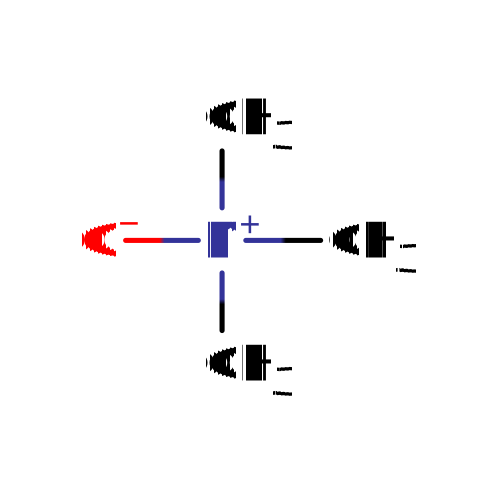
| Common Name | Trimethylamine N-oxide |
|---|
| Description | Trimethylamine N-oxide (TMAO) is an oxidation product of trimethylamine and a common metabolite in animals and humans. In particular, trimethylamine-N-oxide is biosynthesized endogenously from trimethylamine, which is derived from choline, which can be derived from dietary lecithin (phosphatidylcholines) or dietary carnitine. TMAO decomposes to trimethylamine (TMA), which is the main odorant that is characteristic of degrading seafood. TMAO is an osmolyte that the body will use to counteract the effects of increased concentrations of urea (due to kidney failure) and high levels can be used as a biomarker for kidney problems. It has been identified as a uremic toxin according to the European Uremic Toxin Working Group (PMID:22626821 ). Fish odor syndrome or trimethylaminuria is a defect in the production of the enzyme flavin containing monooxygenase 3 (FMO3) causing incomplete breakdown of trimethylamine from choline-containing food into trimethylamine oxide. Trimethylamine then builds up and is released in the person's sweat, urine, and breath, giving off a strong fishy odor. The concentration of TMAO in the blood increases after consuming foods containing carnitine or lecithin (phosphatidylcholines), if the bacteria that convert those substances to TMAO are present in the gut (PMID:23614584 ). High concentrations of carnitine are found in red meat, some energy drinks, and certain dietary supplements; lecithin is found in eggs and is commonly used as an ingredient in processed food. High levels of TMAO are found in many seafoods. Some types of normal gut bacteria (e.g. species of Acinetobacter) in the human gut convert dietary carnitine and dietary lecithin to TMAO (PMID:21475195 ). TMAO alters cholesterol metabolism in the intestines, in the liver and in arterial wall. When TMAO is present, cholesterol metabolism is altered and there is an increased deposition of cholesterol within, and decreased removal of cholesterol from, peripheral cells such as those in the artery wall (PMID:23563705 ). Urinary TMAO is a biomarker for the consumption of fish, especially cold-water fish. Trimethylamine N-oxide is found to be associated with maple syrup urine disease and propionic acidemia, which are inborn errors of metabolism. TMAO can also be found in Bacteroidetes, Ruminococcus (PMID:26687352 ). |
|---|
| Structure | InChI=1S/C3H9NO/c1-4(2,3)5/h1-3H3 |
|---|
| Synonyms | | Value | Source |
|---|
| (CH3)3NO | ChEBI | | Me3n(+)O(-) | ChEBI | | Me3n(O) | ChEBI | | N(CH3)3O | ChEBI | | TMAO | ChEBI | | Trimethylamine oxide | ChEBI | | Trimethylaminoxid | ChEBI | | Trimethyloxamine | ChEBI | | N,N-Dimethylmethanamine N-oxide | HMDB | | TMA-oxide | HMDB | | Trimethylamine-N-oxide | HMDB | | Triox | HMDB | | Trimethylammonium oxide | HMDB |
|
|---|
| Chemical Formula | C3H9NO |
|---|
| Average Molecular Weight | 75.1097 |
|---|
| Monoisotopic Molecular Weight | 75.068413915 |
|---|
| IUPAC Name | N,N-dimethylmethanamine oxide |
|---|
| Traditional Name | trimethylamine-n-oxide |
|---|
| CAS Registry Number | 1184-78-7 |
|---|
| SMILES | C[N+](C)(C)[O-] |
|---|
| InChI Identifier | InChI=1S/C3H9NO/c1-4(2,3)5/h1-3H3 |
|---|
| InChI Key | UYPYRKYUKCHHIB-UHFFFAOYSA-N |
|---|
| Chemical Taxonomy |
|---|
| Description | Belongs to the class of organic compounds known as trialkyl amine oxides. These are hydrocarbyl derivatives of the aminoxide anion, with the general formula R3N+[O-] or R3N=O, where R is an alkyl group. |
|---|
| Kingdom | Organic compounds |
|---|
| Super Class | Organic nitrogen compounds |
|---|
| Class | Organonitrogen compounds |
|---|
| Sub Class | Aminoxides |
|---|
| Direct Parent | Trialkyl amine oxides |
|---|
| Alternative Parents | |
|---|
| Substituents | - Trialkyl amine oxide
- Trisubstituted n-oxide
- N-oxide
- Organic oxygen compound
- Organopnictogen compound
- Organic oxide
- Hydrocarbon derivative
- Aliphatic acyclic compound
|
|---|
| Molecular Framework | Aliphatic acyclic compounds |
|---|
| External Descriptors | |
|---|
| Ontology |
|---|
| Not Available | Not Available |
|---|
| Physical Properties |
|---|
| State | Solid |
|---|
| Experimental Molecular Properties | |
|---|
| Experimental Chromatographic Properties | Not Available |
|---|
| Predicted Molecular Properties | |
|---|
| Predicted Chromatographic Properties | Predicted Collision Cross SectionsPredicted Retention Times Underivatized| Chromatographic Method | Retention Time | Reference |
|---|
| Predicted by Siyang on May 30, 2022 | 8.7405 minutes | 33406817 | | Fem_Long = Waters ACQUITY UPLC HSS T3 C18 with Water:MeOH and 0.1% Formic Acid | 790.9 seconds | 40023050 | | Fem_Lipids = Ascentis Express C18 with (60:40 water:ACN):(90:10 IPA:ACN) and 10mM NH4COOH + 0.1% Formic Acid | 324.2 seconds | 40023050 | | Life_Old = Waters ACQUITY UPLC BEH C18 with Water:(20:80 acetone:ACN) and 0.1% Formic Acid | 108.6 seconds | 40023050 | | Life_New = RP Waters ACQUITY UPLC HSS T3 C18 with Water:(30:70 MeOH:ACN) and 0.1% Formic Acid | 219.3 seconds | 40023050 | | RIKEN = Waters ACQUITY UPLC BEH C18 with Water:ACN and 0.1% Formic Acid | 62.5 seconds | 40023050 | | Eawag_XBridgeC18 = XBridge C18 3.5u 2.1x50 mm with Water:MeOH and 0.1% Formic Acid | 257.1 seconds | 40023050 | | BfG_NTS_RP1 =Agilent Zorbax Eclipse Plus C18 (2.1 mm x 150 mm, 3.5 um) with Water:ACN and 0.1% Formic Acid | 255.1 seconds | 40023050 | | HILIC_BDD_2 = Merck SeQuant ZIC-HILIC with ACN(0.1% formic acid):water(16 mM ammonium formate) | 708.9 seconds | 40023050 | | UniToyama_Atlantis = RP Waters Atlantis T3 (2.1 x 150 mm, 5 um) with ACN:Water and 0.1% Formic Acid | 861.2 seconds | 40023050 | | BDD_C18 = Hypersil Gold 1.9µm C18 with Water:ACN and 0.1% Formic Acid | 36.4 seconds | 40023050 | | UFZ_Phenomenex = Kinetex Core-Shell C18 2.6 um, 3.0 x 100 mm, Phenomenex with Water:MeOH and 0.1% Formic Acid | 964.9 seconds | 40023050 | | SNU_RIKEN_POS = Waters ACQUITY UPLC BEH C18 with Water:ACN and 0.1% Formic Acid | 204.3 seconds | 40023050 | | RPMMFDA = Waters ACQUITY UPLC BEH C18 with Water:ACN and 0.1% Formic Acid | 250.8 seconds | 40023050 | | MTBLS87 = Merck SeQuant ZIC-pHILIC column with ACN:Water and :ammonium carbonate | 609.9 seconds | 40023050 | | KI_GIAR_zic_HILIC_pH2_7 = Merck SeQuant ZIC-HILIC with ACN:Water and 0.1% FA | 408.0 seconds | 40023050 | | Meister zic-pHILIC pH9.3 = Merck SeQuant ZIC-pHILIC column with ACN:Water 5mM NH4Ac pH9.3 and 5mM ammonium acetate in water | 100.7 seconds | 40023050 |
Predicted Kovats Retention IndicesUnderivatized |
|---|
| Spectra |
|---|
| |
|---|
| Biological Properties |
|---|
| Cellular Locations | - Cytoplasm (predicted from logP)
|
|---|
| Biospecimen Locations | - Blood
- Cerebrospinal Fluid (CSF)
- Feces
- Saliva
- Urine
|
|---|
| Tissue Locations | - Epidermis
- Kidney
- Liver
- Placenta
|
|---|
| Pathways | |
|---|
| Normal Concentrations |
|---|
| |
| Blood | Detected but not Quantified | Not Quantified | Children (1-13 years old) | Male | Normal | | details | | Blood | Detected and Quantified | 2.68 ± 0.95 uM | Adult (>18 years old) | Both | Normal | | details | | Blood | Detected and Quantified | 3.95 ± 1.67 uM | Adult (>18 years old) | Both | Normal | | details | | Blood | Detected and Quantified | 4.01 ± 2.07 uM | Adult (>18 years old) | Both | Normal | | details | | Blood | Detected and Quantified | 2.82 ± 0.99 uM | Adult (>18 years old) | Both | Normal | | details | | Blood | Detected and Quantified | 3.67 ± 1.51 uM | Adult (>18 years old) | Both | Normal | | details | | Blood | Detected and Quantified | 3.53 ± 1.43 uM | Adult (>18 years old) | Both | Normal | | details | | Blood | Detected and Quantified | 2.88 ± 1.08 uM | Adult (>18 years old) | Both | Normal | | details | | Blood | Detected and Quantified | 3.62 ± 1.42 uM | Adult (>18 years old) | Both | Normal | | details | | Blood | Detected and Quantified | 3.4 ± 1.84 uM | Adult (>18 years old) | Both | Normal | | details | | Blood | Detected and Quantified | 1.81 +/- 1.60 uM | Adult (>18 years old) | Both | Normal | | details | | Blood | Detected but not Quantified | Not Quantified | Adult (>18 years old) | Both | Normal | | details | | Blood | Detected but not Quantified | Not Quantified | Adult (>18 years old) | Both | Normal | | details | | Blood | Detected and Quantified | 38.81 +/- 20.37 uM | Adult (>18 years old) | Both | Normal | | details | | Blood | Detected and Quantified | 37.8 +/- 20.4 uM | Adult (>18 years old) | Both | Normal | | details | | Cerebrospinal Fluid (CSF) | Detected and Quantified | 1.012 +/- 0.68 uM | Adult (>18 years old) | Both | Normal | | details | | Feces | Detected and Quantified | 30000.564 (7677.659-52323.468) nmol/g wet feces | Infant (0-1 year old) | Not Specified | Normal | | details | | Feces | Detected and Quantified | 14645.246 (8920.286-20370.205) nmol/g wet feces | Infant (0-1 year old) | Not Specified | Normal | | details | | Feces | Detected but not Quantified | Not Quantified | Children (1-13 years old) | Not Specified | Normal | | details | | Feces | Detected but not Quantified | Not Quantified | Adult (>18 years old) | Both | Normal | | details | | Feces | Detected but not Quantified | Not Quantified | Adult (>18 years old) | Both | Normal | | details | | Feces | Detected but not Quantified | Not Quantified | Adult (>18 years old) | Both | Normal | | details | | Feces | Detected but not Quantified | Not Quantified | Children (1-13 years old) | Not Specified | Normal | | details | | Feces | Detected but not Quantified | Not Quantified | Children (1-13 years old) | Both | Normal | | details | | Feces | Detected and Quantified | 18417.506 (9541.599-27293.412) nmol/g wet feces | Infant (0-1 year old) | Not Specified | Normal | | details | | Saliva | Detected and Quantified | >10 uM | Adult (>18 years old) | Both | Normal | | details | | Urine | Detected and Quantified | 91 (4.8-509) umol/mmol creatinine | Adult (>18 years old) | Both | Normal | | details | | Urine | Detected but not Quantified | Not Quantified | Adult (>18 years old) | Male | Normal | | details | | Urine | Detected but not Quantified | Not Quantified | Adult (>18 years old) | Both | Normal | | details | | Urine | Detected and Quantified | 33.70 umol/mmol creatinine | Adult (>18 years old) | Male | Normal | | details | | Urine | Detected and Quantified | 67.1 +/- 45.8 umol/mmol creatinine | Adult (>18 years old) | Female | Normal | | details | | Urine | Detected and Quantified | 5.62 (0.36-10.44) umol/mmol creatinine | Newborn (0-30 days old) | Both | Normal | | details | | Urine | Detected and Quantified | 74.4 +/- 76.6 umol/mmol creatinine | Adult (>18 years old) | Male | Normal | | details | | Urine | Detected and Quantified | 118.7 (35.5-202.1) umol/mmol creatinine | Adult (>18 years old) | Both | Normal | | details | | Urine | Detected and Quantified | 8.32(0.08-45.23) umol/mmol creatinine | Newborn (0-30 days old) | Male | Normal | | details | | Urine | Detected and Quantified | 11.40(1.32-30.76) umol/mmol creatinine | Newborn (0-30 days old) | Female | Normal | | details | | Urine | Detected and Quantified | 0.30-43.08 umol/mmol creatinine | Newborn (0-30 days old) | Both | Normal | | details | | Urine | Detected and Quantified | 20-125 umol/mmol creatinine | Adult (>18 years old) | Not Specified | Normal | | details | | Urine | Detected and Quantified | 50-1000 umol/mmol creatinine | Adult (>18 years old) | Female | Normal | | details | | Urine | Detected but not Quantified | Not Quantified | Children (1-13 years old) | Male | Normal | | details | | Urine | Detected but not Quantified | Not Quantified | Adult (>18 years old) | Both | Normal | | details | | Urine | Detected but not Quantified | Not Quantified | Adult (>18 years old) | Both | Normal | | details | | Urine | Detected but not Quantified | Not Quantified | Adult (>18 years old) | Male | Normal | | details | | Urine | Detected but not Quantified | Not Quantified | Adult (>18 years old) | Male | Normal | | details | | Urine | Detected but not Quantified | Not Quantified | Adult (>18 years old) | Both | Normal | | details | | Urine | Detected and Quantified | 69.88 +/- 55.003 umol/mmol creatinine | Children (1 - 13 years old) | Not Specified | Normal | | details |
|
|---|
| Abnormal Concentrations |
|---|
| |
| Blood | Detected but not Quantified | Not Quantified | Adult (>18 years old) | Both | Colorectal cancer | | details | | Blood | Detected and Quantified | 3.70 +/- 0.95 uM | Adult (>18 years old) | Both | Parkinson’s disease without motor fluctuation | | details | | Blood | Detected and Quantified | 5.46 +/- 4.79 uM | Adult (>18 years old) | Both | Parkinson’s disease with motor fluctuation | | details | | Blood | Detected and Quantified | 3.99 +/- 2.93 uM | Adult (>18 years old) | Both | Parkinson’s disease | | details | | Blood | Detected but not Quantified | Not Quantified | Adult (>18 years old) | Both | Pancreatic cancer | | details | | Blood | Detected and Quantified | 99.72 +/- 31.82 uM | Adult (>18 years old) | Both | uremia | | details | | Blood | Detected and Quantified | 99.9 +/- 31.9 uM | Adult (>18 years old) | Both | Kidney disease | | details | | Cerebrospinal Fluid (CSF) | Detected and Quantified | 0.81 +/- 0.44 uM | Adult (>18 years old) | Both | Parkinson’s disease without motor fluctuation | | details | | Cerebrospinal Fluid (CSF) | Detected and Quantified | 1.62 +/- 1.038 uM | Adult (>18 years old) | Both | Parkinson’s disease with motor fluctuation | | details | | Cerebrospinal Fluid (CSF) | Detected and Quantified | 1.44 +/- 0.99 uM | Adult (>18 years old) | Both | Parkinson’s disease | | details | | Feces | Detected but not Quantified | Not Quantified | Children (1-13 years old) | Not Specified | Treated celiac disease | | details | | Feces | Detected but not Quantified | Not Quantified | Adult (>18 years old) | Both | Crohn disease | | details | | Feces | Detected but not Quantified | Not Quantified | Adult (>18 years old) | Both | Ulcerative colitis | | details | | Feces | Detected but not Quantified | Not Quantified | Children (6 - 18 years old) | Not Specified | Inflammatory bowel disease | | details | | Feces | Detected but not Quantified | Not Quantified | Children (1-13 years old) | Both | celiac disease | | details | | Feces | Detected but not Quantified | Not Quantified | Children (1-13 years old) | Not Specified | celiac disease | | details | | Urine | Detected and Quantified | 78 +/- 71 umol/mmol creatinine | Adult (>18 years old) | Both | Lung cancer | | details | | Urine | Detected and Quantified | 38.1 +/- 2.9 umol/mmol creatinine | Adult (>18 years old) | Both | Argininosuccinic aciduria (ASL) | | details | | Urine | Detected and Quantified | 143 umol/mmol creatinine | Adult (>18 years old) | Female | Rhabdomyolysis | | details | | Urine | Detected and Quantified | 55 umol/mmol creatinine | Adult (>18 years old) | Male | Dimethylglycinuria | | details | | Urine | Detected and Quantified | 1-60 umol/mmol creatinine | Children (1-13 years old) | Both | Trimethylaminuria | | details | | Urine | Detected but not Quantified | Not Quantified | Adult (>18 years old) | Both | Schizophrenia | | details | | Urine | Detected but not Quantified | Not Quantified | Adult (>18 years old) | Both | Colorectal cancer | | details | | Urine | Detected and Quantified | 15.7 umol/mmol creatinine | Adult (>18 years old) | Male | Trimethylaminuria | | details | | Urine | Detected and Quantified | 66 +/- 1.3 umol/mmol creatinine | Adult (>18 years old) | Both | 3-Hydroxy-3- methylglutaryl-CoA lyase (HL) deficency | | details | | Urine | Detected and Quantified | 54.493 +/- 50.173 umol/mmol creatinine | Children (1 - 13 years old) | Not Specified | Eosinophilic esophagitis | | details | | Urine | Detected and Quantified | 74 +/- 2.2 umol/mmol creatinine | Adult (>18 years old) | Both | 3-Hydroxy-3- methylglutaryl-CoA lyase (HL) deficency | | details | | Urine | Detected and Quantified | 33.1 +/- 1.9 umol/mmol creatinine | Adult (>18 years old) | Both | Maple syrup urine disease | | details | | Urine | Detected and Quantified | 16.1 +/- 1.5 umol/mmol creatinine | Adult (>18 years old) | Both | Tyrosinemia I | | details | | Urine | Detected and Quantified | 36.4 +/- 1.1 umol/mmol creatinine | Adult (>18 years old) | Both | Tyrosinemia I | | details | | Urine | Detected and Quantified | 140.5 +/- 14.1 umol/mmol creatinine | Adult (>18 years old) | Both | Propionic acidemia | | details | | Urine | Detected and Quantified | 2144.7 +/- 123.4 umol/mmol creatinine | Adult (>18 years old) | Both | Propionic acidemia | | details |
|
|---|
| Associated Disorders and Diseases |
|---|
| Disease References | | Kidney disease |
|---|
- Bain MA, Faull R, Fornasini G, Milne RW, Evans AM: Accumulation of trimethylamine and trimethylamine-N-oxide in end-stage renal disease patients undergoing haemodialysis. Nephrol Dial Transplant. 2006 May;21(5):1300-4. Epub 2006 Jan 9. [PubMed:16401621 ]
| | Colorectal cancer |
|---|
- Ni Y, Xie G, Jia W: Metabonomics of human colorectal cancer: new approaches for early diagnosis and biomarker discovery. J Proteome Res. 2014 Sep 5;13(9):3857-70. doi: 10.1021/pr500443c. Epub 2014 Aug 14. [PubMed:25105552 ]
| | Pancreatic cancer |
|---|
- OuYang D, Xu J, Huang H, Chen Z: Metabolomic profiling of serum from human pancreatic cancer patients using 1H NMR spectroscopy and principal component analysis. Appl Biochem Biotechnol. 2011 Sep;165(1):148-54. doi: 10.1007/s12010-011-9240-0. Epub 2011 Apr 20. [PubMed:21505807 ]
| | Uremia |
|---|
- Duranton F, Cohen G, De Smet R, Rodriguez M, Jankowski J, Vanholder R, Argiles A: Normal and pathologic concentrations of uremic toxins. J Am Soc Nephrol. 2012 Jul;23(7):1258-70. doi: 10.1681/ASN.2011121175. Epub 2012 May 24. [PubMed:22626821 ]
| | Celiac disease |
|---|
- Di Cagno R, De Angelis M, De Pasquale I, Ndagijimana M, Vernocchi P, Ricciuti P, Gagliardi F, Laghi L, Crecchio C, Guerzoni ME, Gobbetti M, Francavilla R: Duodenal and faecal microbiota of celiac children: molecular, phenotype and metabolome characterization. BMC Microbiol. 2011 Oct 4;11:219. doi: 10.1186/1471-2180-11-219. [PubMed:21970810 ]
- De Angelis M, Vannini L, Di Cagno R, Cavallo N, Minervini F, Francavilla R, Ercolini D, Gobbetti M: Salivary and fecal microbiota and metabolome of celiac children under gluten-free diet. Int J Food Microbiol. 2016 Dec 19;239:125-132. doi: 10.1016/j.ijfoodmicro.2016.07.025. Epub 2016 Jul 19. [PubMed:27452636 ]
| | Crohn's disease |
|---|
- Azario I, Pievani A, Del Priore F, Antolini L, Santi L, Corsi A, Cardinale L, Sawamoto K, Kubaski F, Gentner B, Bernardo ME, Valsecchi MG, Riminucci M, Tomatsu S, Aiuti A, Biondi A, Serafini M: Neonatal umbilical cord blood transplantation halts skeletal disease progression in the murine model of MPS-I. Sci Rep. 2017 Aug 25;7(1):9473. doi: 10.1038/s41598-017-09958-9. [PubMed:28842642 ]
| | Ulcerative colitis |
|---|
- Azario I, Pievani A, Del Priore F, Antolini L, Santi L, Corsi A, Cardinale L, Sawamoto K, Kubaski F, Gentner B, Bernardo ME, Valsecchi MG, Riminucci M, Tomatsu S, Aiuti A, Biondi A, Serafini M: Neonatal umbilical cord blood transplantation halts skeletal disease progression in the murine model of MPS-I. Sci Rep. 2017 Aug 25;7(1):9473. doi: 10.1038/s41598-017-09958-9. [PubMed:28842642 ]
| | Inflammatory bowel disease |
|---|
- Kolho KL, Pessia A, Jaakkola T, de Vos WM, Velagapudi V: Faecal and Serum Metabolomics in Paediatric Inflammatory Bowel Disease. J Crohns Colitis. 2017 Mar 1;11(3):321-334. doi: 10.1093/ecco-jcc/jjw158. [PubMed:27609529 ]
| | Maple syrup urine disease |
|---|
- Gronwald W, Klein MS, Kaspar H, Fagerer SR, Nurnberger N, Dettmer K, Bertsch T, Oefner PJ: Urinary metabolite quantification employing 2D NMR spectroscopy. Anal Chem. 2008 Dec 1;80(23):9288-97. doi: 10.1021/ac801627c. [PubMed:19551947 ]
| | Trimethylaminuria |
|---|
- Maschke S, Wahl A, Azaroual N, Boulet O, Crunelle V, Imbenotte M, Foulard M, Vermeersch G, Lhermitte M: 1H-NMR analysis of trimethylamine in urine for the diagnosis of fish-odour syndrome. Clin Chim Acta. 1997 Jul 25;263(2):139-46. [PubMed:9246418 ]
- Chalmers RA, Bain MD, Michelakakis H, Zschocke J, Iles RA: Diagnosis and management of trimethylaminuria (FMO3 deficiency) in children. J Inherit Metab Dis. 2006 Feb;29(1):162-72. [PubMed:16601883 ]
| | Eosinophilic esophagitis |
|---|
- Slae, M., Huynh, H., Wishart, D.S. (2014). Analysis of 30 normal pediatric urine samples via NMR spectroscopy (unpublished work). NA.
| | Tyrosinemia I |
|---|
- Gronwald W, Klein MS, Kaspar H, Fagerer SR, Nurnberger N, Dettmer K, Bertsch T, Oefner PJ: Urinary metabolite quantification employing 2D NMR spectroscopy. Anal Chem. 2008 Dec 1;80(23):9288-97. doi: 10.1021/ac801627c. [PubMed:19551947 ]
| | Propionic acidemia |
|---|
- Gronwald W, Klein MS, Kaspar H, Fagerer SR, Nurnberger N, Dettmer K, Bertsch T, Oefner PJ: Urinary metabolite quantification employing 2D NMR spectroscopy. Anal Chem. 2008 Dec 1;80(23):9288-97. doi: 10.1021/ac801627c. [PubMed:19551947 ]
| | Schizophrenia |
|---|
- Cai HL, Li HD, Yan XZ, Sun B, Zhang Q, Yan M, Zhang WY, Jiang P, Zhu RH, Liu YP, Fang PF, Xu P, Yuan HY, Zhang XH, Hu L, Yang W, Ye HS: Metabolomic analysis of biochemical changes in the plasma and urine of first-episode neuroleptic-naive schizophrenia patients after treatment with risperidone. J Proteome Res. 2012 Aug 3;11(8):4338-50. doi: 10.1021/pr300459d. Epub 2012 Jul 26. [PubMed:22800120 ]
| | Argininosuccinic aciduria |
|---|
- Gronwald W, Klein MS, Kaspar H, Fagerer SR, Nurnberger N, Dettmer K, Bertsch T, Oefner PJ: Urinary metabolite quantification employing 2D NMR spectroscopy. Anal Chem. 2008 Dec 1;80(23):9288-97. doi: 10.1021/ac801627c. [PubMed:19551947 ]
| | Dimethylglycine Dehydrogenase Deficiency |
|---|
- Moolenaar SH, Poggi-Bach J, Engelke UF, Corstiaensen JM, Heerschap A, de Jong JG, Binzak BA, Vockley J, Wevers RA: Defect in dimethylglycine dehydrogenase, a new inborn error of metabolism: NMR spectroscopy study. Clin Chem. 1999 Apr;45(4):459-64. [PubMed:10102904 ]
| | Rhabdomyolysis |
|---|
- Bairaktari E, Seferiadis K, Liamis G, Psihogios N, Tsolas O, Elisaf M: Rhabdomyolysis-related renal tubular damage studied by proton nuclear magnetic resonance spectroscopy of urine. Clin Chem. 2002 Jul;48(7):1106-9. [PubMed:12089184 ]
| | Lung Cancer |
|---|
- Stretch C, Eastman T, Mandal R, Eisner R, Wishart DS, Mourtzakis M, Prado CM, Damaraju S, Ball RO, Greiner R, Baracos VE: Prediction of skeletal muscle and fat mass in patients with advanced cancer using a metabolomic approach. J Nutr. 2012 Jan;142(1):14-21. doi: 10.3945/jn.111.147751. Epub 2011 Dec 7. [PubMed:22157537 ]
|
|
|---|
| Associated OMIM IDs | |
|---|
| External Links |
|---|
| DrugBank ID | Not Available |
|---|
| Phenol Explorer Compound ID | Not Available |
|---|
| FooDB ID | FDB010413 |
|---|
| KNApSAcK ID | Not Available |
|---|
| Chemspider ID | 1113 |
|---|
| KEGG Compound ID | C01104 |
|---|
| BioCyc ID | TRIMENTHLAMINE-N-O |
|---|
| BiGG ID | Not Available |
|---|
| Wikipedia Link | Trimethylamine_oxide |
|---|
| METLIN ID | 5876 |
|---|
| PubChem Compound | 1145 |
|---|
| PDB ID | Not Available |
|---|
| ChEBI ID | 15724 |
|---|
| Food Biomarker Ontology | Not Available |
|---|
| VMH ID | M03054 |
|---|
| MarkerDB ID | MDB00000283 |
|---|
| Good Scents ID | rw1293651 |
|---|
| References |
|---|
| Synthesis Reference | Hazard, Rene; Cheymol, Jean; Chabrier, Pierre. Trimethylamine oxide. (1962), 1 p. |
|---|
| Material Safety Data Sheet (MSDS) | Not Available |
|---|
| General References | - Nicholson JK, Foxall PJ, Spraul M, Farrant RD, Lindon JC: 750 MHz 1H and 1H-13C NMR spectroscopy of human blood plasma. Anal Chem. 1995 Mar 1;67(5):793-811. [PubMed:7762816 ]
- Sweatman BC, Farrant RD, Holmes E, Ghauri FY, Nicholson JK, Lindon JC: 600 MHz 1H-NMR spectroscopy of human cerebrospinal fluid: effects of sample manipulation and assignment of resonances. J Pharm Biomed Anal. 1993 Aug;11(8):651-64. [PubMed:8257730 ]
- Silwood CJ, Lynch E, Claxson AW, Grootveld MC: 1H and (13)C NMR spectroscopic analysis of human saliva. J Dent Res. 2002 Jun;81(6):422-7. [PubMed:12097436 ]
- Chung YL, Rider LG, Bell JD, Summers RM, Zemel LS, Rennebohm RM, Passo MH, Hicks J, Miller FW, Scott DL: Muscle metabolites, detected in urine by proton spectroscopy, correlate with disease damage in juvenile idiopathic inflammatory myopathies. Arthritis Rheum. 2005 Aug 15;53(4):565-70. [PubMed:16082628 ]
- Messana I, Forni F, Ferrari F, Rossi C, Giardina B, Zuppi C: Proton nuclear magnetic resonance spectral profiles of urine in type II diabetic patients. Clin Chem. 1998 Jul;44(7):1529-34. [PubMed:9665433 ]
- Maschke S, Wahl A, Azaroual N, Boulet O, Crunelle V, Imbenotte M, Foulard M, Vermeersch G, Lhermitte M: 1H-NMR analysis of trimethylamine in urine for the diagnosis of fish-odour syndrome. Clin Chim Acta. 1997 Jul 25;263(2):139-46. [PubMed:9246418 ]
- Kenyon S, Carmichael PL, Khalaque S, Panchal S, Waring R, Harris R, Smith RL, Mitchell SC: The passage of trimethylamine across rat and human skin. Food Chem Toxicol. 2004 Oct;42(10):1619-28. [PubMed:15304308 ]
- Thithapandha A: A pharmacogenetic study of trimethylaminuria in Orientals. Pharmacogenetics. 1997 Dec;7(6):497-501. [PubMed:9429235 ]
- On SL, Holmes B: Effect of inoculum size on the phenotypic characterization of Campylobacter species. J Clin Microbiol. 1991 May;29(5):923-6. [PubMed:2056060 ]
- Shepshelovich J, Goldstein-Magal L, Globerson A, Yen PM, Rotman-Pikielny P, Hirschberg K: Protein synthesis inhibitors and the chemical chaperone TMAO reverse endoplasmic reticulum perturbation induced by overexpression of the iodide transporter pendrin. J Cell Sci. 2005 Apr 15;118(Pt 8):1577-86. Epub 2005 Mar 22. [PubMed:15784681 ]
- Podadera P, Sipahi AM, Areas JA, Lanfer-Marquez UM: Diagnosis of suspected trimethylaminuria by NMR spectroscopy. Clin Chim Acta. 2005 Jan;351(1-2):149-54. [PubMed:15563884 ]
- Wolrath H, Stahlbom B, Hallen A, Forsum U: Trimethylamine and trimethylamine oxide levels in normal women and women with bacterial vaginosis reflect a local metabolism in vaginal secretion as compared to urine. APMIS. 2005 Jul-Aug;113(7-8):513-6. [PubMed:16086821 ]
- Watt K, Jess TJ, Kelly SM, Price NC, McEwan IJ: Induced alpha-helix structure in the aryl hydrocarbon receptor transactivation domain modulates protein-protein interactions. Biochemistry. 2005 Jan 18;44(2):734-43. [PubMed:15641800 ]
- Tang WH, Wang Z, Levison BS, Koeth RA, Britt EB, Fu X, Wu Y, Hazen SL: Intestinal microbial metabolism of phosphatidylcholine and cardiovascular risk. N Engl J Med. 2013 Apr 25;368(17):1575-84. doi: 10.1056/NEJMoa1109400. [PubMed:23614584 ]
- Wang Z, Klipfell E, Bennett BJ, Koeth R, Levison BS, Dugar B, Feldstein AE, Britt EB, Fu X, Chung YM, Wu Y, Schauer P, Smith JD, Allayee H, Tang WH, DiDonato JA, Lusis AJ, Hazen SL: Gut flora metabolism of phosphatidylcholine promotes cardiovascular disease. Nature. 2011 Apr 7;472(7341):57-63. doi: 10.1038/nature09922. [PubMed:21475195 ]
- Koeth RA, Wang Z, Levison BS, Buffa JA, Org E, Sheehy BT, Britt EB, Fu X, Wu Y, Li L, Smith JD, DiDonato JA, Chen J, Li H, Wu GD, Lewis JD, Warrier M, Brown JM, Krauss RM, Tang WH, Bushman FD, Lusis AJ, Hazen SL: Intestinal microbiota metabolism of L-carnitine, a nutrient in red meat, promotes atherosclerosis. Nat Med. 2013 May;19(5):576-85. doi: 10.1038/nm.3145. Epub 2013 Apr 7. [PubMed:23563705 ]
- Duranton F, Cohen G, De Smet R, Rodriguez M, Jankowski J, Vanholder R, Argiles A: Normal and pathologic concentrations of uremic toxins. J Am Soc Nephrol. 2012 Jul;23(7):1258-70. doi: 10.1681/ASN.2011121175. Epub 2012 May 24. [PubMed:22626821 ]
- Wang Z, Roberts AB, Buffa JA, Levison BS, Zhu W, Org E, Gu X, Huang Y, Zamanian-Daryoush M, Culley MK, DiDonato AJ, Fu X, Hazen JE, Krajcik D, DiDonato JA, Lusis AJ, Hazen SL: Non-lethal Inhibition of Gut Microbial Trimethylamine Production for the Treatment of Atherosclerosis. Cell. 2015 Dec 17;163(7):1585-95. doi: 10.1016/j.cell.2015.11.055. [PubMed:26687352 ]
- Elshenawy S, Pinney SE, Stuart T, Doulias PT, Zura G, Parry S, Elovitz MA, Bennett MJ, Bansal A, Strauss JF 3rd, Ischiropoulos H, Simmons RA: The Metabolomic Signature of the Placenta in Spontaneous Preterm Birth. Int J Mol Sci. 2020 Feb 4;21(3). pii: ijms21031043. doi: 10.3390/ijms21031043. [PubMed:32033212 ]
|
|---|