| Record Information |
|---|
| Version | 5.0 |
|---|
| Status | Detected and Quantified |
|---|
| Creation Date | 2007-04-12 19:50:25 UTC |
|---|
| Update Date | 2023-02-21 17:17:11 UTC |
|---|
| HMDB ID | HMDB0005994 |
|---|
| Secondary Accession Numbers | |
|---|
| Metabolite Identification |
|---|
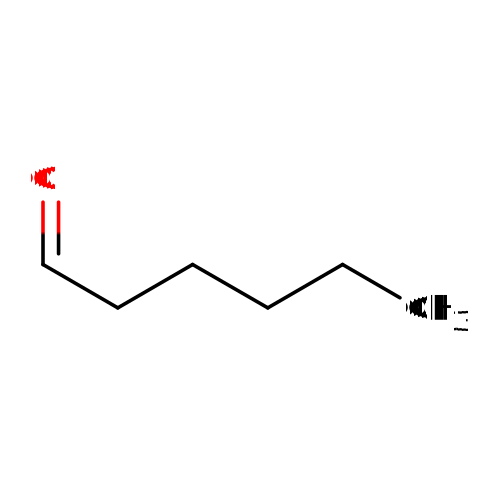
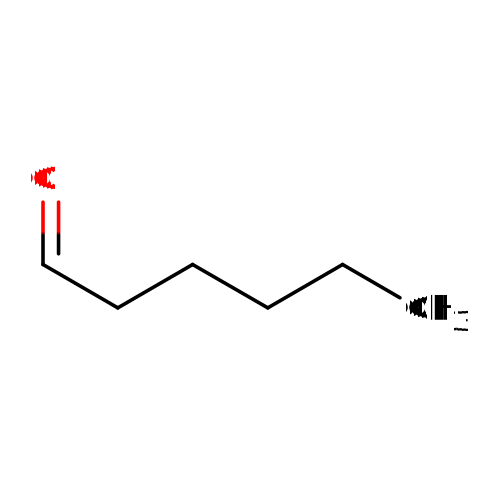
| Common Name | Hexanal |
|---|
| Description | Hexanal is an alkyl aldehyde found in human biofluids. Human milk samples collected from women contains hexanal. Among mediators of oxidative stress, highly reactive secondary aldehydic lipid peroxidation products can initiate the processes of spontaneous mutagenesis and carcinogenesis and can also act as a growth-regulating factors and signaling molecules. In specimens obtained from adult patients with brain astrocytomas, lower levels of n-hexanal are associated with poorer patient prognosis. Hexanal has also been identified as a uremic toxin according to the European Uremic Toxin Working Group (PMID:22626821 ). Hexanal is a volatile compound that has been associated with the development of undesirable flavours. The content of hexanal, which is a major breakdown product of linoleic acid (LA, n - 6 PUFA) oxidation, has been used to follow the course of lipid oxidation and off-flavour development in foods, and have been proposed as one potential marker of milk quality. A "cardboard-like" off-flavour is frequently associated with dehydrated milk products. This effect is highly correlated with the headspace concentration of hexanal. (Food Chemistry. Volume 107, Issue 1, 1 March 2008, Pages 558-569, PMID:17934948 , 17487452 ). |
|---|
| Structure | InChI=1S/C6H12O/c1-2-3-4-5-6-7/h6H,2-5H2,1H3 |
|---|
| Synonyms | | Value | Source |
|---|
| 1-Hexanal | ChEBI | | Aldehyde C-6 | ChEBI | | C6 Aldehyde | ChEBI | | Caproaldehyde | ChEBI | | Caproic aldehyde | ChEBI | | Hexaldehyde | ChEBI | | Hexan-1-al | ChEBI | | Hexanaldehyde | ChEBI | | Hexoic aldehyde | ChEBI | | Hexylaldehyde | ChEBI | | N-C5H11CHO | ChEBI | | N-Caproaldehyde | ChEBI | | N-Caproic aldehyde | ChEBI | | N-Hexanal | ChEBI | | N-Hexylaldehyde | ChEBI | | Capronaldehyde | HMDB | | Hexanal | MeSH | | n-Capronaldehyde | HMDB |
|
|---|
| Chemical Formula | C6H12O |
|---|
| Average Molecular Weight | 100.1589 |
|---|
| Monoisotopic Molecular Weight | 100.088815006 |
|---|
| IUPAC Name | hexanal |
|---|
| Traditional Name | hexanal |
|---|
| CAS Registry Number | 66-25-1 |
|---|
| SMILES | CCCCCC=O |
|---|
| InChI Identifier | InChI=1S/C6H12O/c1-2-3-4-5-6-7/h6H,2-5H2,1H3 |
|---|
| InChI Key | JARKCYVAAOWBJS-UHFFFAOYSA-N |
|---|
| Chemical Taxonomy |
|---|
| Description | Belongs to the class of organic compounds known as medium-chain aldehydes. These are an aldehyde with a chain length containing between 6 and 12 carbon atoms. |
|---|
| Kingdom | Organic compounds |
|---|
| Super Class | Organic oxygen compounds |
|---|
| Class | Organooxygen compounds |
|---|
| Sub Class | Carbonyl compounds |
|---|
| Direct Parent | Medium-chain aldehydes |
|---|
| Alternative Parents | |
|---|
| Substituents | - Medium-chain aldehyde
- Alpha-hydrogen aldehyde
- Organic oxide
- Hydrocarbon derivative
- Aliphatic acyclic compound
|
|---|
| Molecular Framework | Aliphatic acyclic compounds |
|---|
| External Descriptors | |
|---|
| Ontology |
|---|
| Physiological effect | |
|---|
| Disposition | |
|---|
| Process | Not Available |
|---|
| Role | |
|---|
| Physical Properties |
|---|
| State | Liquid |
|---|
| Experimental Molecular Properties | | Property | Value | Reference |
|---|
| Melting Point | -56 °C | Not Available | | Boiling Point | 130.00 to 131.00 °C. @ 760.00 mm Hg | The Good Scents Company Information System | | Water Solubility | 5.64 mg/mL at 30 °C | Not Available | | LogP | 1.78 | HANSCH,C ET AL. (1995) |
|
|---|
| Experimental Chromatographic Properties | Not Available |
|---|
| Predicted Molecular Properties | |
|---|
| Predicted Chromatographic Properties | Predicted Collision Cross SectionsPredicted Kovats Retention IndicesUnderivatizedDerivatized| Derivative Name / Structure | SMILES | Kovats RI Value | Column Type | Reference |
|---|
| Hexanal,1TMS,isomer #1 | CCCCC=CO[Si](C)(C)C | 1025.9 | Semi standard non polar | 33892256 | | Hexanal,1TMS,isomer #1 | CCCCC=CO[Si](C)(C)C | 974.6 | Standard non polar | 33892256 | | Hexanal,1TMS,isomer #1 | CCCCC=CO[Si](C)(C)C | 1082.5 | Standard polar | 33892256 | | Hexanal,1TBDMS,isomer #1 | CCCCC=CO[Si](C)(C)C(C)(C)C | 1245.3 | Semi standard non polar | 33892256 | | Hexanal,1TBDMS,isomer #1 | CCCCC=CO[Si](C)(C)C(C)(C)C | 1206.5 | Standard non polar | 33892256 | | Hexanal,1TBDMS,isomer #1 | CCCCC=CO[Si](C)(C)C(C)(C)C | 1267.7 | Standard polar | 33892256 |
|
|---|
| GC-MS Spectra| Spectrum Type | Description | Splash Key | Deposition Date | Source | View |
|---|
| Experimental GC-MS | GC-MS Spectrum - Hexanal EI-B (Non-derivatized) | splash10-0006-9000000000-65f52440a5d20229be6c | 2017-09-12 | HMDB team, MONA, MassBank | View Spectrum | | Experimental GC-MS | GC-MS Spectrum - Hexanal EI-B (Non-derivatized) | splash10-052f-9000000000-89f4d5edf8639a778ef4 | 2017-09-12 | HMDB team, MONA, MassBank | View Spectrum | | Experimental GC-MS | GC-MS Spectrum - Hexanal EI-B (Non-derivatized) | splash10-052f-9000000000-98fd24ab2b6d3d9cf3cf | 2017-09-12 | HMDB team, MONA, MassBank | View Spectrum | | Experimental GC-MS | GC-MS Spectrum - Hexanal EI-B (Non-derivatized) | splash10-0006-9000000000-65f52440a5d20229be6c | 2018-05-18 | HMDB team, MONA, MassBank | View Spectrum | | Experimental GC-MS | GC-MS Spectrum - Hexanal EI-B (Non-derivatized) | splash10-052f-9000000000-89f4d5edf8639a778ef4 | 2018-05-18 | HMDB team, MONA, MassBank | View Spectrum | | Experimental GC-MS | GC-MS Spectrum - Hexanal EI-B (Non-derivatized) | splash10-052f-9000000000-98fd24ab2b6d3d9cf3cf | 2018-05-18 | HMDB team, MONA, MassBank | View Spectrum | | Predicted GC-MS | Predicted GC-MS Spectrum - Hexanal GC-MS (Non-derivatized) - 70eV, Positive | splash10-004l-9000000000-f6f6f2d2922256923f62 | 2016-09-22 | Wishart Lab | View Spectrum | | Predicted GC-MS | Predicted GC-MS Spectrum - Hexanal GC-MS (Non-derivatized) - 70eV, Positive | Not Available | 2021-10-12 | Wishart Lab | View Spectrum | | MS | Mass Spectrum (Electron Ionization) | splash10-052f-9000000000-72ae5d9e7cc61abeff7f | 2014-09-20 | Not Available | View Spectrum |
MS/MS Spectra| Spectrum Type | Description | Splash Key | Deposition Date | Source | View |
|---|
| Experimental LC-MS/MS | LC-MS/MS Spectrum - Hexanal Quattro_QQQ 10V, N/A-QTOF (Annotated) | splash10-0089-9200000000-a864c6ae8f499374570f | 2012-07-25 | HMDB team, MONA | View Spectrum | | Experimental LC-MS/MS | LC-MS/MS Spectrum - Hexanal Quattro_QQQ 25V, N/A-QTOF (Annotated) | splash10-00lr-9000000000-c35aa664e0abaa7ff754 | 2012-07-25 | HMDB team, MONA | View Spectrum | | Experimental LC-MS/MS | LC-MS/MS Spectrum - Hexanal Quattro_QQQ 40V, N/A-QTOF (Annotated) | splash10-00lr-9100000000-32a2d24a74c86ead890b | 2012-07-25 | HMDB team, MONA | View Spectrum | | Experimental LC-MS/MS | LC-MS/MS Spectrum - Hexanal EI-B (HITACHI RMU-6M) , Positive-QTOF | splash10-0006-9000000000-65f52440a5d20229be6c | 2012-08-31 | HMDB team, MONA | View Spectrum | | Experimental LC-MS/MS | LC-MS/MS Spectrum - Hexanal EI-B (HITACHI M-80B) , Positive-QTOF | splash10-052f-9000000000-13ae9f72ffb8573eac28 | 2012-08-31 | HMDB team, MONA | View Spectrum | | Experimental LC-MS/MS | LC-MS/MS Spectrum - Hexanal EI-B (HITACHI RMU-6M) , Positive-QTOF | splash10-052f-9000000000-e06f68e7ce93f5ced938 | 2012-08-31 | HMDB team, MONA | View Spectrum | | Predicted LC-MS/MS | Predicted LC-MS/MS Spectrum - Hexanal 10V, Positive-QTOF | splash10-0udi-4900000000-3680e8fedab54e7572cb | 2015-05-27 | Wishart Lab | View Spectrum | | Predicted LC-MS/MS | Predicted LC-MS/MS Spectrum - Hexanal 20V, Positive-QTOF | splash10-0ue9-9400000000-d3150dfd70fdee4bfc78 | 2015-05-27 | Wishart Lab | View Spectrum | | Predicted LC-MS/MS | Predicted LC-MS/MS Spectrum - Hexanal 40V, Positive-QTOF | splash10-052f-9000000000-c161db43b692fc558533 | 2015-05-27 | Wishart Lab | View Spectrum | | Predicted LC-MS/MS | Predicted LC-MS/MS Spectrum - Hexanal 10V, Negative-QTOF | splash10-0002-9000000000-16f962506c9316343166 | 2015-05-27 | Wishart Lab | View Spectrum | | Predicted LC-MS/MS | Predicted LC-MS/MS Spectrum - Hexanal 20V, Negative-QTOF | splash10-0002-9000000000-1fd34894f517ecf1f19a | 2015-05-27 | Wishart Lab | View Spectrum | | Predicted LC-MS/MS | Predicted LC-MS/MS Spectrum - Hexanal 40V, Negative-QTOF | splash10-0006-9000000000-054aa18a9a05fa35cf01 | 2015-05-27 | Wishart Lab | View Spectrum | | Predicted LC-MS/MS | Predicted LC-MS/MS Spectrum - Hexanal 10V, Negative-QTOF | splash10-0002-9000000000-658fe53778817eb82301 | 2021-09-22 | Wishart Lab | View Spectrum | | Predicted LC-MS/MS | Predicted LC-MS/MS Spectrum - Hexanal 20V, Negative-QTOF | splash10-001i-9000000000-b0e3f2f55178b8aacda1 | 2021-09-22 | Wishart Lab | View Spectrum | | Predicted LC-MS/MS | Predicted LC-MS/MS Spectrum - Hexanal 40V, Negative-QTOF | splash10-0006-9000000000-c5c7ace495de00bff008 | 2021-09-22 | Wishart Lab | View Spectrum | | Predicted LC-MS/MS | Predicted LC-MS/MS Spectrum - Hexanal 10V, Positive-QTOF | splash10-0a5c-9000000000-d214e2877cddafdcb757 | 2021-09-23 | Wishart Lab | View Spectrum | | Predicted LC-MS/MS | Predicted LC-MS/MS Spectrum - Hexanal 20V, Positive-QTOF | splash10-052f-9000000000-f2f5a7e46a17ef9b2c6b | 2021-09-23 | Wishart Lab | View Spectrum | | Predicted LC-MS/MS | Predicted LC-MS/MS Spectrum - Hexanal 40V, Positive-QTOF | splash10-0a4l-9000000000-7d79b3949754c5802624 | 2021-09-23 | Wishart Lab | View Spectrum |
NMR Spectra| Spectrum Type | Description | Deposition Date | Source | View |
|---|
| Predicted 1D NMR | 13C NMR Spectrum (1D, 100 MHz, D2O, predicted) | 2021-09-16 | Wishart Lab | View Spectrum | | Predicted 1D NMR | 1H NMR Spectrum (1D, 100 MHz, D2O, predicted) | 2021-09-16 | Wishart Lab | View Spectrum | | Predicted 1D NMR | 13C NMR Spectrum (1D, 200 MHz, D2O, predicted) | 2021-09-16 | Wishart Lab | View Spectrum | | Predicted 1D NMR | 1H NMR Spectrum (1D, 200 MHz, D2O, predicted) | 2021-09-16 | Wishart Lab | View Spectrum | | Predicted 1D NMR | 13C NMR Spectrum (1D, 300 MHz, D2O, predicted) | 2021-09-16 | Wishart Lab | View Spectrum | | Predicted 1D NMR | 1H NMR Spectrum (1D, 300 MHz, D2O, predicted) | 2021-09-16 | Wishart Lab | View Spectrum | | Predicted 1D NMR | 13C NMR Spectrum (1D, 400 MHz, D2O, predicted) | 2021-09-16 | Wishart Lab | View Spectrum | | Predicted 1D NMR | 1H NMR Spectrum (1D, 400 MHz, D2O, predicted) | 2021-09-16 | Wishart Lab | View Spectrum | | Predicted 1D NMR | 13C NMR Spectrum (1D, 500 MHz, D2O, predicted) | 2021-09-16 | Wishart Lab | View Spectrum | | Predicted 1D NMR | 1H NMR Spectrum (1D, 500 MHz, D2O, predicted) | 2021-09-16 | Wishart Lab | View Spectrum | | Predicted 1D NMR | 13C NMR Spectrum (1D, 600 MHz, D2O, predicted) | 2021-09-16 | Wishart Lab | View Spectrum | | Predicted 1D NMR | 1H NMR Spectrum (1D, 600 MHz, D2O, predicted) | 2021-09-16 | Wishart Lab | View Spectrum | | Predicted 1D NMR | 13C NMR Spectrum (1D, 700 MHz, D2O, predicted) | 2021-09-16 | Wishart Lab | View Spectrum | | Predicted 1D NMR | 1H NMR Spectrum (1D, 700 MHz, D2O, predicted) | 2021-09-16 | Wishart Lab | View Spectrum | | Predicted 1D NMR | 13C NMR Spectrum (1D, 800 MHz, D2O, predicted) | 2021-09-16 | Wishart Lab | View Spectrum | | Predicted 1D NMR | 1H NMR Spectrum (1D, 800 MHz, D2O, predicted) | 2021-09-16 | Wishart Lab | View Spectrum | | Predicted 1D NMR | 13C NMR Spectrum (1D, 900 MHz, D2O, predicted) | 2021-09-16 | Wishart Lab | View Spectrum | | Predicted 1D NMR | 1H NMR Spectrum (1D, 900 MHz, D2O, predicted) | 2021-09-16 | Wishart Lab | View Spectrum | | Predicted 1D NMR | 13C NMR Spectrum (1D, 1000 MHz, D2O, predicted) | 2021-09-16 | Wishart Lab | View Spectrum | | Predicted 1D NMR | 1H NMR Spectrum (1D, 1000 MHz, D2O, predicted) | 2021-09-16 | Wishart Lab | View Spectrum | | Experimental 1D NMR | 1H NMR Spectrum (1D, 600 MHz, CDCl3, experimental) | 2021-10-10 | Wishart Lab | View Spectrum | | Experimental 2D NMR | [1H, 13C]-HSQC NMR Spectrum (2D, 600 MHz, CDCl3, experimental) | 2012-12-05 | Wishart Lab | View Spectrum |
IR Spectra| Spectrum Type | Description | Deposition Date | Source | View |
|---|
| Predicted IR Spectrum | IR Ion Spectrum (Predicted IRIS Spectrum, Adduct: [M+H]+) | 2023-02-03 | FELIX lab | View Spectrum | | Predicted IR Spectrum | IR Ion Spectrum (Predicted IRIS Spectrum, Adduct: [M+Na]+) | 2023-02-03 | FELIX lab | View Spectrum |
|
|---|
| Disease References | | Uremia |
|---|
- Duranton F, Cohen G, De Smet R, Rodriguez M, Jankowski J, Vanholder R, Argiles A: Normal and pathologic concentrations of uremic toxins. J Am Soc Nephrol. 2012 Jul;23(7):1258-70. doi: 10.1681/ASN.2011121175. Epub 2012 May 24. [PubMed:22626821 ]
| | Ulcerative colitis |
|---|
- Garner CE, Smith S, de Lacy Costello B, White P, Spencer R, Probert CS, Ratcliffe NM: Volatile organic compounds from feces and their potential for diagnosis of gastrointestinal disease. FASEB J. 2007 Jun;21(8):1675-88. Epub 2007 Feb 21. [PubMed:17314143 ]
- Ahmed I, Greenwood R, Costello B, Ratcliffe N, Probert CS: Investigation of faecal volatile organic metabolites as novel diagnostic biomarkers in inflammatory bowel disease. Aliment Pharmacol Ther. 2016 Mar;43(5):596-611. doi: 10.1111/apt.13522. Epub 2016 Jan 25. [PubMed:26806034 ]
| | Celiac disease |
|---|
- Di Cagno R, De Angelis M, De Pasquale I, Ndagijimana M, Vernocchi P, Ricciuti P, Gagliardi F, Laghi L, Crecchio C, Guerzoni ME, Gobbetti M, Francavilla R: Duodenal and faecal microbiota of celiac children: molecular, phenotype and metabolome characterization. BMC Microbiol. 2011 Oct 4;11:219. doi: 10.1186/1471-2180-11-219. [PubMed:21970810 ]
| | Nonalcoholic fatty liver disease |
|---|
- Raman M, Ahmed I, Gillevet PM, Probert CS, Ratcliffe NM, Smith S, Greenwood R, Sikaroodi M, Lam V, Crotty P, Bailey J, Myers RP, Rioux KP: Fecal microbiome and volatile organic compound metabolome in obese humans with nonalcoholic fatty liver disease. Clin Gastroenterol Hepatol. 2013 Jul;11(7):868-75.e1-3. doi: 10.1016/j.cgh.2013.02.015. Epub 2013 Feb 27. [PubMed:23454028 ]
| | Crohn's disease |
|---|
- Ahmed I, Greenwood R, Costello B, Ratcliffe N, Probert CS: Investigation of faecal volatile organic metabolites as novel diagnostic biomarkers in inflammatory bowel disease. Aliment Pharmacol Ther. 2016 Mar;43(5):596-611. doi: 10.1111/apt.13522. Epub 2016 Jan 25. [PubMed:26806034 ]
| | Perillyl alcohol administration for cancer treatment |
|---|
- Silva CL, Passos M, Camara JS: Solid phase microextraction, mass spectrometry and metabolomic approaches for detection of potential urinary cancer biomarkers--a powerful strategy for breast cancer diagnosis. Talanta. 2012 Jan 30;89:360-8. doi: 10.1016/j.talanta.2011.12.041. Epub 2011 Dec 22. [PubMed:22284503 ]
|
|
|---|