| Record Information |
|---|
| Version | 5.0 |
|---|
| Status | Detected and Quantified |
|---|
| Creation Date | 2005-11-16 15:48:42 UTC |
|---|
| Update Date | 2022-03-07 02:48:59 UTC |
|---|
| HMDB ID | HMDB0000067 |
|---|
| Secondary Accession Numbers | - HMDB0000507
- HMDB00067
- HMDB00507
- HMDB0062453
- HMDB62453
|
|---|
| Metabolite Identification |
|---|
| Common Name | Cholesterol |
|---|
| Description | Cholesterol is a sterol (a combination steroid and alcohol) and a lipid found in the cell membranes of all body tissues and transported in the blood plasma of all animals. The name originates from the Greek chole- (bile) and stereos (solid), and the chemical suffix -ol for an alcohol. This is because researchers first identified cholesterol in solid form in gallstones in 1784. In the body, cholesterol can exist in either the free form or as an ester with a single fatty acid (of 10-20 carbons in length) covalently attached to the hydroxyl group at position 3 of the cholesterol ring. Due to the mechanism of synthesis, plasma cholesterol esters tend to contain relatively high proportions of polyunsaturated fatty acids. Most of the cholesterol consumed as a dietary lipid exists as cholesterol esters. Cholesterol esters have a lower solubility in water than cholesterol and are more hydrophobic. They are hydrolyzed by the pancreatic enzyme cholesterol esterase to produce cholesterol and free fatty acids. Cholesterol has vital structural roles in membranes and in lipid metabolism in general. It is a biosynthetic precursor of bile acids, vitamin D, and steroid hormones (glucocorticoids, estrogens, progesterones, androgens and aldosterone). In addition, it contributes to the development and functioning of the central nervous system, and it has major functions in signal transduction and sperm development. Cholesterol is a ubiquitous component of all animal tissues where much of it is located in the membranes, although it is not evenly distributed. The highest proportion of unesterified cholesterol is in the plasma membrane (roughly 30-50% of the lipid in the membrane or 60-80% of the cholesterol in the cell), while mitochondria and the endoplasmic reticulum have very low cholesterol contents. Cholesterol is also enriched in early and recycling endosomes, but not in late endosomes. The brain contains more cholesterol than any other organ where it comprises roughly a quarter of the total free cholesterol in the human body. Of all the organic constituents of blood, only glucose is present in a higher molar concentration than cholesterol. Cholesterol esters appear to be the preferred form for transport in plasma and as a biologically inert storage (de-toxified) form. They do not contribute to membranes but are packed into intracellular lipid particles. Cholesterol molecules (i.e. cholesterol esters) are transported throughout the body via lipoprotein particles. The largest lipoproteins, which primarily transport fats from the intestinal mucosa to the liver, are called chylomicrons. They carry mostly triglyceride fats and cholesterol that are from food, especially internal cholesterol secreted by the liver into the bile. In the liver, chylomicron particles give up triglycerides and some cholesterol. They are then converted into low-density lipoprotein (LDL) particles, which carry triglycerides and cholesterol on to other body cells. In healthy individuals, the LDL particles are large and relatively few in number. In contrast, large numbers of small LDL particles are strongly associated with promoting atheromatous disease within the arteries. (Lack of information on LDL particle number and size is one of the major problems of conventional lipid tests.). In conditions with elevated concentrations of oxidized LDL particles, especially small LDL particles, cholesterol promotes atheroma plaque deposits in the walls of arteries, a condition known as atherosclerosis, which is a major contributor to coronary heart disease and other forms of cardiovascular disease. There is a worldwide trend to believe that lower total cholesterol levels tend to correlate with lower atherosclerosis event rates (though some studies refute this idea). As a result, cholesterol has become a very large focus for the scientific community trying to determine the proper amount of cholesterol needed in a healthy diet. However, the primary association of atherosclerosis with cholesterol has always been specifically with cholesterol transport patterns, not total cholesterol per se. For example, total cholesterol can be low, yet made up primarily of small LDL and small HDL particles and atheroma growth rates are high. In contrast, however, if LDL particle number is low (mostly large particles) and a large percentage of the HDL particles are large (HDL is actively reverse transporting cholesterol), then atheroma growth rates are usually low, even negative, for any given total cholesterol concentration. These effects are further complicated by the relative concentration of asymmetric dimethylarginine (ADMA) in the endothelium since ADMA down-regulates production of nitric oxide, a relaxant of the endothelium. Thus, high levels of ADMA, associated with highly oxidized levels of LDL, pose a heightened risk factor for vascular disease. Chronically high levels of cholesterol are associated with at least five inborn errors of metabolism, including cerebrotendinous xanthomatosis, cholesteryl ester storage disease, congenital lipoid adrenal hyperplasia, hypercholesterolemia, and Zellweger syndrome. In chronically high levels, cholesterol can function as an atherogen (causes atherosclerosis and cardiovascular disease). Specifically, chronically high levels (from diet or from genetic predisposition or from diseases such as hyperlipidemia) of cholesterol and cholesterol esters lead to an excess of low-density lipoprotein (LDL) particles. In healthy individuals, the LDL particles are large and relatively few in number. In contrast, large numbers of small LDL particles are strongly associated with promoting atheromatous disease within the arteries. In conditions with elevated concentrations of oxidized LDL particles, especially small LDL particles, cholesterol promotes atheroma plaque deposits in the walls of arteries, a condition known as atherosclerosis, which is a major contributor to coronary heart disease and other forms of cardiovascular disease. Resistin, a protein secreted by fat tissue, has been shown to increase the production of LDL in human liver cells and also degrades LDL receptors in the liver. As a result, the liver is less able to clear cholesterol from the bloodstream. Resistin accelerates the accumulation of LDL in arteries, increasing the risk of heart disease. Cholesterol is considered to be practically insoluble (in water) and basic. |
|---|
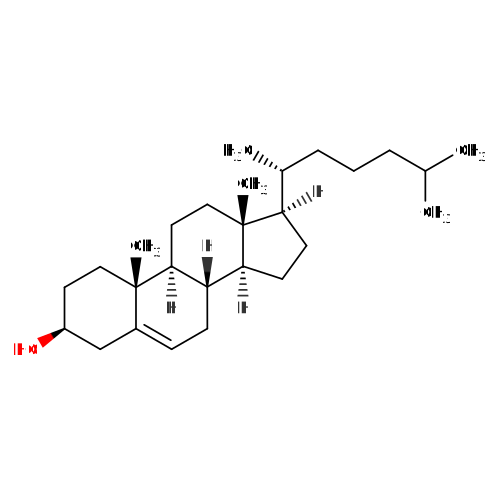
| Structure | [H][C@@]1(CC[C@@]2([H])[C@]3([H])CC=C4C[C@@H](O)CC[C@]4(C)[C@@]3([H])CC[C@]12C)[C@H](C)CCCC(C)C InChI=1S/C27H46O/c1-18(2)7-6-8-19(3)23-11-12-24-22-10-9-20-17-21(28)13-15-26(20,4)25(22)14-16-27(23,24)5/h9,18-19,21-25,28H,6-8,10-17H2,1-5H3/t19-,21+,22+,23-,24+,25+,26+,27-/m1/s1 |
|---|
| Synonyms | | Value | Source |
|---|
| (3beta,14beta,17alpha)-Cholest-5-en-3-ol | ChEBI | | Cholest-5-en-3beta-ol | ChEBI | | Cholesterin | ChEBI | | (3b,14b,17a)-Cholest-5-en-3-ol | Generator | | (3Β,14β,17α)-cholest-5-en-3-ol | Generator | | Cholest-5-en-3b-ol | Generator | | Cholest-5-en-3β-ol | Generator | | (3Β)-cholest-5-en-3-ol | HMDB | | (3beta)-Cholest-5-en-3-ol | HMDB | | 3Β-hydroxycholest-5-ene | HMDB | | 3beta-Hydroxycholest-5-ene | HMDB | | 5:6-Cholesten-3β-ol | HMDB | | 5:6-Cholesten-3beta-ol | HMDB | | (-)-Cholesterol | HMDB | | Cholesterine | HMDB | | Cholesterol base H | HMDB | | Cholesteryl alcohol | HMDB | | Cholestrin | HMDB | | Cholestrol | HMDB | | Cordulan | HMDB | | Dastar | HMDB | | Dusoline | HMDB | | Dusoran | HMDB | | Dythol | HMDB | | Fancol CH | HMDB | | Hydrocerin | HMDB | | Kathro | HMDB | | Lanol | HMDB | | Super hartolan | HMDB | | Tegolan | HMDB | | Cholesterol | HMDB | | delta5-Cholesten-3beta-ol | PhytoBank | | Δ5-Cholesten-3β-ol | PhytoBank |
|
|---|
| Chemical Formula | C27H46O |
|---|
| Average Molecular Weight | 386.6535 |
|---|
| Monoisotopic Molecular Weight | 386.354866094 |
|---|
| IUPAC Name | (1S,2R,5S,10S,11S,14R,15R)-2,15-dimethyl-14-[(2R)-6-methylheptan-2-yl]tetracyclo[8.7.0.0^{2,7}.0^{11,15}]heptadec-7-en-5-ol |
|---|
| Traditional Name | (1S,2R,5S,10S,11S,14R,15R)-2,15-dimethyl-14-[(2R)-6-methylheptan-2-yl]tetracyclo[8.7.0.0^{2,7}.0^{11,15}]heptadec-7-en-5-ol |
|---|
| CAS Registry Number | 57-88-5 |
|---|
| SMILES | [H][C@@]1(CC[C@@]2([H])[C@]3([H])CC=C4C[C@@H](O)CC[C@]4(C)[C@@]3([H])CC[C@]12C)[C@H](C)CCCC(C)C |
|---|
| InChI Identifier | InChI=1S/C27H46O/c1-18(2)7-6-8-19(3)23-11-12-24-22-10-9-20-17-21(28)13-15-26(20,4)25(22)14-16-27(23,24)5/h9,18-19,21-25,28H,6-8,10-17H2,1-5H3/t19-,21+,22+,23-,24+,25+,26+,27-/m1/s1 |
|---|
| InChI Key | HVYWMOMLDIMFJA-DPAQBDIFSA-N |
|---|
| Chemical Taxonomy |
|---|
| Description | Belongs to the class of organic compounds known as cholesterols and derivatives. Cholesterols and derivatives are compounds containing a 3-hydroxylated cholestane core. |
|---|
| Kingdom | Organic compounds |
|---|
| Super Class | Lipids and lipid-like molecules |
|---|
| Class | Steroids and steroid derivatives |
|---|
| Sub Class | Cholestane steroids |
|---|
| Direct Parent | Cholesterols and derivatives |
|---|
| Alternative Parents | |
|---|
| Substituents | - Cholesterol-skeleton
- Cholesterol
- 3-beta-hydroxysteroid
- 3-beta-hydroxy-delta-5-steroid
- Hydroxysteroid
- 3-hydroxysteroid
- 3-hydroxy-delta-5-steroid
- Delta-5-steroid
- Cyclic alcohol
- Secondary alcohol
- Organic oxygen compound
- Hydrocarbon derivative
- Organooxygen compound
- Alcohol
- Aliphatic homopolycyclic compound
|
|---|
| Molecular Framework | Aliphatic homopolycyclic compounds |
|---|
| External Descriptors | |
|---|
| Ontology |
|---|
| Physiological effect | Not Available |
|---|
| Disposition | Biological locationSourceExogenous- Exogenous (HMDB: HMDB0000067)
FoodAnimal originHerb and spiceVegetableFruitNutCereal and cereal productPulseGourdCoffee and coffee productSoyDishTeaBaking goodBeverageAquatic originEggConfectioneryMilk and milk productOther milk productFermented milkFermented milk productUnfermented milk- Milk (Other mammals) (FooDB: FOOD00690)
- Milk (Human) (FooDB: FOOD00666)
- Milk (Cow) (FooDB: FOOD00618)
- Cow milk, pasteurized, vitamin A + D added, 0% fat (FooDB: FOOD00889)
- Cow milk, pasteurized, vitamin A + D added, 1% fat (FooDB: FOOD00890)
- Cow milk, pasteurized, vitamin A + D added, 2% fat (FooDB: FOOD00891)
- Cow milk, pasteurized, vitamin D added, 3.25% fat (FooDB: FOOD00892)
- Milk and milk products (FooDB: FOOD00863)
Fat and oilCocoa and cocoa productBaby foodUnclassified food or beverageSnack
Endogenous |
|---|
| Process | |
|---|
| Role | |
|---|
| Physical Properties |
|---|
| State | Solid |
|---|
| Experimental Molecular Properties | | Property | Value | Reference |
|---|
| Melting Point | 148 °C | Not Available | | Boiling Point | Not Available | Not Available | | Water Solubility | 9.5e-05 mg/mL | Not Available | | LogP | Not Available | Not Available |
|
|---|
| Experimental Chromatographic Properties | Not Available |
|---|
| Predicted Molecular Properties | |
|---|
| Predicted Chromatographic Properties | Predicted Collision Cross SectionsPredicted Retention Times Underivatized| Chromatographic Method | Retention Time | Reference |
|---|
| Measured using a Waters Acquity ultraperformance liquid chromatography (UPLC) ethylene-bridged hybrid (BEH) C18 column (100 mm × 2.1 mm; 1.7 μmparticle diameter). Predicted by Afia on May 17, 2022. Predicted by Afia on May 17, 2022. | 9.35 minutes | 32390414 | | Predicted by Siyang on May 30, 2022 | 27.2577 minutes | 33406817 | | Predicted by Siyang using ReTip algorithm on June 8, 2022 | 2.63 minutes | 32390414 | | Fem_Long = Waters ACQUITY UPLC HSS T3 C18 with Water:MeOH and 0.1% Formic Acid | 3658.3 seconds | 40023050 | | Fem_Lipids = Ascentis Express C18 with (60:40 water:ACN):(90:10 IPA:ACN) and 10mM NH4COOH + 0.1% Formic Acid | 843.2 seconds | 40023050 | | Life_Old = Waters ACQUITY UPLC BEH C18 with Water:(20:80 acetone:ACN) and 0.1% Formic Acid | 324.9 seconds | 40023050 | | Life_New = RP Waters ACQUITY UPLC HSS T3 C18 with Water:(30:70 MeOH:ACN) and 0.1% Formic Acid | 354.8 seconds | 40023050 | | RIKEN = Waters ACQUITY UPLC BEH C18 with Water:ACN and 0.1% Formic Acid | 714.4 seconds | 40023050 | | Eawag_XBridgeC18 = XBridge C18 3.5u 2.1x50 mm with Water:MeOH and 0.1% Formic Acid | 1268.5 seconds | 40023050 | | BfG_NTS_RP1 =Agilent Zorbax Eclipse Plus C18 (2.1 mm x 150 mm, 3.5 um) with Water:ACN and 0.1% Formic Acid | 1128.4 seconds | 40023050 | | HILIC_BDD_2 = Merck SeQuant ZIC-HILIC with ACN(0.1% formic acid):water(16 mM ammonium formate) | 104.0 seconds | 40023050 | | UniToyama_Atlantis = RP Waters Atlantis T3 (2.1 x 150 mm, 5 um) with ACN:Water and 0.1% Formic Acid | 2201.0 seconds | 40023050 | | BDD_C18 = Hypersil Gold 1.9µm C18 with Water:ACN and 0.1% Formic Acid | 717.1 seconds | 40023050 | | UFZ_Phenomenex = Kinetex Core-Shell C18 2.6 um, 3.0 x 100 mm, Phenomenex with Water:MeOH and 0.1% Formic Acid | 2297.4 seconds | 40023050 | | SNU_RIKEN_POS = Waters ACQUITY UPLC BEH C18 with Water:ACN and 0.1% Formic Acid | 787.1 seconds | 40023050 | | RPMMFDA = Waters ACQUITY UPLC BEH C18 with Water:ACN and 0.1% Formic Acid | 615.4 seconds | 40023050 | | MTBLS87 = Merck SeQuant ZIC-pHILIC column with ACN:Water and :ammonium carbonate | 348.1 seconds | 40023050 | | KI_GIAR_zic_HILIC_pH2_7 = Merck SeQuant ZIC-HILIC with ACN:Water and 0.1% FA | 743.9 seconds | 40023050 | | Meister zic-pHILIC pH9.3 = Merck SeQuant ZIC-pHILIC column with ACN:Water 5mM NH4Ac pH9.3 and 5mM ammonium acetate in water | 8.7 seconds | 40023050 |
Predicted Kovats Retention IndicesUnderivatizedDerivatized |
|---|
| GC-MS Spectra| Spectrum Type | Description | Splash Key | Deposition Date | Source | View |
|---|
| Experimental GC-MS | GC-MS Spectrum - Cholesterol GC-MS (1 TMS) | splash10-004i-3911000000-52f5261007adc218f8f8 | 2014-06-16 | HMDB team, MONA, MassBank | View Spectrum | | Experimental GC-MS | GC-MS Spectrum - Cholesterol EI-B (Non-derivatized) | splash10-052b-2932000000-1667c83d002043a59fff | 2017-09-12 | HMDB team, MONA, MassBank | View Spectrum | | Experimental GC-MS | GC-MS Spectrum - Cholesterol EI-B (Non-derivatized) | splash10-000l-9527000000-5529a262047f5369c9c1 | 2017-09-12 | HMDB team, MONA, MassBank | View Spectrum | | Experimental GC-MS | GC-MS Spectrum - Cholesterol EI-B (Non-derivatized) | splash10-0mkr-2954000000-60e7d1f5973e4de33dec | 2017-09-12 | HMDB team, MONA, MassBank | View Spectrum | | Experimental GC-MS | GC-MS Spectrum - Cholesterol CI-B (Non-derivatized) | splash10-014i-1009000000-e82b8e23dedb45ce70e6 | 2017-09-12 | HMDB team, MONA, MassBank | View Spectrum | | Experimental GC-MS | GC-MS Spectrum - Cholesterol GC-EI-TOF (Non-derivatized) | splash10-056v-2900000000-04687c9f19ff52ba4654 | 2017-09-12 | HMDB team, MONA, MassBank | View Spectrum | | Predicted GC-MS | Predicted GC-MS Spectrum - Cholesterol GC-MS (Non-derivatized) - 70eV, Positive | splash10-05i3-1109000000-8cd386b595bd5151c5a2 | 2017-09-20 | Wishart Lab | View Spectrum | | Predicted GC-MS | Predicted GC-MS Spectrum - Cholesterol GC-MS (1 TMS) - 70eV, Positive | splash10-0006-3104900000-698223f49da0b0c1cf81 | 2017-10-06 | Wishart Lab | View Spectrum | | Predicted GC-MS | Predicted GC-MS Spectrum - Cholesterol GC-MS (Non-derivatized) - 70eV, Positive | Not Available | 2021-10-12 | Wishart Lab | View Spectrum | | Predicted GC-MS | Predicted GC-MS Spectrum - Cholesterol GC-MS (Non-derivatized) - 70eV, Positive | Not Available | 2021-10-12 | Wishart Lab | View Spectrum | | Predicted GC-MS | Predicted GC-MS Spectrum - Cholesterol GC-MS (TBDMS_1_1) - 70eV, Positive | Not Available | 2021-11-05 | Wishart Lab | View Spectrum | | MS | Mass Spectrum (Electron Ionization) | splash10-0a4l-7922000000-36e8a5e1a77d2e71d1d1 | 2014-09-20 | Not Available | View Spectrum |
MS/MS Spectra| Spectrum Type | Description | Splash Key | Deposition Date | Source | View |
|---|
| Experimental LC-MS/MS | LC-MS/MS Spectrum - Cholesterol n/a 27V, positive-QTOF | splash10-052u-0690000000-36b4aea6637bdf069b5d | 2020-07-22 | HMDB team, MONA | View Spectrum | | Experimental LC-MS/MS | LC-MS/MS Spectrum - Cholesterol QTOF 5V, positive-QTOF | splash10-014i-3639000000-18a9275beb9bae48c1d7 | 2020-07-22 | HMDB team, MONA | View Spectrum | | Experimental LC-MS/MS | LC-MS/MS Spectrum - Cholesterol QTOF 10V, positive-QTOF | splash10-014j-4934000000-f755ada933cfcf53c303 | 2020-07-22 | HMDB team, MONA | View Spectrum | | Experimental LC-MS/MS | LC-MS/MS Spectrum - Cholesterol QTOF 15V, positive-QTOF | splash10-0002-5921000000-e7d43c825b9f6d45e679 | 2020-07-22 | HMDB team, MONA | View Spectrum | | Experimental LC-MS/MS | LC-MS/MS Spectrum - Cholesterol QTOF 20V, positive-QTOF | splash10-0532-5910000000-ce90c49b7429a03a65da | 2020-07-22 | HMDB team, MONA | View Spectrum | | Experimental LC-MS/MS | LC-MS/MS Spectrum - Cholesterol QTOF 30V, positive-QTOF | splash10-05nb-8900000000-2e8913fec7126b5b2a62 | 2020-07-22 | HMDB team, MONA | View Spectrum | | Experimental LC-MS/MS | LC-MS/MS Spectrum - Cholesterol QTOF 40V, positive-QTOF | splash10-0apl-9600000000-3096c7a78c3dd2e6a538 | 2020-07-22 | HMDB team, MONA | View Spectrum | | Experimental LC-MS/MS | LC-MS/MS Spectrum - Cholesterol QTOF 50V, positive-QTOF | splash10-067l-9400000000-1b57543b4cd0a05b9b3f | 2020-07-22 | HMDB team, MONA | View Spectrum | | Experimental LC-MS/MS | LC-MS/MS Spectrum - Cholesterol QTOF 60V, positive-QTOF | splash10-0aru-9300000000-45a29b76dfefce3f01ca | 2020-07-22 | HMDB team, MONA | View Spectrum | | Predicted LC-MS/MS | Predicted LC-MS/MS Spectrum - Cholesterol 10V, Positive-QTOF | splash10-014r-0009000000-dccd68f70545aeac4fab | 2017-07-26 | Wishart Lab | View Spectrum | | Predicted LC-MS/MS | Predicted LC-MS/MS Spectrum - Cholesterol 20V, Positive-QTOF | splash10-05p9-3149000000-7f25daf2b709c7e0d177 | 2017-07-26 | Wishart Lab | View Spectrum | | Predicted LC-MS/MS | Predicted LC-MS/MS Spectrum - Cholesterol 40V, Positive-QTOF | splash10-0c00-6269000000-5333d0216e01a3e43367 | 2017-07-26 | Wishart Lab | View Spectrum | | Predicted LC-MS/MS | Predicted LC-MS/MS Spectrum - Cholesterol 10V, Negative-QTOF | splash10-000i-0009000000-dc853b29b9e884bbb03b | 2017-07-26 | Wishart Lab | View Spectrum | | Predicted LC-MS/MS | Predicted LC-MS/MS Spectrum - Cholesterol 20V, Negative-QTOF | splash10-000i-0009000000-09d9608700564a6fef78 | 2017-07-26 | Wishart Lab | View Spectrum | | Predicted LC-MS/MS | Predicted LC-MS/MS Spectrum - Cholesterol 40V, Negative-QTOF | splash10-0ldi-1009000000-96f6e67651380e1c959e | 2017-07-26 | Wishart Lab | View Spectrum | | Predicted LC-MS/MS | Predicted LC-MS/MS Spectrum - Cholesterol 10V, Positive-QTOF | splash10-000i-0009000000-2d9cbc8b5b1fa392fb9b | 2021-09-23 | Wishart Lab | View Spectrum | | Predicted LC-MS/MS | Predicted LC-MS/MS Spectrum - Cholesterol 20V, Positive-QTOF | splash10-0abj-9173000000-9086873e4b65db1ced63 | 2021-09-23 | Wishart Lab | View Spectrum | | Predicted LC-MS/MS | Predicted LC-MS/MS Spectrum - Cholesterol 40V, Positive-QTOF | splash10-0a4i-8920000000-bd94fa538afb75d04765 | 2021-09-23 | Wishart Lab | View Spectrum | | Predicted LC-MS/MS | Predicted LC-MS/MS Spectrum - Cholesterol 10V, Negative-QTOF | splash10-000i-0009000000-c037f2d2f217e99b79ac | 2021-09-25 | Wishart Lab | View Spectrum | | Predicted LC-MS/MS | Predicted LC-MS/MS Spectrum - Cholesterol 20V, Negative-QTOF | splash10-000i-0009000000-7de5154056e69e7319e1 | 2021-09-25 | Wishart Lab | View Spectrum | | Predicted LC-MS/MS | Predicted LC-MS/MS Spectrum - Cholesterol 40V, Negative-QTOF | splash10-001i-0009000000-96c53273291d4857bde4 | 2021-09-25 | Wishart Lab | View Spectrum |
NMR Spectra| Spectrum Type | Description | Deposition Date | Source | View |
|---|
| Predicted 1D NMR | 13C NMR Spectrum (1D, 100 MHz, H2O, predicted) | 2022-08-23 | Wishart Lab | View Spectrum | | Predicted 1D NMR | 1H NMR Spectrum (1D, 100 MHz, H2O, predicted) | 2022-08-23 | Wishart Lab | View Spectrum | | Predicted 1D NMR | 13C NMR Spectrum (1D, 1000 MHz, H2O, predicted) | 2022-08-23 | Wishart Lab | View Spectrum | | Predicted 1D NMR | 1H NMR Spectrum (1D, 1000 MHz, H2O, predicted) | 2022-08-23 | Wishart Lab | View Spectrum | | Predicted 1D NMR | 13C NMR Spectrum (1D, 200 MHz, H2O, predicted) | 2022-08-23 | Wishart Lab | View Spectrum | | Predicted 1D NMR | 1H NMR Spectrum (1D, 200 MHz, H2O, predicted) | 2022-08-23 | Wishart Lab | View Spectrum | | Predicted 1D NMR | 13C NMR Spectrum (1D, 300 MHz, H2O, predicted) | 2022-08-23 | Wishart Lab | View Spectrum | | Predicted 1D NMR | 1H NMR Spectrum (1D, 300 MHz, H2O, predicted) | 2022-08-23 | Wishart Lab | View Spectrum | | Predicted 1D NMR | 13C NMR Spectrum (1D, 400 MHz, H2O, predicted) | 2022-08-23 | Wishart Lab | View Spectrum | | Predicted 1D NMR | 1H NMR Spectrum (1D, 400 MHz, H2O, predicted) | 2022-08-23 | Wishart Lab | View Spectrum | | Predicted 1D NMR | 13C NMR Spectrum (1D, 500 MHz, H2O, predicted) | 2022-08-23 | Wishart Lab | View Spectrum | | Predicted 1D NMR | 1H NMR Spectrum (1D, 500 MHz, H2O, predicted) | 2022-08-23 | Wishart Lab | View Spectrum | | Predicted 1D NMR | 13C NMR Spectrum (1D, 600 MHz, H2O, predicted) | 2022-08-23 | Wishart Lab | View Spectrum | | Predicted 1D NMR | 1H NMR Spectrum (1D, 600 MHz, H2O, predicted) | 2022-08-23 | Wishart Lab | View Spectrum | | Predicted 1D NMR | 13C NMR Spectrum (1D, 700 MHz, H2O, predicted) | 2022-08-23 | Wishart Lab | View Spectrum | | Predicted 1D NMR | 1H NMR Spectrum (1D, 700 MHz, H2O, predicted) | 2022-08-23 | Wishart Lab | View Spectrum | | Predicted 1D NMR | 13C NMR Spectrum (1D, 800 MHz, H2O, predicted) | 2022-08-23 | Wishart Lab | View Spectrum | | Predicted 1D NMR | 1H NMR Spectrum (1D, 800 MHz, H2O, predicted) | 2022-08-23 | Wishart Lab | View Spectrum | | Predicted 1D NMR | 13C NMR Spectrum (1D, 900 MHz, H2O, predicted) | 2022-08-23 | Wishart Lab | View Spectrum | | Predicted 1D NMR | 1H NMR Spectrum (1D, 900 MHz, H2O, predicted) | 2022-08-23 | Wishart Lab | View Spectrum |
|
|---|
| Disease References | | Cholelithiasis |
|---|
- Miettinen TE, Kesaniemi YA, Gylling H, Jarvinen H, Silvennoinen E, Miettinen TA: Noncholesterol sterols in bile and stones of patients with cholesterol and pigment stones. Hepatology. 1996 Feb;23(2):274-80. [PubMed:8591852 ]
| | Stomach cancer |
|---|
- Higashijima H, Ichimiya H, Nakano T, Yamashita H, Kuroki S, Satoh H, Chijiiwa K, Tanaka M: Deconjugation of bilirubin accelerates coprecipitation of cholesterol, fatty acids, and mucin in human bile--in vitro study. J Gastroenterol. 1996 Dec;31(6):828-35. [PubMed:9027647 ]
| | Gallbladder disease |
|---|
- Miettinen TE, Kesaniemi YA, Gylling H, Jarvinen H, Silvennoinen E, Miettinen TA: Noncholesterol sterols in bile and stones of patients with cholesterol and pigment stones. Hepatology. 1996 Feb;23(2):274-80. [PubMed:8591852 ]
- Mizuno S, Tazuma S, Kajiyama G: Stabilization of biliary lipid particles by ursodeoxycholic acid. Prolonged nucleation time in human gallbladder bile. Dig Dis Sci. 1993 Apr;38(4):684-93. [PubMed:8462368 ]
| | 3-Hydroxy-3-Methylglutaryl-CoA Synthase Deficiency |
|---|
- Conboy E, Vairo F, Schultz M, Agre K, Ridsdale R, Deyle D, Oglesbee D, Gavrilov D, Klee EW, Lanpher B: Mitochondrial 3-Hydroxy-3-Methylglutaryl-CoA Synthase Deficiency: Unique Presenting Laboratory Values and a Review of Biochemical and Clinical Features. JIMD Rep. 2017 Oct 14. doi: 10.1007/8904_2017_59. [PubMed:29030856 ]
| | Partial lipodystrophy |
|---|
- Akinci G, Topaloglu H, Demir T, Danyeli AE, Talim B, Keskin FE, Kadioglu P, Talip E, Altay C, Yaylali GF, Bilen H, Nur B, Demir L, Onay H, Akinci B: Clinical spectra of neuromuscular manifestations in patients with lipodystrophy: A multicenter study. Neuromuscul Disord. 2017 Oct;27(10):923-930. doi: 10.1016/j.nmd.2017.05.015. Epub 2017 Jun 1. [PubMed:28754454 ]
| | Hypercholesterolemia, familial |
|---|
- Kwiterovich PO Jr, Fredrickson DS, Levy RI: Familial hypercholesterolemia (one form of familial type II hyperlipoproteinemia). A study of its biochemical, genetic and clinical presentation in childhood. J Clin Invest. 1974 May;53(5):1237-49. doi: 10.1172/JCI107670. [PubMed:4363406 ]
| | SC4MOL deficiency |
|---|
- He M, Kratz LE, Michel JJ, Vallejo AN, Ferris L, Kelley RI, Hoover JJ, Jukic D, Gibson KM, Wolfe LA, Ramachandran D, Zwick ME, Vockley J: Mutations in the human SC4MOL gene encoding a methyl sterol oxidase cause psoriasiform dermatitis, microcephaly, and developmental delay. J Clin Invest. 2011 Mar;121(3):976-84. doi: 10.1172/JCI42650. [PubMed:21285510 ]
| | Chondrodysplasia punctata, X-linked dominant |
|---|
- Aughton DJ, Kelley RI, Metzenberg A, Pureza V, Pauli RM: X-linked dominant chondrodysplasia punctata (CDPX2) caused by single gene mosaicism in a male. Am J Med Genet A. 2003 Jan 30;116A(3):255-60. doi: 10.1002/ajmg.a.10852. [PubMed:12503102 ]
| | Desmosterolosis |
|---|
- Andersson HC, Kratz L, Kelley R: Desmosterolosis presenting with multiple congenital anomalies and profound developmental delay. Am J Med Genet. 2002 Dec 15;113(4):315-9. doi: 10.1002/ajmg.b.10873. [PubMed:12457401 ]
| | Donohue Syndrome |
|---|
- Nijim Y, Awni Y, Adawi A, Bowirrat A: Classic Case Report of Donohue Syndrome (Leprechaunism; OMIM *246200): The Impact of Consanguineous Mating. Medicine (Baltimore). 2016 Feb;95(6):e2710. doi: 10.1097/MD.0000000000002710. [PubMed:26871809 ]
| | Leptin Deficiency or Dysfunction |
|---|
- Farooqi IS, Jebb SA, Langmack G, Lawrence E, Cheetham CH, Prentice AM, Hughes IA, McCamish MA, O'Rahilly S: Effects of recombinant leptin therapy in a child with congenital leptin deficiency. N Engl J Med. 1999 Sep 16;341(12):879-84. doi: 10.1056/NEJM199909163411204. [PubMed:10486419 ]
| | Duchenne Muscular Dystrophy |
|---|
- Srivastava NK, Pradhan S, Mittal B, Gowda GA: High resolution NMR based analysis of serum lipids in Duchenne muscular dystrophy patients and its possible diagnostic significance. NMR Biomed. 2010 Jan;23(1):13-22. doi: 10.1002/nbm.1419. [PubMed:19787747 ]
| | Lecithin:cholesterol Acyltransferase Deficiency |
|---|
- Idzior-Walus B, Sieradzki J, Kostner G, Malecki MT, Klupa T, Wesolowska T, Rostworowski W, Hartwich J, Walus M, Kiec AD, Naruszewicz M: Familial lecithin-cholesterol acyltransferase deficiency: biochemical characteristics and molecular analysis of a new LCAT mutation in a Polish family. Atherosclerosis. 2006 Apr;185(2):413-20. Epub 2005 Jul 26. [PubMed:16051254 ]
| | Lipodystrophy |
|---|
- Akinci G, Topaloglu H, Demir T, Danyeli AE, Talim B, Keskin FE, Kadioglu P, Talip E, Altay C, Yaylali GF, Bilen H, Nur B, Demir L, Onay H, Akinci B: Clinical spectra of neuromuscular manifestations in patients with lipodystrophy: A multicenter study. Neuromuscul Disord. 2017 Oct;27(10):923-930. doi: 10.1016/j.nmd.2017.05.015. Epub 2017 Jun 1. [PubMed:28754454 ]
| | Lipodystrophy, Congenital Generalized |
|---|
- Akinci G, Topaloglu H, Demir T, Danyeli AE, Talim B, Keskin FE, Kadioglu P, Talip E, Altay C, Yaylali GF, Bilen H, Nur B, Demir L, Onay H, Akinci B: Clinical spectra of neuromuscular manifestations in patients with lipodystrophy: A multicenter study. Neuromuscul Disord. 2017 Oct;27(10):923-930. doi: 10.1016/j.nmd.2017.05.015. Epub 2017 Jun 1. [PubMed:28754454 ]
| | Oculocerebrorenal syndrome |
|---|
- Charnas LR, Bernardini I, Rader D, Hoeg JM, Gahl WA: Clinical and laboratory findings in the oculocerebrorenal syndrome of Lowe, with special reference to growth and renal function. N Engl J Med. 1991 May 9;324(19):1318-25. doi: 10.1056/NEJM199105093241904. [PubMed:2017228 ]
| | Familial partial lipodystrophy |
|---|
- Akinci G, Topaloglu H, Demir T, Danyeli AE, Talim B, Keskin FE, Kadioglu P, Talip E, Altay C, Yaylali GF, Bilen H, Nur B, Demir L, Onay H, Akinci B: Clinical spectra of neuromuscular manifestations in patients with lipodystrophy: A multicenter study. Neuromuscul Disord. 2017 Oct;27(10):923-930. doi: 10.1016/j.nmd.2017.05.015. Epub 2017 Jun 1. [PubMed:28754454 ]
| | Lathosterolosis |
|---|
- Ho AC, Fung CW, Siu TS, Ma OC, Lam CW, Tam S, Wong VC: Lathosterolosis: a disorder of cholesterol biosynthesis resembling smith-lemli-opitz syndrome. JIMD Rep. 2014;12:129-34. doi: 10.1007/8904_2013_255. Epub 2013 Oct 20. [PubMed:24142275 ]
| | Cerebrotendinous xanthomatosis |
|---|
- Siman-Tov T, Meiner V, Gadoth N: Could steroids mask the diagnosis of cerebrotendinous xanthomatosis? J Neurol Sci. 2006 Apr 15;243(1-2):83-6. Epub 2006 Jan 30. [PubMed:16445943 ]
- Agrawal NK, Garg S: Cerebrotendinous xanthomatosis: a rare disorder with a rare presentation. BMJ Case Rep. 2012 Sep 21;2012. pii: bcr-2012-006202. doi: 10.1136/bcr-2012-006202. [PubMed:23001091 ]
| | Antley-Bixler syndrome with genital anomalies and disordered steroidogenesis |
|---|
- Breckenridge WC, Alaupovic P, Cox DW, Little JA: Apolipoprotein and lipoprotein concentrations in familial apolipoprotein C-II deficiency. Atherosclerosis. 1982 Aug;44(2):223-35. [PubMed:7138621 ]
| | Abetalipoproteinemia |
|---|
- Lazaro RP, Dentinger MP, Rodichok LD, Barron KD, Satya-Murti S: Muscle pathology in Bassen-Kornzweig syndrome and vitamin E deficiency. Am J Clin Pathol. 1986 Sep;86(3):378-87. [PubMed:2944375 ]
| | Hyperlipoproteinemia |
|---|
- Nelson RH: Hyperlipidemia as a risk factor for cardiovascular disease. Prim Care. 2013 Mar;40(1):195-211. doi: 10.1016/j.pop.2012.11.003. Epub 2012 Dec 4. [PubMed:23402469 ]
- Cantin B, Boudriau S, Bertrand M, Brun LD, Gagne C, Rogers PA, Ven Murthy MR, Lupien PJ, Julien P: Hemolysis in primary lipoprotein lipase deficiency. Metabolism. 1995 May;44(5):652-8. [PubMed:7752915 ]
| | Primary hypomagnesemia |
|---|
- Jin-no Y, Kamiya Y, Okada M, Hirako M, Takada N, Kawaguchi M: Primary hypomagnesemia caused by isolated magnesium malabsorption: atypical case in adult. Intern Med. 1999 Mar;38(3):261-5. [PubMed:10337938 ]
| | Schizophrenia |
|---|
- Xuan J, Pan G, Qiu Y, Yang L, Su M, Liu Y, Chen J, Feng G, Fang Y, Jia W, Xing Q, He L: Metabolomic profiling to identify potential serum biomarkers for schizophrenia and risperidone action. J Proteome Res. 2011 Dec 2;10(12):5433-43. doi: 10.1021/pr2006796. Epub 2011 Nov 8. [PubMed:22007635 ]
- Al Awam K, Haussleiter IS, Dudley E, Donev R, Brune M, Juckel G, Thome J: Multiplatform metabolome and proteome profiling identifies serum metabolite and protein signatures as prospective biomarkers for schizophrenia. J Neural Transm (Vienna). 2015 Aug;122 Suppl 1:S111-22. doi: 10.1007/s00702-014-1224-0. Epub 2014 May 1. [PubMed:24789758 ]
| | Prostate cancer |
|---|
- Thysell E, Surowiec I, Hornberg E, Crnalic S, Widmark A, Johansson AI, Stattin P, Bergh A, Moritz T, Antti H, Wikstrom P: Metabolomic characterization of human prostate cancer bone metastases reveals increased levels of cholesterol. PLoS One. 2010 Dec 3;5(12):e14175. doi: 10.1371/journal.pone.0014175. [PubMed:21151972 ]
| | Smith-Lemli-Opitz syndrome |
|---|
- van Rooij A, Nijenhuis AA, Wijburg FA, Schutgens RB: Highly increased CSF concentrations of cholesterol precursors in Smith-Lemli-Opitz syndrome. J Inherit Metab Dis. 1997 Aug;20(4):578-80. [PubMed:9266395 ]
| | Cystinosis |
|---|
- Ueda M, O'Brien K, Rosing DR, Ling A, Kleta R, McAreavey D, Bernardini I, Gahl WA: Coronary artery and other vascular calcifications in patients with cystinosis after kidney transplantation. Clin J Am Soc Nephrol. 2006 May;1(3):555-62. Epub 2006 Feb 8. [PubMed:17699259 ]
- Gahl WA, Bernardini I, Dalakas M, Rizzo WB, Harper GS, Hoeg JM, Hurko O, Bernar J: Oral carnitine therapy in children with cystinosis and renal Fanconi syndrome. J Clin Invest. 1988 Feb;81(2):549-60. [PubMed:3276734 ]
- G.Frauendienst-Egger, Friedrich K. Trefz (2017). MetaGene: Metabolic & Genetic Information Center (MIC: http://www.metagene.de). METAGENE consortium.
| | Cholesteryl ester storage disease |
|---|
- Rassoul F, Richter V, Lohse P, Naumann A, Purschwitz K, Keller E: Long-term administration of the HMG-CoA reductase inhibitor lovastatin in two patients with cholesteryl ester storage disease. Int J Clin Pharmacol Ther. 2001 May;39(5):199-204. [PubMed:11380065 ]
- Chatrath H, Keilin S, Attar BM: Cholesterol ester storage disease (CESD) diagnosed in an asymptomatic adult. Dig Dis Sci. 2009 Jan;54(1):168-73. doi: 10.1007/s10620-008-0310-2. Epub 2008 May 14. [PubMed:18478331 ]
- Bernstein DL, Hulkova H, Bialer MG, Desnick RJ: Cholesteryl ester storage disease: review of the findings in 135 reported patients with an underdiagnosed disease. J Hepatol. 2013 Jun;58(6):1230-43. doi: 10.1016/j.jhep.2013.02.014. Epub 2013 Feb 26. [PubMed:23485521 ]
- G.Frauendienst-Egger, Friedrich K. Trefz (2017). MetaGene: Metabolic & Genetic Information Center (MIC: http://www.metagene.de). METAGENE consortium.
| | Hypercholesterolemia |
|---|
- Authors unspecified: Report of the National Cholesterol Education Program Expert Panel on Detection, Evaluation, and Treatment of High Blood Cholesterol in Adults. The Expert Panel. Arch Intern Med. 1988 Jan;148(1):36-69. [PubMed:3422148 ]
| | Acute myelogenous leukemia |
|---|
- Tatidis L, Vitols S, Gruber A, Paul C, Axelson M: Cholesterol catabolism in patients with acute myelogenous leukemia and hypocholesterolemia: suppressed levels of a circulating marker for bile acid synthesis. Cancer Lett. 2001 Sep 20;170(2):169-75. [PubMed:11463495 ]
| | Multiple sclerosis |
|---|
- Leoni V, Lutjohann D, Masterman T: Levels of 7-oxocholesterol in cerebrospinal fluid are more than one thousand times lower than reported in multiple sclerosis. J Lipid Res. 2005 Feb;46(2):191-5. Epub 2004 Dec 1. [PubMed:15576852 ]
| | Colorectal cancer |
|---|
- Brown DG, Rao S, Weir TL, O'Malia J, Bazan M, Brown RJ, Ryan EP: Metabolomics and metabolic pathway networks from human colorectal cancers, adjacent mucosa, and stool. Cancer Metab. 2016 Jun 6;4:11. doi: 10.1186/s40170-016-0151-y. eCollection 2016. [PubMed:27275383 ]
- Sinha R, Ahn J, Sampson JN, Shi J, Yu G, Xiong X, Hayes RB, Goedert JJ: Fecal Microbiota, Fecal Metabolome, and Colorectal Cancer Interrelations. PLoS One. 2016 Mar 25;11(3):e0152126. doi: 10.1371/journal.pone.0152126. eCollection 2016. [PubMed:27015276 ]
- Goedert JJ, Sampson JN, Moore SC, Xiao Q, Xiong X, Hayes RB, Ahn J, Shi J, Sinha R: Fecal metabolomics: assay performance and association with colorectal cancer. Carcinogenesis. 2014 Sep;35(9):2089-96. doi: 10.1093/carcin/bgu131. Epub 2014 Jul 18. [PubMed:25037050 ]
| | Inflammatory bowel disease |
|---|
- Lee T, Clavel T, Smirnov K, Schmidt A, Lagkouvardos I, Walker A, Lucio M, Michalke B, Schmitt-Kopplin P, Fedorak R, Haller D: Oral versus intravenous iron replacement therapy distinctly alters the gut microbiota and metabolome in patients with IBD. Gut. 2017 May;66(5):863-871. doi: 10.1136/gutjnl-2015-309940. Epub 2016 Feb 4. [PubMed:26848182 ]
|
|
|---|
| General References | - Sreekumar A, Poisson LM, Rajendiran TM, Khan AP, Cao Q, Yu J, Laxman B, Mehra R, Lonigro RJ, Li Y, Nyati MK, Ahsan A, Kalyana-Sundaram S, Han B, Cao X, Byun J, Omenn GS, Ghosh D, Pennathur S, Alexander DC, Berger A, Shuster JR, Wei JT, Varambally S, Beecher C, Chinnaiyan AM: Metabolomic profiles delineate potential role for sarcosine in prostate cancer progression. Nature. 2009 Feb 12;457(7231):910-4. doi: 10.1038/nature07762. [PubMed:19212411 ]
- van Rooij A, Nijenhuis AA, Wijburg FA, Schutgens RB: Highly increased CSF concentrations of cholesterol precursors in Smith-Lemli-Opitz syndrome. J Inherit Metab Dis. 1997 Aug;20(4):578-80. [PubMed:9266395 ]
- Bjorkhem I, Heverin M, Leoni V, Meaney S, Diczfalusy U: Oxysterols and Alzheimer's disease. Acta Neurol Scand Suppl. 2006;185:43-9. [PubMed:16866910 ]
- Ellis D, Lloyd C, Becker DJ, Forrest KY, Orchard TJ: The changing course of diabetic nephropathy: low-density lipoprotein cholesterol and blood pressure correlate with regression of proteinuria. Am J Kidney Dis. 1996 Jun;27(6):809-18. [PubMed:8651245 ]
- Gil'miiarova FN, Pervova IuV, Radomskaia VM, Gergel' NI, Tarasova SV: [Levels of unified metabolites and thyroid hormones in blood and oral fluid of children with minimal brain dysfunction]. Biomed Khim. 2004 Mar-Apr;50(2):204-10. [PubMed:15179829 ]
- Thelen KM, Falkai P, Bayer TA, Lutjohann D: Cholesterol synthesis rate in human hippocampus declines with aging. Neurosci Lett. 2006 Jul 31;403(1-2):15-9. Epub 2006 May 15. [PubMed:16701946 ]
- Schillaci G, Pirro M, Ronti T, Gemelli F, Pucci G, Innocente S, Porcellati C, Mannarino E: Prognostic impact of prolonged ventricular repolarization in hypertension. Arch Intern Med. 2006 Apr 24;166(8):909-13. [PubMed:16636218 ]
- Higashijima H, Ichimiya H, Nakano T, Yamashita H, Kuroki S, Satoh H, Chijiiwa K, Tanaka M: Deconjugation of bilirubin accelerates coprecipitation of cholesterol, fatty acids, and mucin in human bile--in vitro study. J Gastroenterol. 1996 Dec;31(6):828-35. [PubMed:9027647 ]
- Proksch GJ, Bonderman DP: Use of a cholesterol-rich bovine lipoprotein to enhance cholesterol concentrations in the preparation of serum control materials. Clin Chem. 1976 Aug;22(8):1302-5. [PubMed:985740 ]
- Sanchez E, Fernandez-D'Pool J: [Liver function in patients exposed to a toluene in a hydrocarbon processing plant]. Invest Clin. 1996 Dec;37(4):255-70. [PubMed:9004852 ]
- Mizuno S, Tazuma S, Kajiyama G: Stabilization of biliary lipid particles by ursodeoxycholic acid. Prolonged nucleation time in human gallbladder bile. Dig Dis Sci. 1993 Apr;38(4):684-93. [PubMed:8462368 ]
- Bookman ID, Pham J, Guindi M, Heathcote EJ: Distinguishing nonalcoholic steatohepatitis from fatty liver: serum-free fatty acids, insulin resistance, and serum lipoproteins. Liver Int. 2006 Jun;26(5):566-71. [PubMed:16762001 ]
- Nigg C, Gutzwiller F: [Cholesterol: blood level and control by Swiss physicians]. Schweiz Med Wochenschr. 1995 Feb 25;125(8):355-60. [PubMed:7709184 ]
- Winocour PH, Durrington PN, Bhatnagar D, Ishola M, Mackness M, Arrol S: Influence of early diabetic nephropathy on very low density lipoprotein (VLDL), intermediate density lipoprotein (IDL), and low density lipoprotein (LDL) composition. Atherosclerosis. 1991 Jul;89(1):49-57. [PubMed:1772471 ]
- Hoffmann G, Gibson KM, Brandt IK, Bader PI, Wappner RS, Sweetman L: Mevalonic aciduria--an inborn error of cholesterol and nonsterol isoprene biosynthesis. N Engl J Med. 1986 Jun 19;314(25):1610-4. [PubMed:3012338 ]
- Markuszewski L, Rosiak M, Golanski J, Rysz J, Spychalska M, Watala C: Reduced blood platelet sensitivity to aspirin in coronary artery disease: are dyslipidaemia and inflammatory states possible factors predisposing to sub-optimal platelet response to aspirin? Basic Clin Pharmacol Toxicol. 2006 May;98(5):503-9. [PubMed:16635110 ]
- Miettinen TE, Kesaniemi YA, Gylling H, Jarvinen H, Silvennoinen E, Miettinen TA: Noncholesterol sterols in bile and stones of patients with cholesterol and pigment stones. Hepatology. 1996 Feb;23(2):274-80. [PubMed:8591852 ]
- Leoni V, Lutjohann D, Masterman T: Levels of 7-oxocholesterol in cerebrospinal fluid are more than one thousand times lower than reported in multiple sclerosis. J Lipid Res. 2005 Feb;46(2):191-5. Epub 2004 Dec 1. [PubMed:15576852 ]
- D'Amico G, Gentile MG: Effect of dietary manipulation on the lipid abnormalities and urinary protein loss in nephrotic patients. Miner Electrolyte Metab. 1992;18(2-5):203-6. [PubMed:1465059 ]
- Pak CH, Oleneva VA, Agadzhanov SA: [Dietetic aspects of preventing urolithiasis in patients with gout and uric acid diathesis]. Vopr Pitan. 1985 Jan-Feb;(1):21-4. [PubMed:3885567 ]
- Simons K, Toomre D: Lipid rafts and signal transduction. Nat Rev Mol Cell Biol. 2000 Oct;1(1):31-9. [PubMed:11413487 ]
- Watson AD: Thematic review series: systems biology approaches to metabolic and cardiovascular disorders. Lipidomics: a global approach to lipid analysis in biological systems. J Lipid Res. 2006 Oct;47(10):2101-11. Epub 2006 Aug 10. [PubMed:16902246 ]
- Sethi JK, Vidal-Puig AJ: Thematic review series: adipocyte biology. Adipose tissue function and plasticity orchestrate nutritional adaptation. J Lipid Res. 2007 Jun;48(6):1253-62. Epub 2007 Mar 20. [PubMed:17374880 ]
- Lingwood D, Simons K: Lipid rafts as a membrane-organizing principle. Science. 2010 Jan 1;327(5961):46-50. doi: 10.1126/science.1174621. [PubMed:20044567 ]
- Dietschy JM, Turley SD: Thematic review series: brain Lipids. Cholesterol metabolism in the central nervous system during early development and in the mature animal. J Lipid Res. 2004 Aug;45(8):1375-97. [PubMed:15254070 ]
- O'Byrne SM, Blaner WS: Retinol and retinyl esters: biochemistry and physiology. J Lipid Res. 2013 Jul;54(7):1731-43. doi: 10.1194/jlr.R037648. Epub 2013 Apr 26. [PubMed:23625372 ]
- Brunk E, Sahoo S, Zielinski DC, Altunkaya A, Drager A, Mih N, Gatto F, Nilsson A, Preciat Gonzalez GA, Aurich MK, Prlic A, Sastry A, Danielsdottir AD, Heinken A, Noronha A, Rose PW, Burley SK, Fleming RMT, Nielsen J, Thiele I, Palsson BO: Recon3D enables a three-dimensional view of gene variation in human metabolism. Nat Biotechnol. 2018 Mar;36(3):272-281. doi: 10.1038/nbt.4072. Epub 2018 Feb 19. [PubMed:29457794 ]
- Elshenawy S, Pinney SE, Stuart T, Doulias PT, Zura G, Parry S, Elovitz MA, Bennett MJ, Bansal A, Strauss JF 3rd, Ischiropoulos H, Simmons RA: The Metabolomic Signature of the Placenta in Spontaneous Preterm Birth. Int J Mol Sci. 2020 Feb 4;21(3). pii: ijms21031043. doi: 10.3390/ijms21031043. [PubMed:32033212 ]
- Gunstone, Frank D., John L. Harwood, and Albert J. Dijkstra (2007). The lipid handbook with CD-ROM. CRC Press.
- Linda T. Welson (2006). Triglycerides and Cholesterol Research. Nova Science Publishers Inc..
|
|---|